

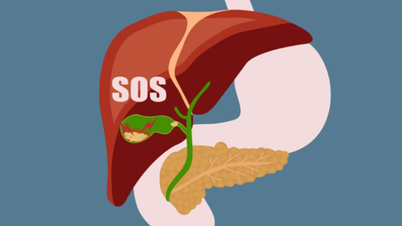
Yellow skin often immediately makes many people think of hepatitis, bile duct obstruction, or other dangerous liver and biliary tract diseases. However, in reality, medicine recognizes a fairly common but benign condition called carotenemia, which occurs when the body accumulates too much beta-carotene – the yellow-orange pigment found in many fruits and vegetables.
- How is the orange-yellow color caused by carotene different from jaundice caused by liver disease?
- Why do many people have yellowish-orange skin?
- When should I see a doctor?
- How can you eat without "overdosing" on beta-carotene?
Beta-carotene is a precursor to vitamin A, found abundantly in carrots, pumpkins, sweet potatoes, papayas, ripe mangoes, gac fruit, and dark green leafy vegetables. When consumed in excessive amounts over a long period, beta-carotene can accumulate under the skin, causing a noticeable yellow-orange discoloration.
How is the orange-yellow color caused by carotene different from jaundice caused by liver disease?
The most significant difference lies in the eyes. People with liver disease often experience jaundice – the whites of the eyes turn noticeably yellow. In contrast, people with carotenemia usually only experience skin discoloration, while their eyes remain normal white.
The yellow-orange color is also more commonly seen in: the palms of the hands, soles of the feet, tip of the nose, around the mouth, elbows, and knees. This is because these areas have a thicker stratum corneum, which is more prone to accumulating carotene pigment.
In addition, people with jaundice caused by liver problems often experience a range of other symptoms such as:
- Prolonged fatigue.
- Dark-colored urine.
- Itchy skin.
- Loss of appetite.
- Pain in the right lower rib area.
- Weight loss.
- Nausea.
Meanwhile, carotenemia mostly does not cause discomfort or serious health effects.
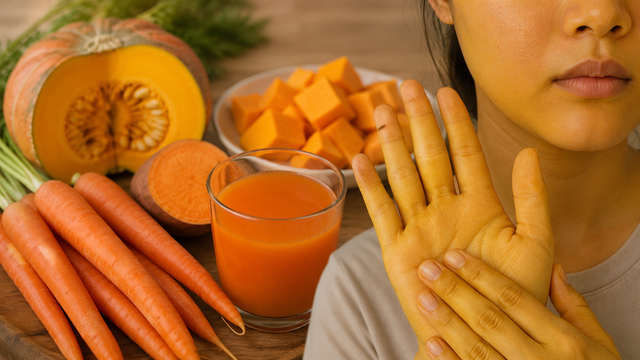
Eating too much beta-carotene-rich food like carrots and pumpkins can cause the skin to turn yellow-orange even if the liver is normal.
Why do many people have yellowish-orange skin?
Trends like "healthy" eating, detoxing with vegetable juices, or extreme weight loss methods are causing many people to inadvertently consume excessive amounts of beta-carotene.
Many people drink carrot, pumpkin, mango, or gac fruit juice daily for extended periods hoping for beautiful skin and increased immunity. Some even take high-dose beta-carotene supplements without medical prescription.
Young children are also susceptible to carotenemia due to diets often containing large amounts of pumpkin, mashed carrots, or sweet potatoes. In children, this condition often causes parents concern because the child's skin appears unusually yellow.
Although beta-carotene is not as toxic as high doses of vitamin A, prolonged overuse is still not beneficial to health.
Although the most common cause is diet, yellow-orange skin is sometimes associated with certain metabolic disorders or underlying conditions such as:
- Hypothyroidism.
- Diabetes.
- Dyslipidemia.
- Kidney disease.
- Anorexia nervosa.
These conditions can cause the body to metabolize beta-carotene less efficiently than normal, leading to the pigment accumulating in the blood and under the skin.
In some rare cases, it may also be associated with prolonged use of medications or dietary supplements containing carotenoids.
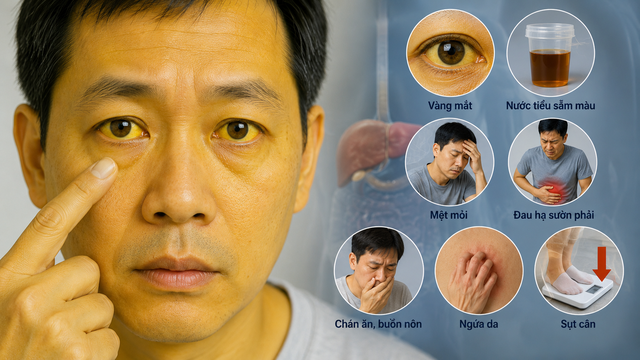
Jaundice caused by liver disease is often accompanied by yellowing of the eyes, dark urine, and various other systemic symptoms.
When should I see a doctor?
We should not take any unusual skin discoloration lightly. Although carotenemia is usually benign, people should still see a doctor if it appears:
- My eyes are turning yellow.
- Prolonged fatigue.
- Stomach-ache.
- Dark-colored urine.
- Unexplained weight loss.
- Fever or severe itching.
- The yellowing of the skin persisted despite dietary changes.
Typically, doctors will order liver function tests, blood bilirubin levels, and evaluate dietary habits to differentiate the cause.
If it is indeed carotenemia, treatment primarily involves dietary adjustments. After a few weeks to a few months of reducing foods rich in beta-carotene, skin color usually returns to normal.
How can you eat without "overdosing" on beta-carotene?
You don't need to completely avoid carrots, pumpkins, or yellow-orange vegetables because they are all healthy foods. The important thing is to eat a balanced and varied diet.
Some points to note include:
- Don't drink too much carrot juice every day.
- Avoid prolonged detoxification using only one food group.
- Do not use high-dose beta-carotene supplements without consulting a doctor.
- Combine a variety of green vegetables, fruits, and protein.
- Monitor changes in skin color if you are on a special diet.
In particular, parents should not force children to eat too much yellow-orange food continuously for a long period of time just because they think "the more nutritious, the better."
Changes in skin color sometimes simply reflect diet, but they can also be a warning sign of an underlying medical condition. Instead of self-diagnosing online, people should consult a specialist if they experience any persistent unusual symptoms.
Source: https://suckhoedoisong.vn/vi-sao-da-chuyen-mau-vang-cam-du-gan-binh-thuong-169260514110045518.htm
![[Image] Pleasant weather helps students enter the 10th grade entrance exam with confidence.](https://vphoto.vietnam.vn/thumb/1200x675/vietnam/resource/IMAGE/2026/05/29/1780034401612_ngay-1-thi-lop-10-minh-duy-8-5009-jpg.webp)



![[Photo] Ba Lang An Lighthouse - the "eye of the sea" amidst the "rock museum" of Quang Ngai province.](https://vphoto.vietnam.vn/thumb/1200x675/vietnam/resource/IMAGE/2026/05/29/1780038698840_anh-man-hinh-2026-05-29-luc-14-10-42.png)
































































































Comment (0)