

If you've ever been to the beach, you've probably accidentally swallowed a mouthful of seawater and felt its intense saltiness. Seawater is salty because it contains a very high concentration of salt. Scientists estimate that the oceans contain approximately 50 quadrillion tons of dissolved salt.
Where does the salt in the oceans come from?
When it comes to salt, many people simply think of it as a seasoning on the dinner table. However, salt is more than just that.
In chemistry, salt refers to any compound containing positive metal ions (sodium, potassium, magnesium, etc.) and negative acid ions. These salts are diverse and found in many types of rocks around the world .
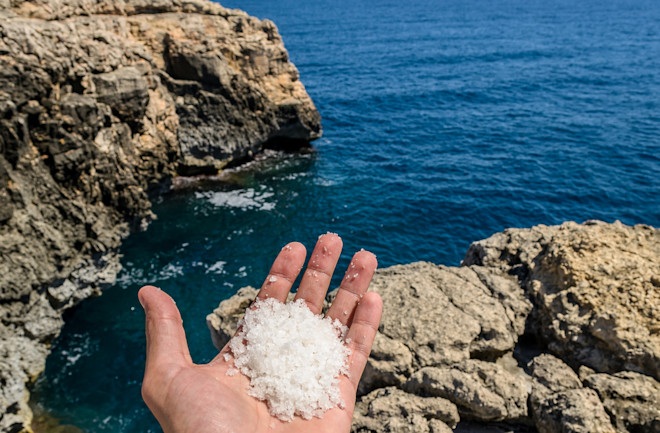
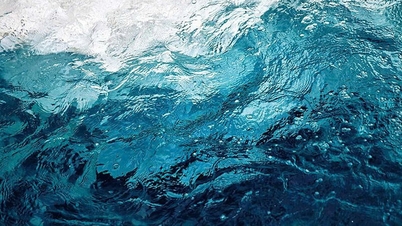
Ocean water contains an extremely high concentration of salt, accumulated over millions of years (Image: iStock).
Salt is not naturally present in seawater; it is slowly transported into the oceans from hills, rivers, and other sources. The continuous flow of rivers and streams creates erosion and weathering, causing minerals, including salt, within rocks to dissolve and be carried by the water current towards the sea.
Furthermore, the ocean floor contains many active volcanoes and hydrothermal vents, which are fissures in the Earth's surface where hot water and chemicals from the Earth's core erupt outwards. This eruption process releases many minerals, including positive and negative ions that form mineral salts.
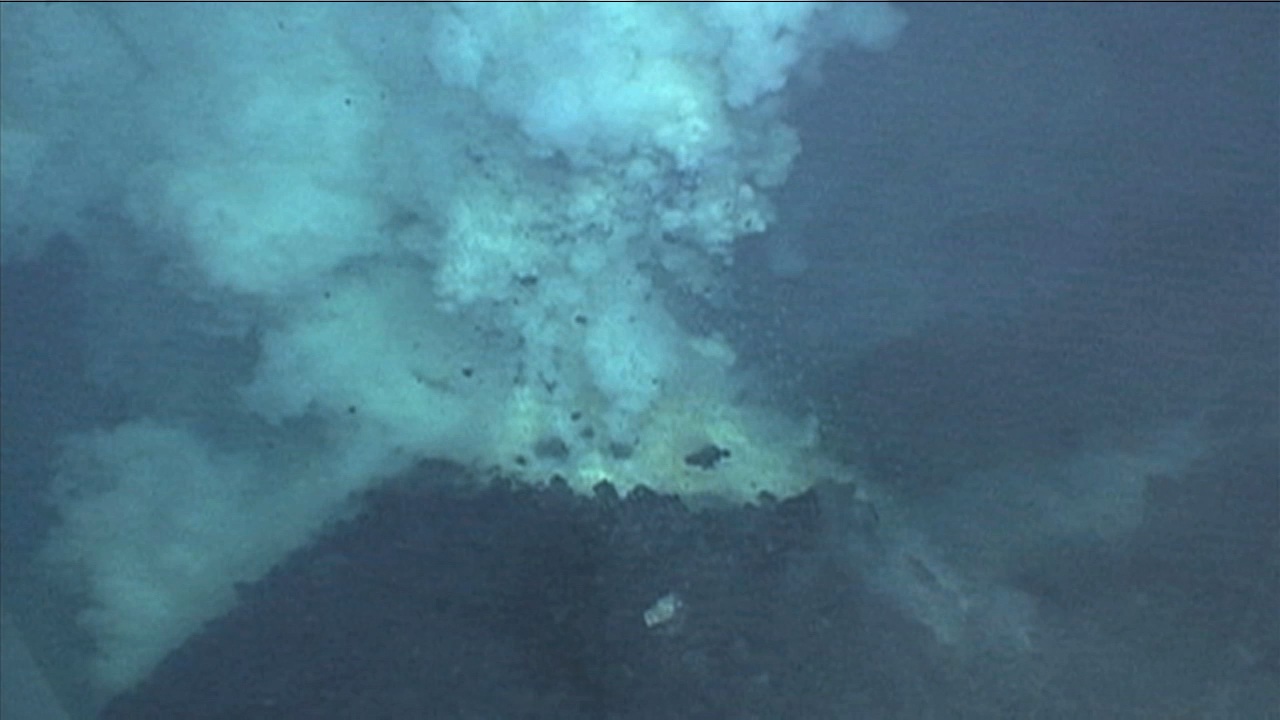
Underwater volcanic eruptions also add salt to the ocean (Photo: NOAA).
Why aren't lake and river waters as salty as the sea?

River and stream water also contains salt molecules, but the amount is too small to create the salty taste of the sea (Photo: Pinterest).
The question is why river and lake water, which also contains salt molecules from rock erosion, is not as salty as seawater?
In fact, lake and river water also contain a small amount of salt, but it's negligible and doesn't create the characteristic salty taste of seawater. It's only when salt is carried by water into the oceans and accumulates there over a long period that it creates the salty taste.
Why doesn't seawater become fresh again?
Many people will wonder why freshwater continuously flows into the sea from rivers, yet this water is unable to dissolve and reduce the salinity of seawater?
According to scientists, the process of salt accumulation in the sea has been forming over millions of years, with salt being continuously replenished by rivers.
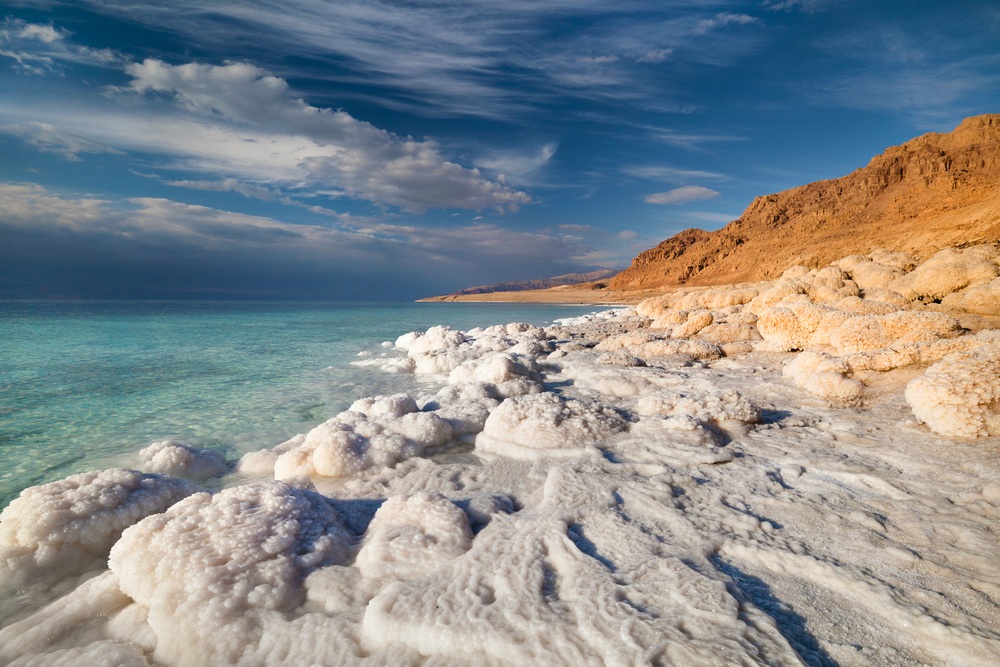
Coastal waters with excessively high salt content can lead to precipitation (Photo: Getty).
When seawater evaporates into the atmosphere, it leaves behind salt molecules, increasing the salinity of the ocean. Meanwhile, new salt molecules are continuously carried in from land by rivers and streams, creating a continuous cycle that brings salt into the oceans, making the seawater extremely salty.
How important is the salt content in the ocean?
Seawater is salty, but the salinity varies by region. For example, in some shallow coastal areas, the salt concentration can be so high that no more salt can dissolve, leading to the formation of a layer of salt deposits on the seabed.
The concentration of salt and the salinity of seawater are the cause of many different weather phenomena on Earth.
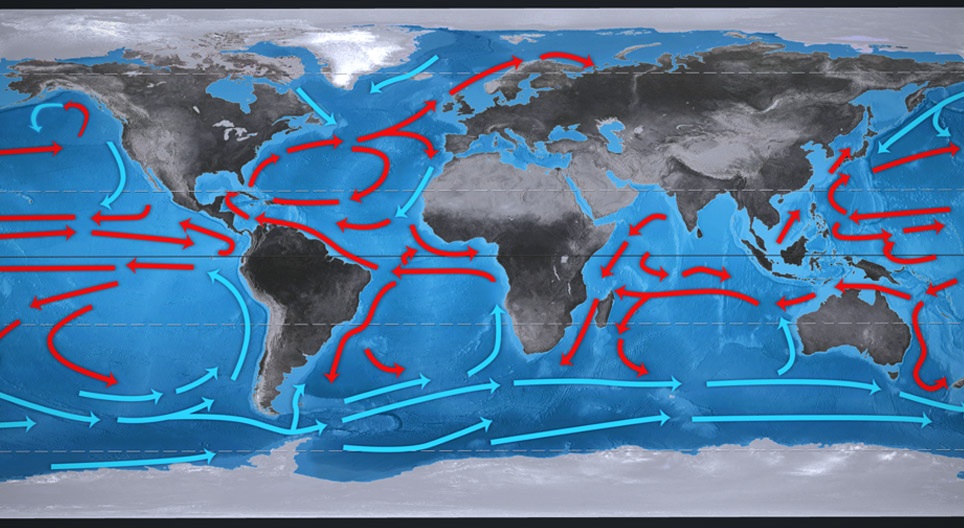
The salinity of seawater creates ocean currents, which have a significant impact on many areas of science and life (Photo: Mozaweb).
Ocean currents, which circulate warm and cold seawater across the planet, are considered vital regulators of global climate. These currents are created by wind, temperature, and the salinity of the seawater.
Just as meteorologists measure air temperature to predict what will happen in the atmosphere, oceanographers measure wind speeds, temperature, and salinity of seawater to predict ocean currents.
Ocean currents affect the temperature and humidity of the atmosphere; therefore, predictions related to ocean currents play a crucial role in many scientific and practical fields, such as forecasting extreme weather events, maritime transport, or predicting the movement of fish for fishing purposes.
Source: https://dantri.com.vn/khoa-hoc/vi-sao-nuoc-bien-lai-man-20250728150749578.htm
![[Photo] The heat at the fireworks display site on the opening night of the Da Nang International Fireworks Festival 2026](https://vphoto.vietnam.vn/thumb/1200x675/vietnam/resource/IMAGE/2026/05/27/1779889741485_ndo_br_z7872039145157-fecaba5112f39e8352544099d7ef4738-5140-jpg.webp)


![[Photo] The courage of new recruits of Brigade 144 on the training ground.](https://vphoto.vietnam.vn/thumb/1200x675/vietnam/resource/IMAGE/2026/05/27/1779881651341_anh-man-hinh-2026-05-27-luc-18-32-52.png)


































































![[Photo] The courage of new recruits of Brigade 144 on the training ground.](https://vphoto.vietnam.vn/thumb/402x226/vietnam/resource/IMAGE/2026/05/27/1779881651341_anh-man-hinh-2026-05-27-luc-18-32-52.png)































Comment (0)