

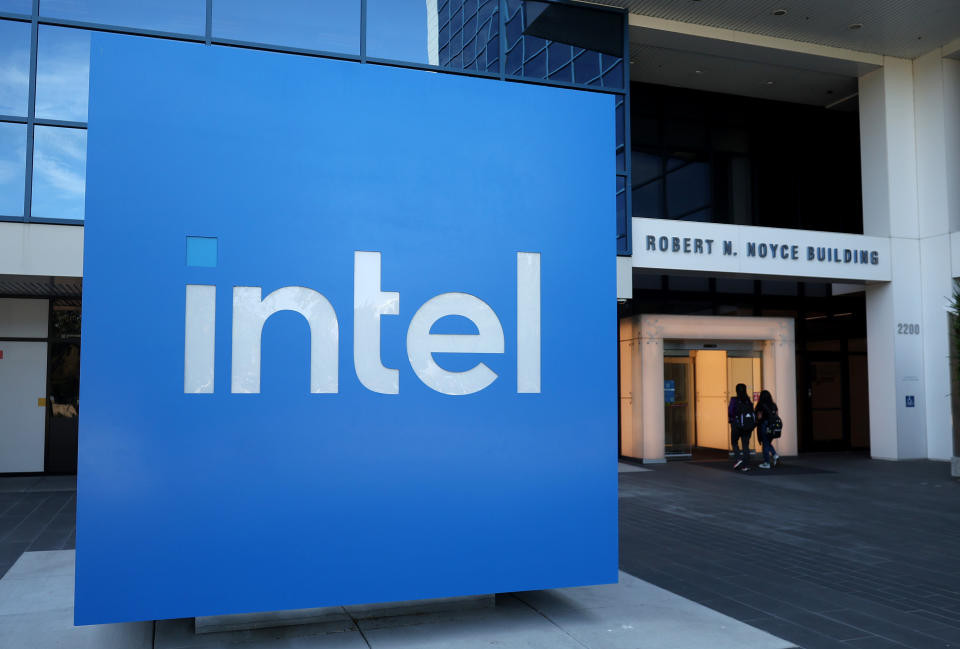
The tech giant stated that its business unit is not for sale. Engadget, citing internal Intel sources, reported that this division handles PC, server, network chip, and a foundry business. However, Arm is not interested in Intel's semiconductor foundry.
Over the past twelve months, Intel's value and position have been declining rapidly. Following a net loss of $1.6 billion in the second quarter of 2024, the company announced a reduction of 15,000 employees – part of an overall plan to save $10 billion.
Last week, the company revealed plans to transform its struggling foundry division into an independent subsidiary. Intel lost half its market value last year and is now valued at $102.3 billion.
Arm is a company that sells processor designs to clients such as Qualcomm, Apple, and several major mobile manufacturers.
The UK company currently lacks a chip manufacturing facility. Therefore, acquiring Intel's product division could pave the way for a change in their business model.
With Intel currently vulnerable, competitors have begun to surround it. Qualcomm had previously expressed interest in acquiring the company.
Any merger involving Arm and Qualcomm would be a regulatory nightmare, but the fact that proposals are still being made shows the declining status of the once-dominant American semiconductor giant.
The giant's stumble.
According to the WSJ, strategic mistakes, coupled with the rapid explosion of artificial intelligence, turned the long-established semiconductor giant from "hunter" into "prey."
Intel's problems began with manufacturing failures before Gelsinger took over. Things worsened when the CEO pursued a costly but ill-advised shift in strategy that failed to anticipate the explosion of AI, fundamentally changing demand to a type of chip manufactured by rival Nvidia.
Chip manufacturing is extremely complex and expensive. Last year, Intel spent $25.8 billion on chips, equivalent to about 48% of the company's revenue.
Meanwhile, Qualcomm's total capital expenditure in the most recent fiscal year was $1.5 billion, just over 4% of its sales.
On Intel's side, they have several other ways to encourage investment in the company, such as Apollo Global Management, which has offered to invest up to $5 billion.
In addition, Intel also plans to sell a portion of its stake in chipmaker Altera to private equity investors.
(According to Bloomberg, Engadget, WSJ)
Source: https://vietnamnet.vn/vi-the-cua-intel-tut-doc-khong-phanh-2327601.html


![[Photo] Prime Minister Pham Minh Chinh attends the Conference on the Implementation of Tasks for 2026 of the Industry and Trade Sector](/_next/image?url=https%3A%2F%2Fvphoto.vietnam.vn%2Fthumb%2F1200x675%2Fvietnam%2Fresource%2FIMAGE%2F2025%2F12%2F19%2F1766159500458_ndo_br_shared31-jpg.webp&w=3840&q=75)






















































































Comment (0)