

On the occasion of the Lunar New Year 2024 (Year of the Dragon), DTTC had a cordial conversation with Dr. Nguyen Dinh Cung, former Director of the Central Institute for Economic Management Research, about his profound memories of the late Prime Minister Phan Van Khai. Dr. Nguyen Dinh Cung shared:
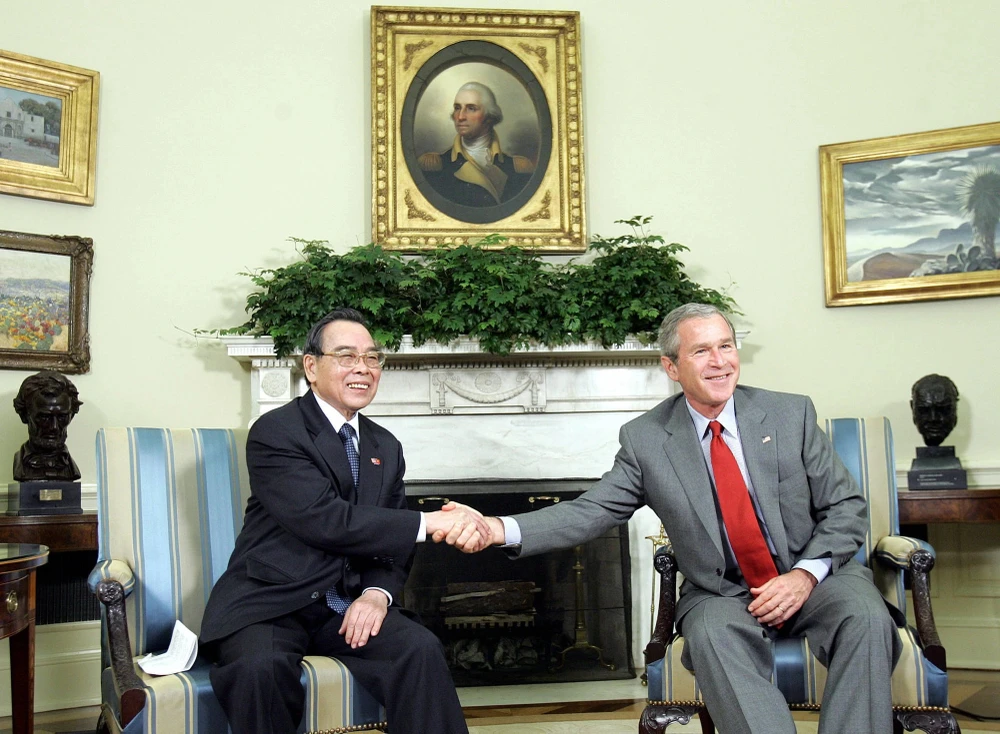
As of December 2023, more than five years have passed since Mr. Phan Van Khai (affectionately known as Prime Minister Phan Van Khai), but his contributions to the cause of reform and international integration still leave a profound mark on many generations of officials, Party members, and the people. What he did for the business environment, including the drafting of the Enterprise Law and the elimination of numerous illegal licenses, is an important part of his career as a technocrat and a great personality.
Vigorously build a market economy system.
During nearly two terms as head of government (1997-2006), under the impact of the 1997 Asian financial crisis and the difficulties and challenges of the early stages of national reform, Mr. Sau Khai, along with the government leadership, steered the country towards stability and development, overcoming many difficult times. In particular, he paid great attention to and devoted much effort to building a market economy, reducing state intervention in the economy, and creating a foundation for the state to shift its management method from "pre-audit" to "post-audit," organizing, managing, and supervising according to the principles of openness and transparency.
At the first session of the 10th National Assembly on September 30, 1997, just five days after taking office, the new Prime Minister Phan Van Khai clearly stated one of the priorities in the government's action plan for the new term: "Completing the legal framework, creating an equal competitive environment among enterprises of all economic sectors, coupled with a mechanism to control business monopolies." In line with this principle, the Prime Minister led the government in the first-ever development and implementation of particularly important legal documents, such as the Enterprise Law, the Investment Law, the document on Vietnam's accession to the World Trade Organization (WTO), the Vietnam-US Trade Agreement, and the government's resolution on promoting socialization in the fields of education, health, physical education, sports, science and technology, etc.
Dr. Nguyen Dinh Cung, who was one of the drafters of the 1999 Enterprise Law, which came into effect in 2000 – a law considered to have liberated and paved the way for economic development in general, and for the development of businesses of all economic sectors in particular, especially the private sector – recalled: “Some new contents in the law could be a ‘shock’ to conservative minds, for example, the view that ‘people can do anything that the law does not prohibit,’ instead of the ‘people can only do what is permitted’ that had existed for a long time before; or ‘the State only does what people cannot or do not want to do.’”
Citing numerous unbelievable and absurd regulations, the veteran expert stated that before the 1999 Enterprise Law came into effect, those who wanted to sell newspapers or typewriters needed a license valid for three months, meaning they had to apply for a license every three months. Even collecting metal scraps, waste paper, or painting portraits required permits… Fortunately, the drafting and editing team of the Enterprise Law received strong support from the Prime Minister. In August 2000, in an interview with the press regarding the dissenting opinions, Prime Minister Phan Văn Khải frankly stated: “A system accustomed to a system of requesting and granting permits, now abolishing unnecessary and harmful regulations, naturally, many people are taken aback. In my opinion, the reaction is understandable.”
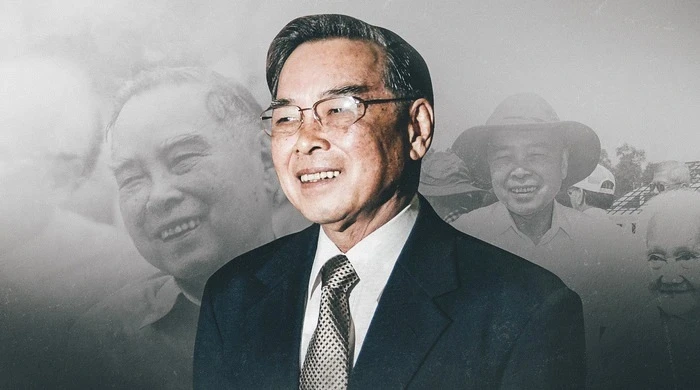
I fully understand the cumbersome and complicated administrative procedures currently causing many difficulties for businesses… On behalf of the Government, I pledge to you that such issues will certainly be addressed through dialogue and timely resolution, creating the greatest possible convenience for businesses to conduct production and business activities. Along with accelerating administrative reforms, these inconveniences will be gradually eliminated.
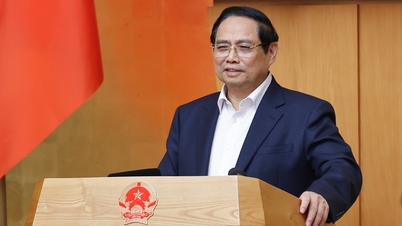
Prime Minister Phan Van Khai, speaking to representatives of businesses and scientists in Hanoi, January 9, 1998.
The courage of someone willing to take responsibility.
Dr. Nguyen Dinh Cung shared what impressed him most about Prime Minister Phan Van Khai: not only did he promote the completion of the Enterprise Law, but he also directly supervised its implementation. “Within just 58 days after the law came into effect, the Prime Minister signed a decision to establish a Task Force for the Implementation of the Enterprise Law, headed by the Minister of Planning and Investment, which included many ‘regular staff’ at the time, like myself. As far as I know, this was the first time such a task force had been established. This was also the first time representatives of the business community were invited by the Government to participate in drafting a law. In many of our meetings, the Prime Minister came to listen and engage in fair discussions, not to give directives. He considered and made decisions very quickly. Once, we reported an issue the afternoon before, and the next morning we saw him sign the document addressing it.”
More than 20 years have passed, but Mr. Cung still remembers Prime Minister's Decision 19/2000/QD-TTG abolishing 84 types of licenses that violated the provisions of the Enterprise Law – which could be considered a "Big Bang" in the socio-economic life at that time: "We proposed over 100 types, and he decided to abolish 84. That was incredibly decisive, because it stripped away the 'authority' of numerous ministries and agencies, preventing bureaucratic working methods and harassment by the public administration directly related to the investment, production, and business activities of enterprises. We had never worked so freely before."
Prime Minister Phan Van Khai's trust in experts outside the administrative apparatus, many of whom did not even hold important positions, earned their respect. The head of government was willing to accept significant political risks by accepting their bold proposals, and was ready to face the attacks from agencies that had suddenly lost their power to grant favors. Not only in institution building, the Prime Minister consistently valued the position and role of businesses and entrepreneurs, and always sought to listen to the voices of those facing the realities of business. He organized a series of frank and open meetings and dialogues with businesses of all economic sectors across the three regions of North, Central, and South Vietnam, aiming to promote their development.
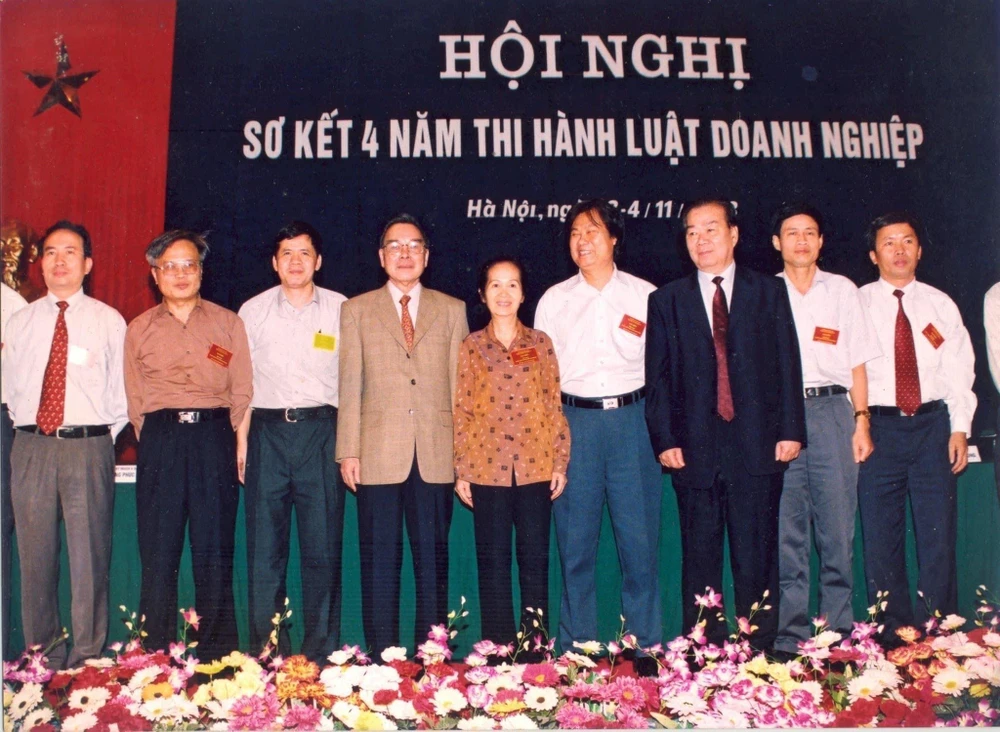
“The Prime Minister always patiently listens to businesses present their concerns, aspirations, and recommendations regarding business conditions and the business environment. Before each meeting, through his team of consultants and task forces, the Prime Minister thoroughly investigates the business environment, often making immediate decisions for businesses on the spot. He doesn't just go there to shake hands or express general goodwill,” Dr. Cung recounted with deep admiration.
Mr. Phan Van Khai was truly a "junior" to Mr. Vo Van Kiet. Mr. Khai served as Mr. Kiet's deputy for a considerable period. Later, upon becoming Prime Minister, he genuinely strived to follow in his predecessor's footsteps. He completed what Mr. Kiet hadn't finished, building upon it. Accordingly, he inherited major ideas and directions regarding market economy thinking and the development of the private sector. For example, the Private Enterprise Law and the Company Law, enacted in 1990-1991, were limited by the circumstances of the time, only allowing private enterprises to operate as a formal sector and still subject to the state's approval mechanism, restricting their freedom of business. However, during Mr. Khai's tenure, the 1999 Enterprise Law was enacted, restoring business rights to this sector.
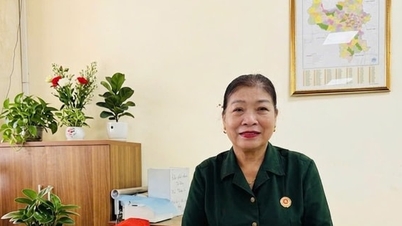
Ms. PHAM CHI LAN, former member of the Prime Minister's Research Committee from 1996 to 2006.
BAO VAN (recorded)
Source





![[Photo] “Red Journey” 2026: Vietnamese Youth Continue Building the Bridge of Friendship Between Vietnam and China](https://vphoto.vietnam.vn/thumb/1200x675/vietnam/resource/IMAGE/2026/04/20/1776629730866_4055880775670638308-9618-4200-jpg.webp)




























































Comment (0)