

However, if detected early, treatment for laryngeal cancer can yield positive results, significantly improving the patient's quality of life.
- Causes of laryngeal cancer
- Factors that increase the risk of laryngeal cancer
- Warning signs of laryngeal cancer
- When should I see a doctor?
- How can laryngeal cancer be prevented?
- Complete treatment of laryngitis
Causes of laryngeal cancer
One common concern is: can laryngitis progress to cancer? What are the symptoms?
The larynx is an organ located in the neck region, playing a vital role in the respiratory and vocal systems. It acts as a "gateway" for air to enter the lungs from the outside, and also participates in the process of creating sound when we speak.
In addition, the larynx also plays a protective role in the airway through the cough reflex, helping to expel foreign objects and prevent them from going deeper into the lungs.
When a malignant tumor appears in the larynx, this condition is called laryngeal cancer. The tumor can develop silently for a long time before causing noticeable symptoms.
Currently, the exact cause of laryngeal cancer remains unclear. However, many studies suggest that the disease is associated with a combination of various risk factors.
Chronic laryngitis is considered a risk factor, but not a direct cause, for laryngeal cancer. Prolonged inflammation of the laryngeal mucosa can lead to abnormal cellular changes, increasing the likelihood of developing precancerous lesions if left uncontrolled.
In other words, laryngitis is not synonymous with cancer, but if the inflammation is prolonged, recurs frequently, and is accompanied by other risk factors, then the likelihood of developing laryngeal cancer will be higher than in the general population.
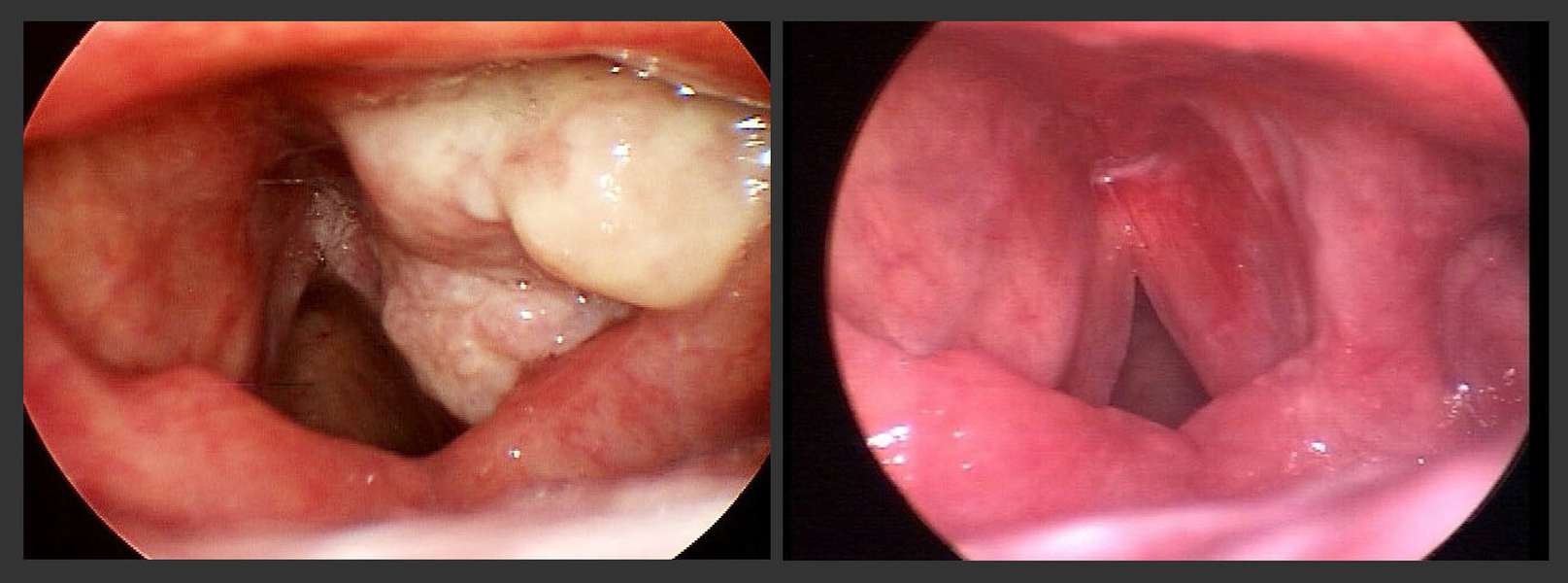
Images of laryngeal cancer lesions
Factors that increase the risk of laryngeal cancer
Experts have identified several risk factors that may contribute to the development of laryngeal cancer:
- Cigarette
Smoking is the leading risk factor. The harmful substances in cigarette smoke can damage the laryngeal mucosa, alter cells, and lead to cancer. This risk is significantly increased in long-term smokers.
- Exposure to chemicals, polluted environment
People who work in environments with a lot of dust and toxic chemicals, such as in industry and construction, are at higher risk because their larynx is constantly irritated.
- Chronic laryngitis
Prolonged inflammation causes continuous damage to the laryngeal mucosa, creating conditions for abnormal cellular changes. Furthermore, laryngeal cancer is more common in men than women. The most common age group affected is 50 to 70 years old, accounting for a high percentage of all cases.
Warning signs of laryngeal cancer
Symptoms of laryngeal cancer often depend on the location and size of the tumor. However, there are some typical signs that people should pay particular attention to:
- Persistent hoarseness
This is the earliest and most common symptom. If hoarseness lasts for more than 3 weeks, especially in people over 40, a visit to an ENT specialist is necessary for examination.
- Persistent cough
Patients may experience a persistent cough, a dry cough, or intermittent coughing. In some cases, the cough may be accompanied by irritation or spasms. As the disease progresses, difficulty swallowing and choking while eating or drinking may also trigger coughing.
- Shortness of breath
Shortness of breath can appear early or late depending on the location of the tumor. Initially, patients only experience shortness of breath during exertion, but this may later occur more frequently due to the tumor compressing the airway.
- Difficulty swallowing, pain when swallowing.
When the tumor spreads to the pharyngeal region, patients may experience pain when swallowing, along with a feeling of something stuck in the throat. In some cases, the pain may also radiate to the ear.
- Unexplained weight loss
Rapid, unexplained weight loss is a systemic sign that warns of many malignant diseases, including laryngeal cancer. If accompanied by the symptoms mentioned above, patients should pay special attention.
When should I see a doctor?
We should not be complacent about persistent symptoms, especially: Hoarseness lasting more than 3 weeks without improvement; Persistent cough of unknown origin; Difficulty swallowing, persistent sore throat; Gradually worsening shortness of breath; Unusual weight loss...
Early medical checkups help detect diseases in their initial stages, thereby improving treatment effectiveness and reducing the risk of complications.
How can laryngeal cancer be prevented?
While it's impossible to completely eliminate the risk, each individual can proactively minimize their chances of contracting the disease through the following measures:
- Stop smoking.
This is the most important measure to reduce the risk of laryngeal cancer as well as many other dangerous diseases.
- Limit exposure to toxic chemicals.
Using protective gear when working in environments with a lot of dust and chemicals is an effective way to protect the vocal cords.
Complete treatment of laryngitis
Do not underestimate the symptoms of sore throat and laryngitis. Early and proper treatment helps to prevent chronic inflammation from lasting for too long.
A healthy diet rich in vitamins, combined with regular exercise, will help boost immunity and protect the body against disease-causing agents.
In summary: Laryngitis is a common condition and in most cases is not dangerous. However, if the inflammation is prolonged and not well controlled, especially when accompanied by risk factors such as smoking or chemical exposure, the risk of developing laryngeal cancer may increase.
Therefore, monitoring for abnormal signs, proactively seeking early medical attention, and maintaining a healthy lifestyle are key to protecting laryngeal health and effectively preventing dangerous diseases.
Source: https://suckhoedoisong.vn/viem-thanh-quan-co-dan-den-ung-thu-khong-169260415213257587.htm

![[Photo] General Secretary and President To Lam presides over a meeting on preparations for the review of one year of operation of the three-tiered government system.](https://vphoto.vietnam.vn/thumb/1200x675/vietnam/resource/IMAGE/2026/06/02/1780391821195_a1-bnd-4595-9717-jpg.webp)

































































































Comment (0)