

The land of present-day Viet Tri was formerly the capital of Van Lang during the time of the Hung Kings. Legend has it that: To choose a place for the capital, King Hung traveled through many areas, from the Ao Chau swamp (Ha Hoa) with its ninety-nine inlets, through the Thanh Ba hills with the Tham mountain range, seeing many beautiful landscapes and fertile lands, but none satisfied him. Then, one time, the king and his Lac Hau and Lac Tuong arrived at an area where three rivers converged, flanked by the Tan Vien and Tam Dao mountains like a dragon and a tiger bowing, with hills and mountains near and far, fertile fields, and a bustling population. In the midst of the rolling hills and mountains, a towering peak rose like a dragon's head, while the other mountain ranges resembled the winding body of a dragon. The king was overjoyed to see such wondrous mountains, fertile land, deep rivers, and lush vegetation. This place had the strategic advantage of being both fortified and expansive, a place for all people to gather. King Hung resolutely chose this land, and it became the capital of the Van Lang state.
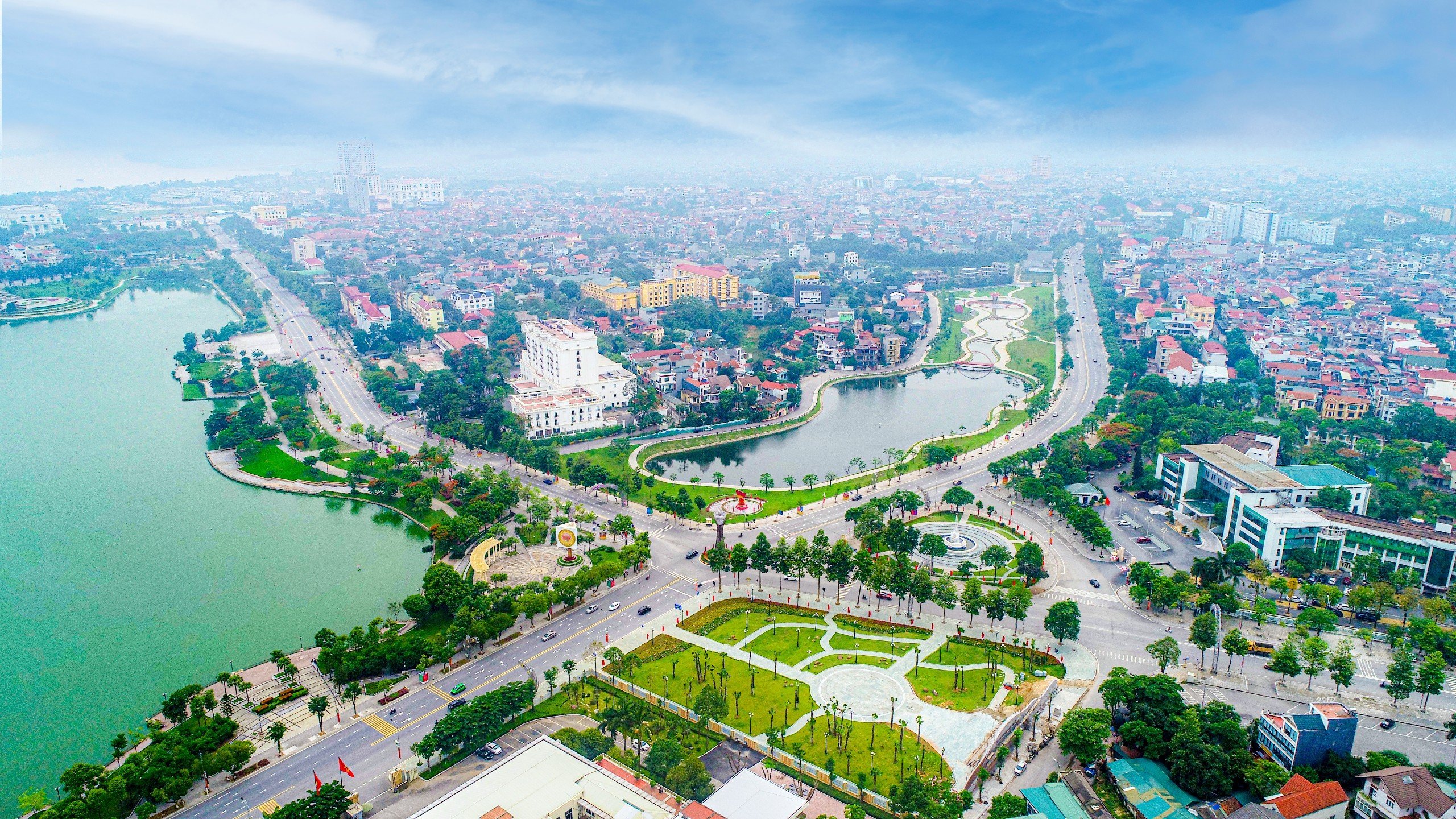
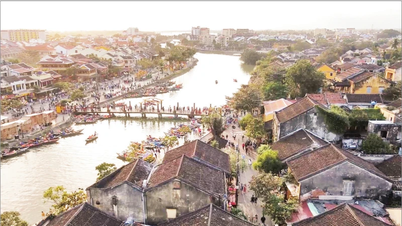
Viet Tri City today.
Thus, legend or history, history or legend, have partly reflected historical truth: from very early times, the ancient Vietnamese people chose the Viet Tri region as a place for survival and development of their race. Therefore, Viet Tri was chosen as the political center of the Van Lang state. With its favorable geographical location and natural conditions, it was a convergence point for many ancient Vietnamese groups, each with diverse characteristics, within the unified framework of the Dong Son civilization. The inhabitants of Viet Tri originated from the Van Lang people during the era of the Hung Kings.
The Hung Kings lived in low hills along riverbanks, their economy primarily based on wet rice cultivation, hunting, and raising small livestock. Legends mention King Hung teaching the people how to cultivate rice in Minh Nong, the granary in Nong Trang, and the sticky rice fields in Huong Tram and Duu Lau. The motifs on the Dong Son bronze drums also depict stilt houses, drumming, rice pounding, hunting, deer, dogs, etc. Many bronze and stone tools have been found at the Doi Giam (pre-Dong Son) and Lang Ca (Dong Son culture) sites.
During this period, the socio-economic system shifted from a tribal system to a rural commune. Economic development led to a significant liberation of productive forces, resulting in surplus products. Some people left agriculture to engage in handicrafts, with bronze casting being the most advanced, evidenced by the discovery of four double-sided bronze casting molds along with smelting and pouring equipment at the Lang Ca burial site. This likely represents the burial of a professional bronze caster. It can be affirmed that this was a period of flourishing bronze production and significant influence, hence it is also known as the Bronze Age.
Due to its favorable geographical location and natural conditions for living and development, Viet Tri has been the center of the Lac Viet community since the time of the Hung Kings. The population has grown rapidly, fundamentally changing its composition and structure, resulting in a more diverse and rich population. The history of Viet Tri's development within the thousands of years of the nation's history of nation-building and defense reveals several prominent characteristics of the inhabitants of this river confluence area, as observed below:
This is the earliest settlement area of the Vietnamese people, with a highly developed wet rice farming industry. It is the starting point for the development of ethnic groups living on Vietnamese land, and from here, the first urban class appeared in Viet Tri, closely associated with the formation, birth, and development of the first capital - Van Lang.
This was a very early center of concentration, with a large number of ancient Vietnamese inhabitants. From here, various ethnic groups dispersed to settle and establish themselves in other areas, and conversely, people from all over the country came to settle in Viet Tri, creating a natural "population exchange" and establishing the Van Lang nation with an administrative area comprising 15 ministries in the early days of nation-building. As an area heavily impacted by wars that took place in history, Viet Tri has had a significant influence on population dynamics, creating a dynamic, unstable state with a constant trend of "growth" and "development" in its population composition.
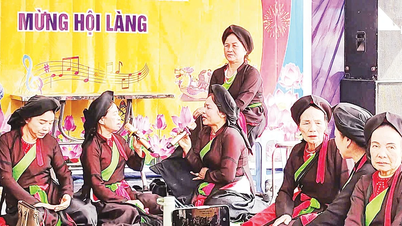
The cultural and spiritual life of the inhabitants of the Van Lang capital is also known to us through legends and archaeological artifacts. At the Lang Ca site, we found some jewelry such as bracelets and earrings. Bronze drums and bells were not only used in religious rituals but also served cultural and spiritual activities. Dong Son bronze drums also depict images of young men and women playing drums and singing, especially Xoan singing.
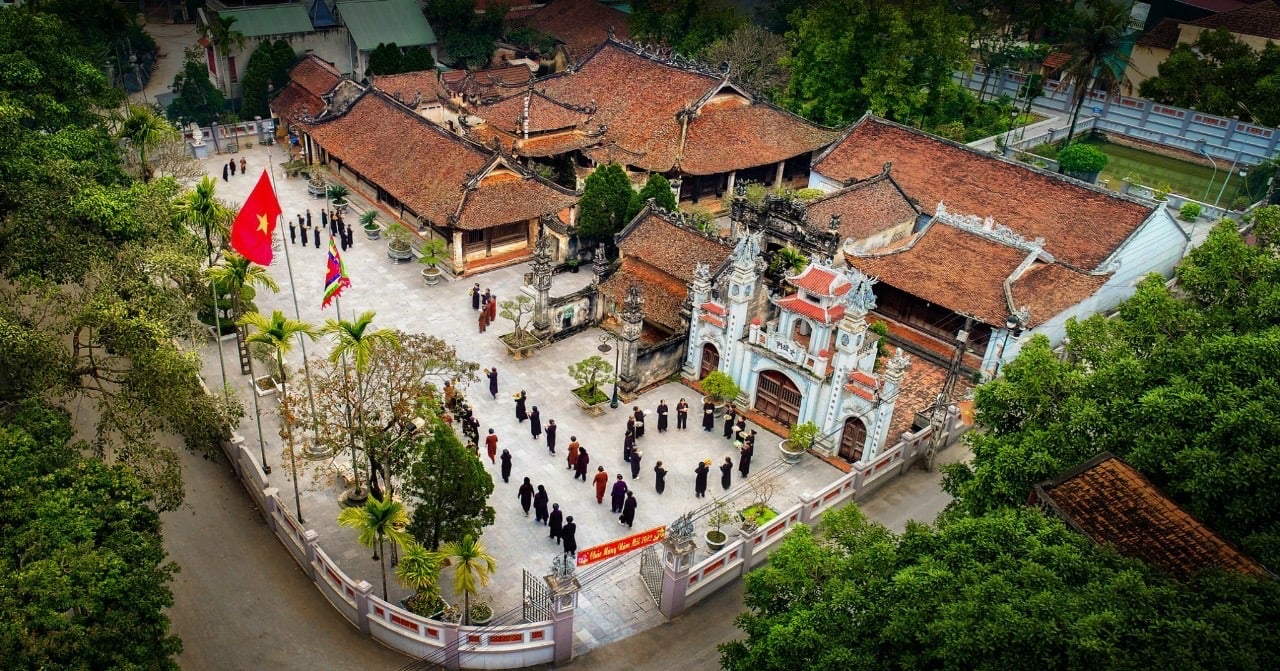
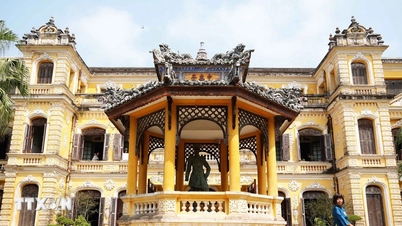
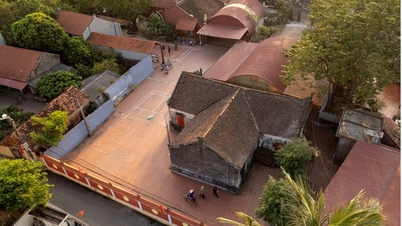
Hung Lo Temple. Photo: Archival material.
Viet Tri – the ancient capital of Van Lang – is a region with a high concentration of tangible and intangible cultural heritage bearing the distinctive mark of the ancestral land. This includes a rich system of religious architectural relics, more than half of which are sites dedicated to the worship of King Hung and his generals, wives, and children.
Many historical sites possess high cultural and artistic value, such as Lau Thuong Temple, Bao Da Temple, Hung Lo Temple, An Thai Temple, Huong Tram Temple, etc. Associated with these sites are rich and unique festivals with attractive folk games such as: the boat racing festival (Bach Hac); the rice cake pounding festival (Mo Chu Ha - Bach Hac); the Xoan festival (Kim Duc - Phuong Lau); the Tich Dien festival (Minh Nong); the swing game (Minh Nong, Minh Phuong); tug-of-war (Duu Lau); throwing the net to snatch the flower (Van Phu); walking on the bridge and setting off firecrackers (Huong Lan - Trung Vuong)... all of these festivals are rituals related to King Hung and the generals of the Hung Dynasty.
Along with the festival system, there are many legends associated with each place in Viet Tri, such as: the story of King Hung teaching the people to cultivate rice in Lu village (Minh Nong); the King's granary (Nong Trang); the village that grew fragrant sticky rice for Prince Lang Lieu to make cakes to offer to the King in Huong Tram (Duu Lau); King Hung's son-in-law selection tower in Lau Thuong; the Thuong Vo platform in Bach Hac; King Hung's military camp in Cam Doi (No Luc); schools in Chang Dong, Chanh Nam (Thanh Mieu), Huong Lan village (Trung Vuong); Lau Thuong, Lau Ha, Tien Cat, and Thanh Mieu were all former palaces of King Hung; Quat Thuong village was the King's kumquat garden, as was Duu Lau Ke Dau, a betel garden with the Vietnamese custom of chewing betel... There are many more legends and myths reflecting the life, labor, and struggles of the ancient Vietnamese people in the early days of nation-building.
Viet Tri is the first ancient capital of the nation. Among the 10 criteria set forth by UNESCO regarding outstanding universal value for recognition as a World Cultural Heritage site, Phu Tho's heritage sites can meet the fifth criterion, entitled: "Prehistoric Cultural Space," because this name evokes the outstanding value of preserving cultural stratigraphy, demonstrating the traditional settlement of ancient Vietnamese people from the early Bronze Age (Phung Nguyen culture) to the late Bronze Age - early Iron Age (Dong Son culture).
The long-standing traditional settlement and continuous development of the ancient Vietnamese people gave rise to wet rice cultivation, the famous Phung Nguyen pottery making, and bronze metallurgy with the Dong Son bronze drums, showcasing the artistic creativity of the ancient Vietnamese community. This is the cultural identity and character of Vietnam, rooted in ancient Vietnamese civilization. For this reason, UNESCO has recognized two representative cultural heritage sites of humanity in the Viet Tri region: Phu Tho Xoan singing and the Hung King worshiping belief in Phu Tho.
Today, Viet Tri City is a Class I urban area, directly under Phu Tho province, covering an area of nearly 11,153 hectares and with a population of over 215,000 people, of which the urban population accounts for nearly 70%. It has 22 administrative units, including 13 wards and 9 communes. Through many stages of planning and construction, Viet Tri has affirmed its important role and position in the overall development of the province and its role as a center of the northern mountainous region.
Viet Tri currently has 56 classified historical sites, including 1 Special National-level site; 13 National-level sites, and 42 provincial-level sites. This is a major attraction for locals and tourists alike when visiting this city at the confluence of three rivers. In addition, Viet Tri has invested significant resources in restoring and preserving 30 historical sites in the area, aiming to conserve and promote their value and integrate them with tourism development. The restoration and expansion of festival spaces have also received attention. As a result, some historical sites have become complete cultural tourism products, showcasing the unique characteristics of the ancestral land, creating attractive tourist routes for both domestic and international visitors.
To improve urban management, Viet Tri City has implemented the "Civilized and Culturally Advanced City" project for the period 2016-2020 and the "Civilized and Modern City" project for the period 2021-2025. The implementation of the urban management regulations and the projects to build and upgrade Viet Tri City has received positive support and participation from the community, creating a clear shift in people's awareness and self-discipline in areas such as construction order, urban order, environmental sanitation, and the socialization of resources.
In the period from 2016 to 2020 alone, Viet Tri mobilized over 27,600 billion VND for infrastructure investment within the city. By the end of 2018, 100% of the city's communes had completed the new rural development program, two years ahead of schedule. One of the breakthroughs, identified by the 20th City Party Committee, term 2015-2020, is the goal of building Viet Tri into a civilized and cultured urban area.
To realize this goal, Viet Tri has focused on prioritizing investment in urban infrastructure development, accelerating the construction progress of key projects, creating a modern, bright, green, clean, and beautiful city, and providing the best conditions for practicing two intangible cultural heritages of humanity: "The Hung King worshiping belief in Phu Tho" and "Xoan singing in Phu Tho".
On June 12, 2020, the Prime Minister issued Decision 817/QD-TTg approving the objectives, orientations, tasks, and key solutions for developing Viet Tri city into a festival city celebrating the roots of the Vietnamese nation, for the period up to 2025, with a vision to 2030. This serves as encouragement and further motivation for Viet Tri to preserve and promote the value of its cultural heritage, meeting the cultural and religious needs of the people of the ancestral land in particular, and of the Vietnamese nation in general.
According to the plan approved by the Government, the Hung Temple National Tourist Area will continue to be developed with many components; urban infrastructure and transportation networks will continue to be improved. Inner-city roads such as Nguyen Tat Thanh, Ton Duc Thang, Hoang Van Thu, Nguyen Van Linh, Vu The Lang, Phu Dong... and over 130km of internal roads, many national highways, bridges and external routes such as the Noi Bai - Lao Cai Expressway, National Highway 2, Hac Tri Bridge, Van Lang Bridge, Vinh Phu Bridge... will continue to be invested in, upgraded and newly constructed, helping to connect transportation, boost the economy, and create a highlight for the city.
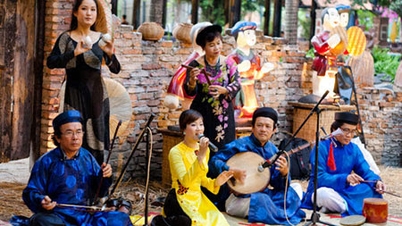
Furthermore, Viet Tri continues to promote the value of its cultural heritage in conjunction with sustainable tourism development, boosting the socio-economic development of the locality; strengthening cooperation and linkages with localities and countries that have intangible cultural heritage recognized by the United Nations Educational, Scientific and Cultural Organization (UNESCO). At the same time, it harmoniously combines national identity and modernity, creating a blend and connection between the functions of an industrial city and a tourism festival.
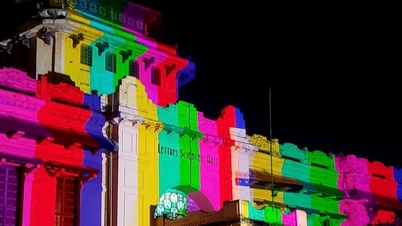
Viet Tri City has been mobilizing all available resources to implement breakthroughs in infrastructure investment, building a civilized and modern urban area; developing services, especially tourism services, in order to create new momentum in the city's economic and social development. Viet Tri City is gradually maintaining, restoring, and enhancing existing folk and traditional cultural festivals associated with relics from the Hung King era in the area, ensuring solemnity, economy, and efficiency.
Through this, we aim to educate the younger generation about traditions while simultaneously building a strong sense of city citizenship, and to promote and publicize the city's festival heritage, connecting it to the roots of the Vietnamese nation. At the same time, we strengthen linkages with localities within the province, with provinces in the region, tourism centers, and domestic and international partners to create convenient and attractive tourism routes and services.
With the achievements already made, as well as the existing potential and advantages, along with the aspirations of the Party Committee and the people, the city will soon complete the criteria of a civilized and modern city, gradually making Viet Tri an attractive destination for investors and tourists from all over, so that Viet Tri becomes a dynamic city, a city of festivals that connects with the roots of the Vietnamese nation.
Nguyen Huu Dien
Former Secretary of the Provincial Party Committee, Honorary Chairman of the Phu Tho Historical Science Association
Source: https://baophutho.vn/viet-tri-xua-va-nay-223202.htm


![[Photo] General Secretary and President To Lam receives Amazon's Senior Vice President David Zapolsky](https://vphoto.vietnam.vn/thumb/1200x675/vietnam/resource/IMAGE/2026/05/22/1779466547770_a1-bnd-3513-6601-jpg.webp)


















































Comment (0)