

In 2025, the Vietnamese tobacco industry continues to operate under significant pressure. Demand for legal tobacco products is trending downward, reflecting the impact of tobacco control policies and gradual changes in consumer behavior. Simultaneously, businesses in the industry face increasing production costs. Raw material prices, supplies, logistics costs, and legal compliance costs are all on the rise, while room for price adjustments is shrinking.
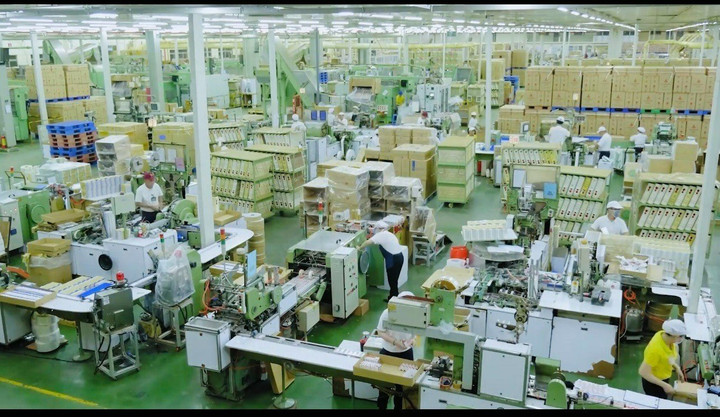
Vinataba is focusing on stabilizing production and business operations and preparing the foundation for the next phase.
Notably, the situation with smuggled cigarettes remains complex, accounting for a significant share of the market. This creates unfair competitive pressure on legitimate domestic manufacturing and trading businesses.
In this context, the goal of increasing production volume is no longer the top priority. Instead, many businesses, including Vinataba, are shifting their focus to stabilizing the market and improving operational efficiency.
Vinataba maintains production pace and closely follows market demand.
In light of market fluctuations, Vinataba has chosen a cautious operational strategy for 2025. The corporation maintains a reasonable production scale, closely following actual consumption demand, limiting inventory buildup and working capital pressure.
Production plans are being adjusted flexibly in stages, instead of maintaining high capacity as in previous years. This approach helps Vinataba reduce risks in a context where overall demand is not increasing, and even shows signs of decline in some segments.
According to aggregated assessments, Vinataba's production and revenue in 2025 remained basically stable compared to the previous year, with only slight fluctuations. Given the rising input costs, maintaining a consistent business performance is considered a commendable effort.
In terms of market share, Vinataba continues to play a leading role in the domestic legal tobacco segment. As the market size shrinks, maintaining market share is identified as a key task, with strategic significance for the long-term stability of the enterprise.
Instead of expanding its distribution system, Vinataba focuses on strengthening existing channels, tightly controlling the flow of goods, and improving the efficiency of each sales point. At the same time, the company cooperates with relevant authorities in market control, contributing to limiting the impact of smuggled cigarettes.
Financially, Vinataba continues to fulfill its state budget obligations as planned. For many years, the corporation has consistently been among the largest contributors to the budget, and this trend is expected to continue in 2025.
A key focus of Vinataba's production and business activities in 2025 is cost control. Facing increasing cost pressures, the corporation is implementing a comprehensive set of solutions to reduce indirect costs, review material consumption standards, and optimize logistics.
Cash flow management is a top priority. Vinataba focuses on balancing cash flow from production and business operations, tightly controlling accounts receivable and payable, and limiting reliance on short-term capital. A streamlined inventory management approach reduces financial pressure and enhances operational proactiveness.
In the context of industry-wide profit margins under pressure, this approach helps Vinataba maintain acceptable financial performance, creating a "buffer" against adverse market fluctuations.
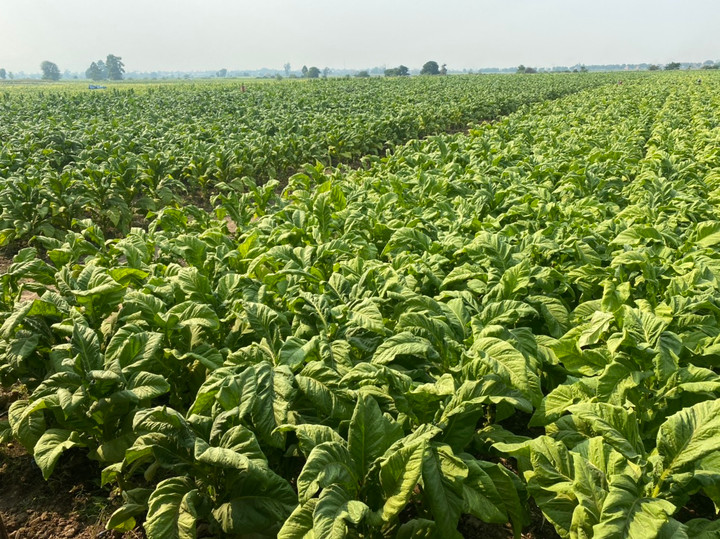
Given the market fluctuations, Vinataba has chosen a cautious operating strategy for 2025.
Alongside its production and business activities, Vinataba continues to implement restructuring aimed at streamlining its organizational structure and improving management efficiency. Intermediate stages are being reviewed and reorganized to reduce fixed costs and increase operational flexibility.
In its investments, Vinataba prioritizes projects that can improve productivity and save costs. Investments that are spread thin and have low efficiency are limited or postponed, in line with the unfavorable market conditions.
In the technology sector, the corporation continues to invest in upgrading its production lines towards automation, while gradually applying digital technology in management. Although the effects may not be immediately apparent in the short term, this is considered an important foundation for the next phase of development.
The challenges remain significant, and the goal is sustainable development.
Entering 2026, the Vietnam Tobacco Corporation (Vinataba) continues to face a challenging market environment, with shrinking growth potential in the tobacco industry while demands for governance, policy compliance, and operational efficiency continue to rise. In this context, Vinataba has identified 2026 as a year to strengthen its foundation and focus on implementing specific solutions to improve efficiency and enhance adaptability.
The first priority in Vinataba's 2026 strategic plan is stabilizing production in line with market demands. The corporation plans to continue managing production based on actual demand, avoiding chasing after high output. Production plans will be developed flexibly on a quarterly basis to control inventory and reduce pressure on working capital. Maintaining a stable market share in the domestic legal market remains a top priority.
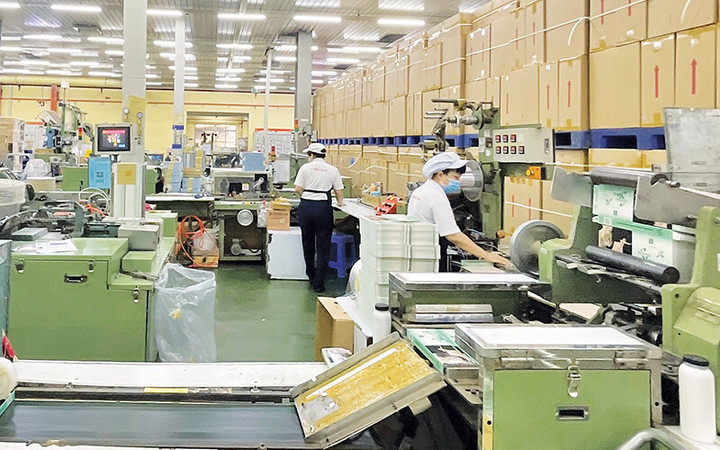
Cigarette production at Saigon Tobacco Company (a member of Vinataba).
Vinataba aims to further improve capital efficiency. In 2026, the corporation will focus on reviewing all expenses, especially indirect costs and logistics costs, to find appropriate cost-saving solutions. Cash flow management will continue to be tightened, debt will be controlled, and the use of short-term capital for long-term investment needs will be limited.
Another key set of solutions is to accelerate restructuring coupled with governance innovation. Vinataba plans to continue streamlining its organizational structure, reducing functional overlap between the parent company and its subsidiaries. The responsibility of leaders will be more closely linked to production and business results and capital efficiency. This is considered a crucial solution to enhance discipline and operational efficiency throughout the entire system.
Vinataba is focusing on key projects in 2026. The top priority is upgrading production lines towards automation, saving raw materials and energy. Simultaneously, the corporation will continue to expand the application of digital technology in management, from accounting and human resources to production operations, aiming to improve labor productivity and reduce management costs.
The corporation plans to focus on strengthening its existing distribution system and improving the efficiency of each sales channel, rather than expanding indiscriminately. Coordination with relevant authorities in combating tobacco smuggling will continue to be intensified, aiming to protect the legitimate market and minimize negative impacts on business operations.
However, Vinataba also clearly recognizes the significant challenges ahead in 2026. Pressure from tax policies and regulations related to tobacco control may continue to impact purchasing power and compliance costs. Furthermore, the demands for digital transformation and productivity enhancement present a challenge in balancing resources, requiring cautious investment.
In this context, Vinataba is committed to a cautious development strategy, focusing on efficiency and sustainability. The synchronized implementation of solutions in production, finance, management, and technology in 2026 is expected to help the corporation enhance its adaptability and maintain its role as a leading enterprise in the domestic tobacco industry.
Source: https://vtcnews.vn/vinataba-2025-giu-nhip-thi-truong-cung-co-nen-tang-ar993048.html
![[Image] Pleasant weather helps students enter the 10th grade entrance exam with confidence.](https://vphoto.vietnam.vn/thumb/1200x675/vietnam/resource/IMAGE/2026/05/29/1780034401612_ngay-1-thi-lop-10-minh-duy-8-5009-jpg.webp)


![[Photo] Ba Lang An Lighthouse - the "eye of the sea" amidst the "rock museum" of Quang Ngai province.](https://vphoto.vietnam.vn/thumb/1200x675/vietnam/resource/IMAGE/2026/05/29/1780038698840_anh-man-hinh-2026-05-29-luc-14-10-42.png)
























































































Comment (0)