

The global gold market has just experienced a series of volatile days, leaving investors shaken. After plummeting to nearly $4,400 per ounce at the beginning of the week, the spot gold price recovered to around $4,500 per ounce on the morning of June 3rd, an increase of nearly 1% from its low.
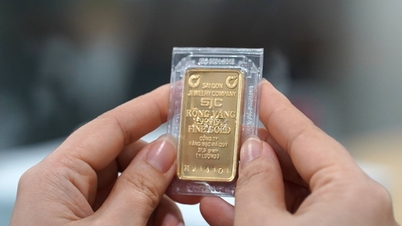
This trend quickly spread to Vietnam. On the morning of June 3rd, SJC, DOJI , and PNJ gold brands simultaneously reduced the price of gold bars to 154-157 million VND/ounce, a decrease of 500,000 VND/ounce compared to the previous session.
The journey from the summit to the descent.
Few expected this shock to come right after the market had just experienced an unprecedented period of rapid growth.
The spectacular "peak" of gold actually began in the first few weeks of 2026. Specifically, the world gold price experienced a strong surge, climbing from around $4,500/ounce to a historical peak of $5,600/ounce on January 29th.
However, this frenzy quickly cooled down in March, as the market witnessed a sharp correction, with gold prices at one point falling below $4,100 per ounce.
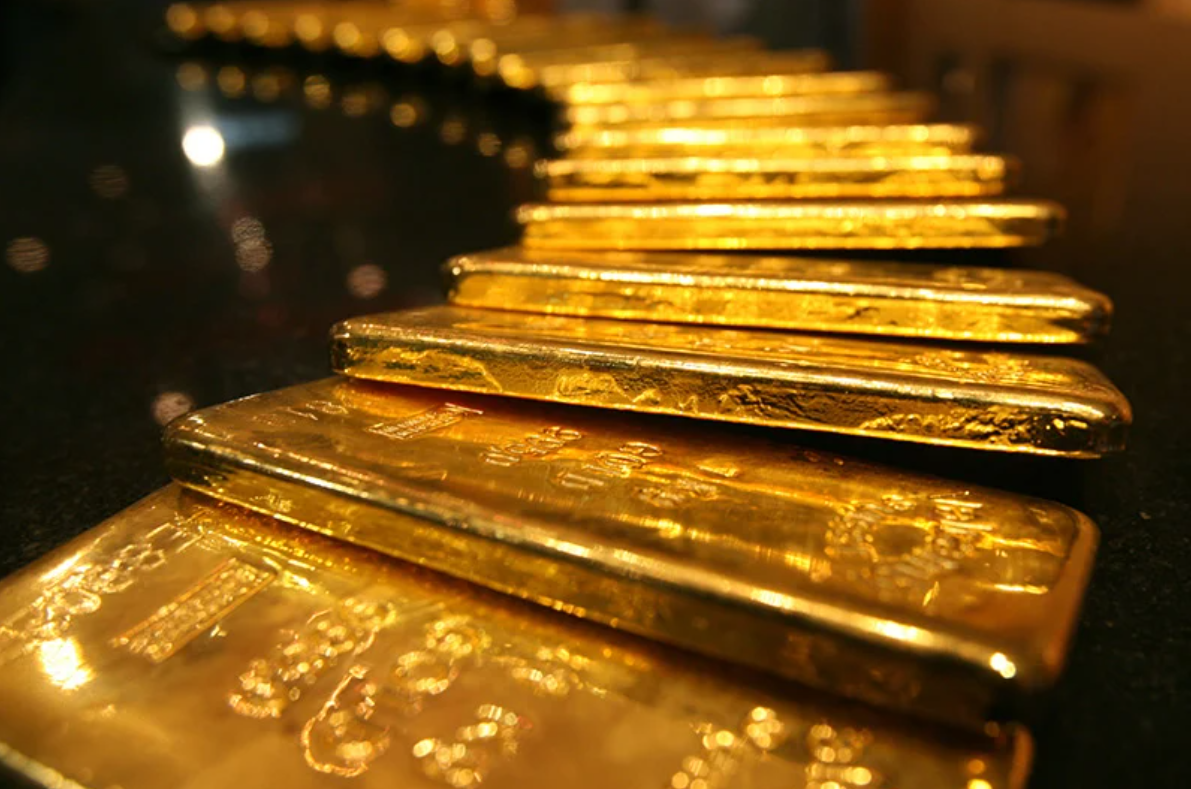
Since then, gold has continuously fluctuated within a wide range and has been under significant pressure. Images of people queuing to buy gold, families rushing into ETFs, and posts "showing off" profits on social media were very common in the early part of the year.
"Gold can only go up" was a common belief among many investors at the time.
Three factors were considered the solid pillars supporting the gold rush at the time: escalating geopolitical tensions, continuous net buying by global central banks, and most importantly, the expectation that the US Federal Reserve (Fed) would soon lower interest rates.
However, things began to change from the end of May. The "collapse" of gold didn't happen spontaneously. The world witnessed the convergence of at least three key factors, creating a "perfect storm."
First and foremost, the interest rate narrative has completely changed. While it was expected that the Fed would soon ease monetary policy, the May Purchasing Managers' Index (PMI) and US employment data both showed the remarkable resilience of the world's largest economy, making it difficult for inflation to cool down quickly.
Additionally, at the end of May, Kevin Warsh – a well-known "hawk" with a tough stance on inflation – was officially sworn in as Chairman of the Fed, replacing Jerome Powell.
News of a Fed chairman advocating for monetary tightening has driven the Dollar Index sharply higher, while the yield on 10-year US Treasury bonds remains high around 4.45%. As real interest rates rise, the opportunity cost of holding gold – a non-yielding asset – becomes too expensive, causing money to turn away.
Secondly , geopolitical factors backfired. Escalating conflicts in the Middle East, along with new airstrikes, caused oil prices to surge by more than 8% in the session.
But this time, instead of seeking refuge in gold, the market panicked because rising oil prices would trigger a resurgence of inflation, further reinforcing the Fed's tightening stance. Interest rate concerns completely overshadowed war fears.
Thirdly , the end of a boom always leaves behind repercussions. After six months of rapid growth, a large amount of profit had been accumulated. From the end of May, large institutions quietly sold off, but individual investors still rushed in. The sell-off created a downward spiral, sweeping away all efforts to maintain prices during tense trading sessions.
What does the future hold for 'safe haven channels'?
Global gold prices remain in a weak, fluctuating state after experiencing a historic plunge. Experts believe that gold is gradually losing some of the supporting factors that previously fueled its upward trend.
Smart money is showing signs of shifting, partly due to the "money-making" effect from the AI sector and technology stocks, which are regaining strong appeal.
In addition, the fact that US tariffs are controlled by a legal framework, the Fed is not politicized, and the budget deficit is slowing down has reduced the valuation reflecting the risks from Trump's policies, pushing gold into an accumulation phase.
Does gold still have a chance to return to its peak? The answer is yes, but the road ahead is fraught with challenges, largely depending on whether the Fed actually changes its monetary policy, as well as whether the geopolitical crisis spirals out of control.
For those holding gold, the fear of losing money remains a daily nightmare. The gold rush of the first half of 2026 seems to have ended, giving way to a volatile and equally dramatic period ahead.
Source: https://vietnamnet.vn/vo-mong-vang-chi-co-len-lieu-co-con-co-hoi-de-quay-lai-dinh-2522205.html

![[Photo] First session of the 14th Congress of the Vietnam Trade Union](https://vphoto.vietnam.vn/thumb/1200x675/vietnam/resource/IMAGE/2026/06/03/1780465947883_ndo_br_img-3852-jpg.webp)
![[Photo] Secretary of the National Assembly Party Committee, Chairman of the National Assembly presides over the meeting of the Standing Committee and Executive Committee of the National Assembly Party Committee.](https://vphoto.vietnam.vn/thumb/1200x675/vietnam/resource/IMAGE/2026/06/03/1780480353201_ndo_br_bnd-2585-jpg.webp)
![[Photo] General Secretary and President To Lam presides over a meeting with the Central Organizing Committee.](https://vphoto.vietnam.vn/thumb/1200x675/vietnam/resource/IMAGE/2026/06/03/1780482764658_a1-bnd-4741-3342-jpg.webp)























































![[Video] Sunset at Lap An Lagoon – Where the sun sets over the fishing nets](https://vphoto.vietnam.vn/thumb/1200x675/vietnam/resource/IMAGE/2026/05/31/1780192137701_beach-landscape-sea-water-nature-grass-745871-pxhere-com.jpeg)






































Comment (0)