

Amidst the vast shrimp farms in the "southernmost" region, where saltwater and freshwater alternate seasonally, ST25 rice grains are quietly telling their own story. It's not just a story about a delicious rice variety, but also a journey of preserving the ecosystem, changing production mindsets, and building trust with consumers.
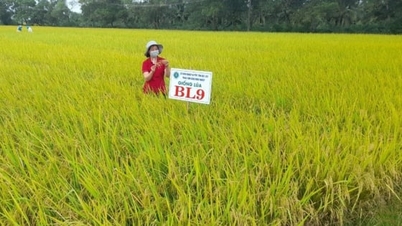
Rice grains are grown on saline soil.
The green bags of rice bearing the brand "Phu Long Cooperative - ST25 Ecological Rice-Shrimp Farming" today are not simply an agricultural product. Behind them lies the sweat of the people of the saline land of Ca Mau, their environmentally friendly farming practices, and their aspiration to bring clean rice to a wider market.
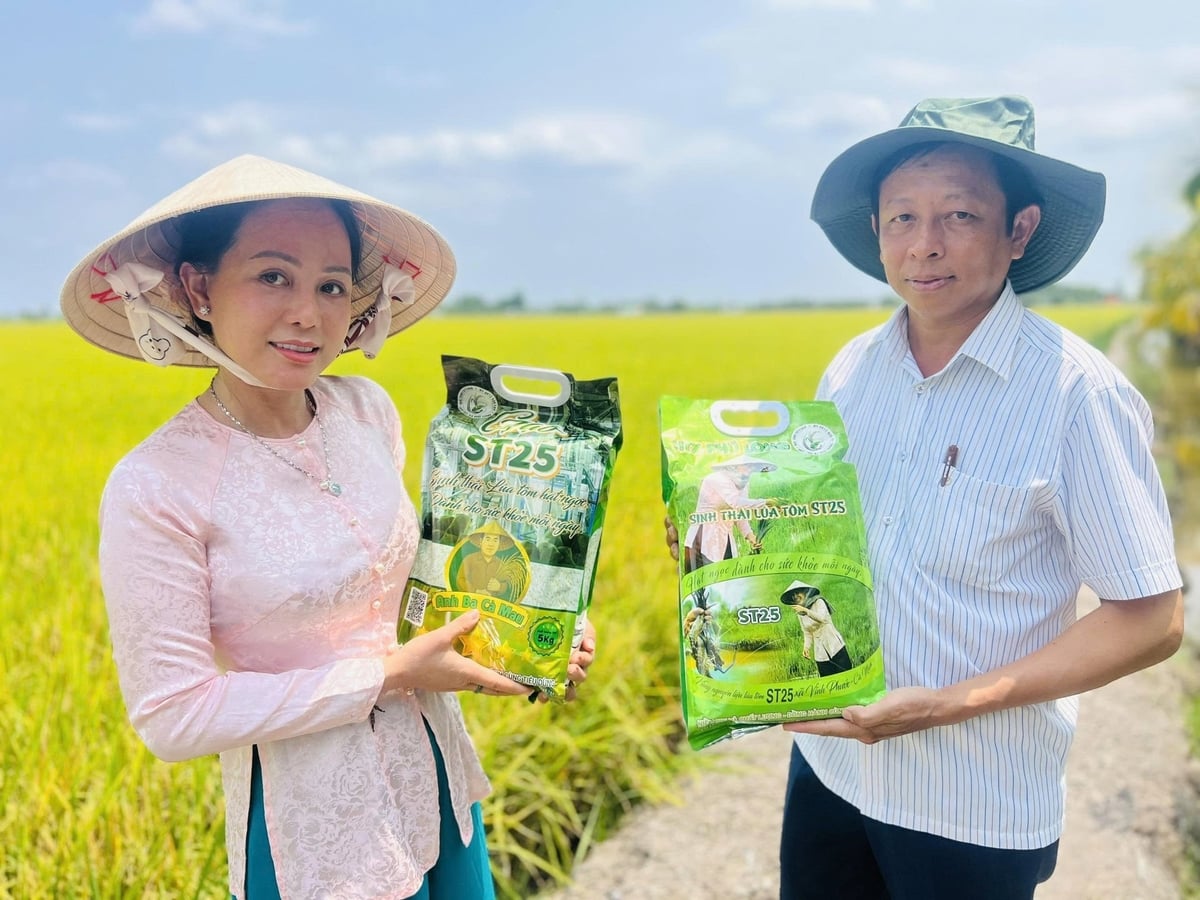
The green rice sacks bearing the brand "Phu Long Cooperative - ST25 Rice-Shrimp Ecology" are the result of the sweat and toil of the people in the saline land of Ca Mau . Photo: Trong Linh.
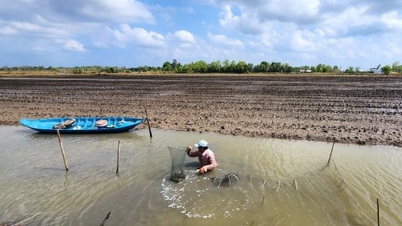
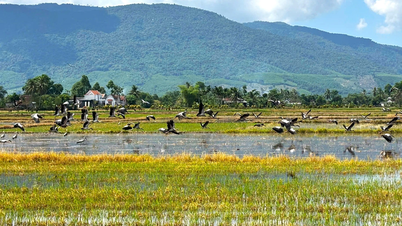
In Vinh Phuoc commune, Ca Mau province, for many years, people have been familiar with the model of one rice crop followed by one shrimp crop. Rice is planted during the rainy season, and saltwater is brought in during the dry season to raise shrimp. These two seemingly opposing production methods support each other, creating a unique ecosystem rarely found elsewhere.
Shrimp farming helps improve the soil, creating a natural source of organic matter. Conversely, rice cultivation contributes to cleaning the water environment before the start of a new shrimp farming season. Therefore, farmers here minimize the use of pesticides and chemical fertilizers.
In the context of increasing consumer concern for clean food, the ecological rice-shrimp farming model has become a sustainable direction. These farms prioritize rice quality and soil health over yield.
Phu Long Cooperative is one of the units pursuing this direction. On the product packaging, the phrases "Precious grains for daily health" or "Trust and quality go hand in hand with consumers" are prominently printed as a commitment from the rice producers.
Notably, the cooperative chose the ST25 variety – a rice highly regarded for its quality and flavor. In the rice-shrimp farming region of Ca Mau, ST25 tells a different story. The rice grains are grown on naturally saline soil with minimal chemical intervention, resulting in soft, fragrant rice that retains its characteristic sweetness.
Many farmers say that although ecological farming is more strenuous and yields are not as high, it results in healthier soil, a more sustainable environment, and products that are well-received by the market.
No longer viewing saltwater as an "enemy".
Previously, rice from rice-shrimp farming areas was mainly sold as raw material, with few people knowing where it was produced. Now, many cooperatives have begun to focus on building their own brands.
The packaging of Phu Long Cooperative is quite eye-catching, featuring images of farmers in rice paddies and shrimp ponds, with a dominant green color scheme that evokes a feeling of closeness to nature. The product also includes a QR code for traceability – an increasingly important feature as consumers want to know what type of rice they are eating and how it was produced.
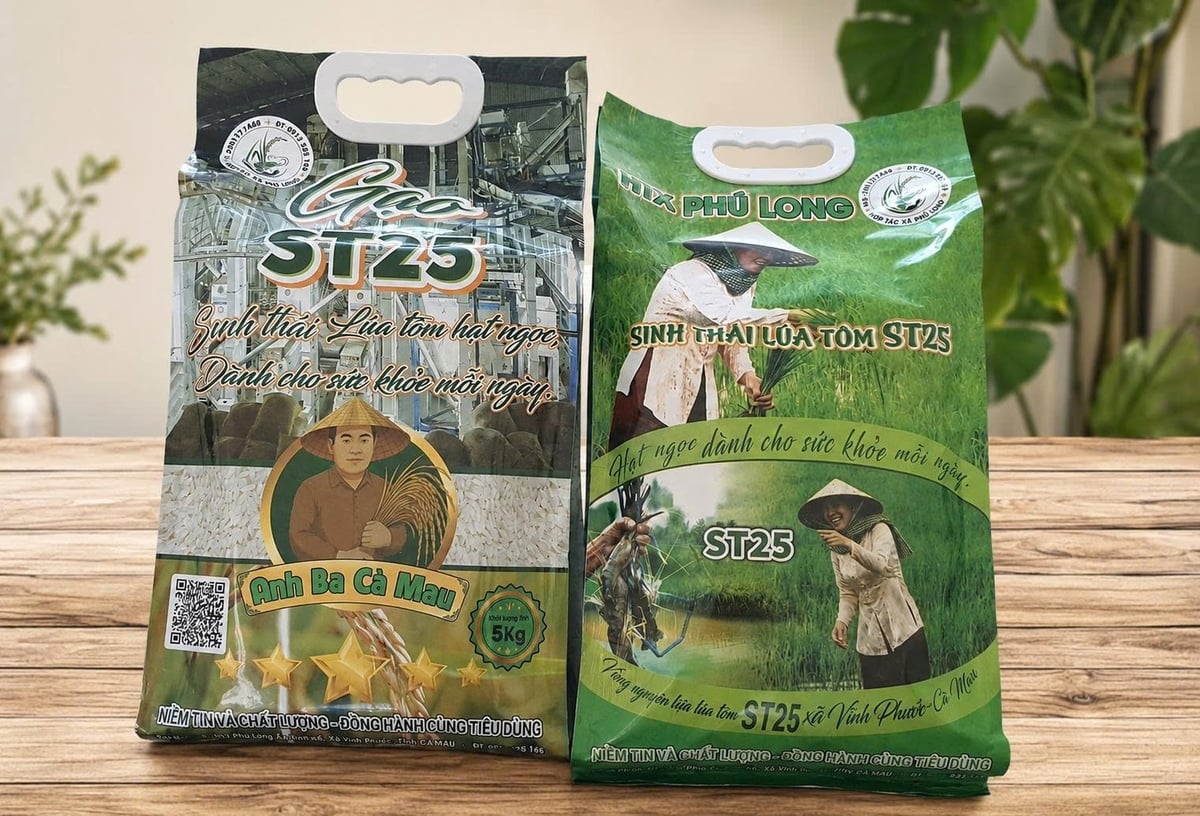
On the product packaging, the phrases "A precious grain for daily health" or "Trust and quality go hand in hand with consumers" are prominently printed as a commitment from the rice producers. Photo: Trong Linh.
Beyond simply selling rice, the cooperative also tells the story of the Vinh Phuoc rice-shrimp farming area. This is a new approach adopted by many producers today: selling not just rice, but also ecological value.
In the context of Vietnam's rice industry's strong shift towards high quality, low emissions, and green growth, such models are seen as a positive sign. For a long time, the biggest challenge for Vietnamese agricultural products hasn't been how much to produce, but how to build lasting trust with the market.
In fact, the rice-shrimp farming model in Ca Mau and many coastal provinces of the Mekong Delta is being evaluated as an effective production approach adapting to climate change. As saltwater intrusion intensifies, "living with salinity" through a model that is in harmony with nature, rather than fighting against it, is showing clear effectiveness.
There, farmers no longer view saltwater as an "enemy" but have transformed it into an integral part of the production process. Shrimp and rice coexist, supporting each other to create double value.
However, for eco-friendly rice to reach a wider market, the market remains a major challenge. Cooperatives need more support in branding, quality standards, traceability, and stable market connections.
In reality, today's consumers are willing to pay more for clean products, but they need transparency and consistency in quality. A brand that wants to survive in the long term cannot rely on just a few good harvests; it must maintain its reputation with every bag of rice.
Looking at the bags of ST25 rice from the rice-shrimp farming region of Ca Mau today, one can see that agriculture in the Mekong Delta is gradually changing. It's no longer just about "producing more," but about making it cleaner, greener, and more sustainable.
From coastal shrimp farms, eco-friendly rice is opening up a new direction for farmers in the "southernmost" region – a place once heavily impacted by climate change but also one striving to adapt. In future Vietnamese meals, there will be more "precious grains" produced from fields that thrive in harmony with nature.
Source: https://nongnghiepmoitruong.vn/vung-dat-man-lam-nen-hat-gao-ngot-d812504.html

















































Comment (0)