

Amidst the volatile market, environmental, and disease situation facing the fisheries sector, Can Tho City is proactively developing a plan for the development of shrimp-rice farming in 2026 to stabilize livelihoods for its people and affirm the value of smart production models that adapt to climate change.
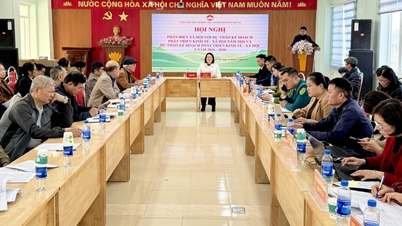
On December 15th, Ms. Quach Thi Thanh Binh, Deputy Director of the Department of Agriculture and Environment of Can Tho City, chaired a meeting to discuss and gather opinions on the draft plan for the development of shrimp-rice farming in Can Tho City in 2026.
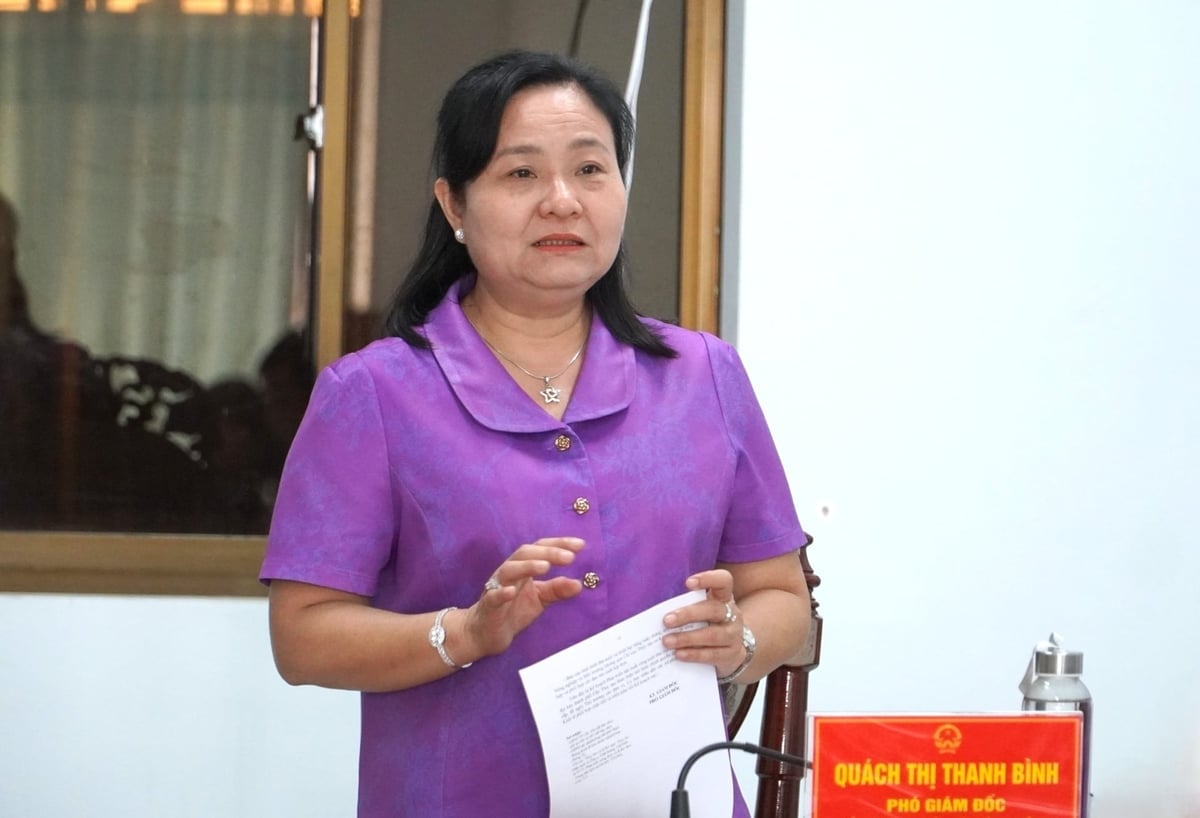
Deputy Director of the Department of Agriculture and Environment, Quách Thị Thanh Bình, affirmed that the shrimp-rice farming model needs to be maintained and developed. Photo: Kim Anh.
According to Ms. Binh, in recent times, shrimp-rice production in Can Tho City has faced many difficulties. For rice, yields have not met expectations, prices are volatile, and economic efficiency is low. Meanwhile, shrimp farming is also facing complex disease outbreaks, rising input costs, and volatile shrimp prices, directly impacting farmers' income.
In light of this situation, the Party Committee and People's Committee of Can Tho City directed the City's Department of Agriculture and Environment to closely monitor the situation. Simultaneously, they developed a plan to implement shrimp-rice farming. The goal of the plan is to both stabilize livelihoods for the people and maintain and develop the shrimp-rice model as a sustainable production solution, adapting to increasingly severe climate change conditions.
The development and promulgation of the shrimp-rice production zone development plan for 2026 is identified as playing a crucial role in proactively responding to environmental and disease risks, promoting the application of science and technology, perfecting the production-consumption value chain, improving economic efficiency, and developing the city's fisheries sector in a safe and sustainable direction.
The draft plan identifies the communes of Hoa Tu, Ngoc To, Nhu Gia, Gia Hoa, Luong Tam, Vinh Vien, etc., as key areas for the application of the shrimp-rice farming model in Can Tho City. Flexible crop rotation methods will be applied, adapted to local conditions, including one crop of tiger shrimp followed by one crop of rice per year, or two crops of whiteleg shrimp followed by one crop of rice.
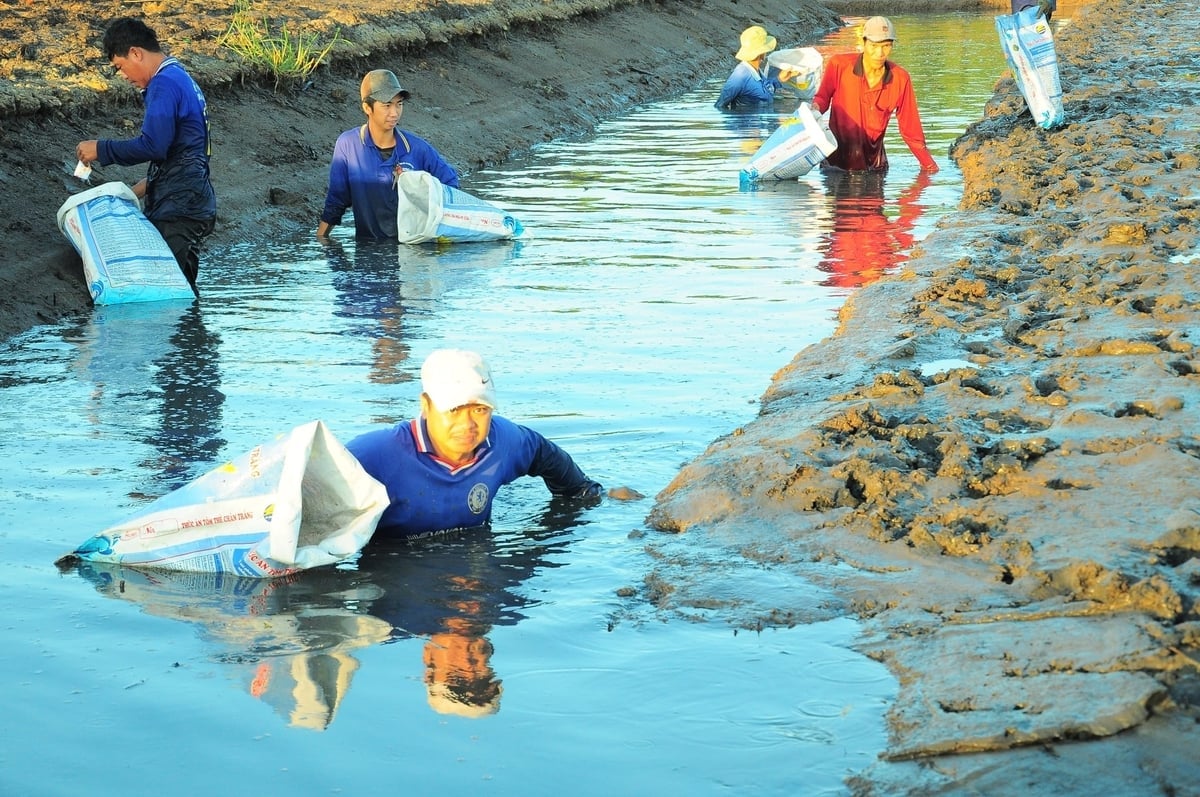
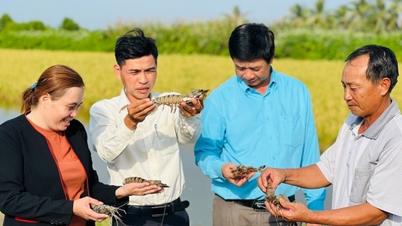
Farmers harvesting shrimp in Vinh Vien commune (Can Tho city). Photo: Kim Anh.
In addition, effective shrimp-rice farming models will continue to be maintained and expanded, such as tiger shrimp - rice - freshwater prawn; shrimp - rice combined with crop cultivation on embankments; and whiteleg shrimp - rice - freshwater prawn, linked with the expansion and improvement of the inland irrigation and drainage system.
The total area for shrimp-rice farming according to the plan for 2026 is approximately 17,700 hectares, of which the area for rice cultivation accounts for about 55% of the area used for shrimp farming.
In terms of productivity, the model of raising tiger shrimp after the rice crop using improved extensive farming is expected to achieve about 0.6 tons/ha, while the semi-intensive farming method will achieve 2.1 tons/ha. For the model of raising whiteleg shrimp after the rice crop using semi-intensive farming, the average productivity is about 3.3 tons/ha.
Mr. Le Van An, Vice Chairman of the Gia Hoa Commune People's Committee, said that the locality has about 3,500 hectares of aquaculture, of which the shrimp-rice farming area accounts for about 2,000 hectares. According to Mr. An, the shrimp-rice farming model still has much room for development in the next 10 years, but it needs specific guidance to avoid spontaneous production that could affect the environment.
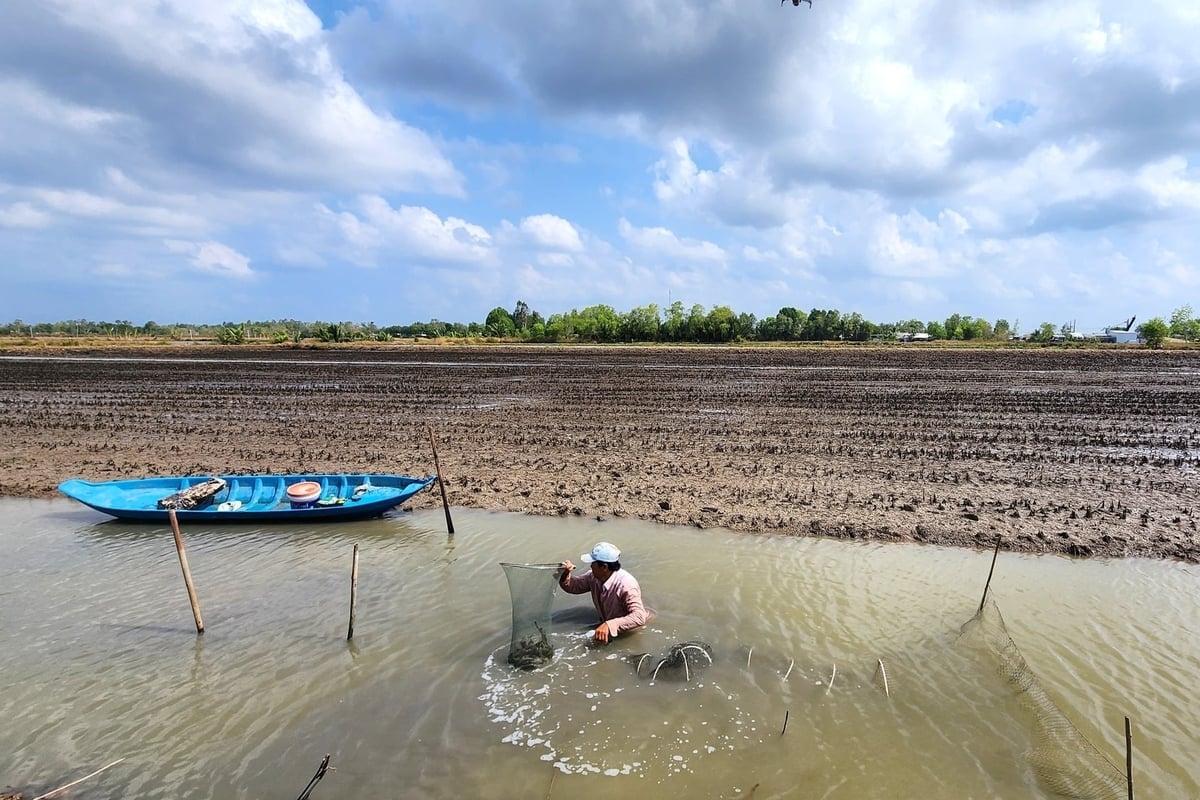
The shrimp-rice farming development plan for 2026 is expected to create an important foundation for the safe, efficient, and sustainable development of Can Tho City's fisheries industry. Photo: Kim Anh.
Mr. Pham Thanh Binh, Vice Chairman of the Hoa Tu Commune People's Committee, stated that the major difficulty currently facing the shrimp-rice farming model is the manual production methods, making mechanization difficult. The local authorities have requested the Department of Agriculture and Environment of Can Tho City to provide solutions to support the provision of suitable machinery and equipment for the shrimp-rice farming area to reduce costs and encourage farmers to switch to this model.
Localities such as Ngoc To and Luong Tam also proposed rebuilding the shrimp-rice farming area map, supporting the development of exemplary models, perfecting technical procedures, and increasing support for mechanization, seeds, and techniques for farmers.
Based on feedback from specialized units and localities, Deputy Director Quach Thi Thanh Binh agreed that in 2026, three models supporting the development of shrimp-rice production will be built in Luong Tam, Ngoc To, and Hoa Tu communes. It is expected that these models will receive support in terms of seeds, feed, farming techniques, consumption linkages, and product certification…
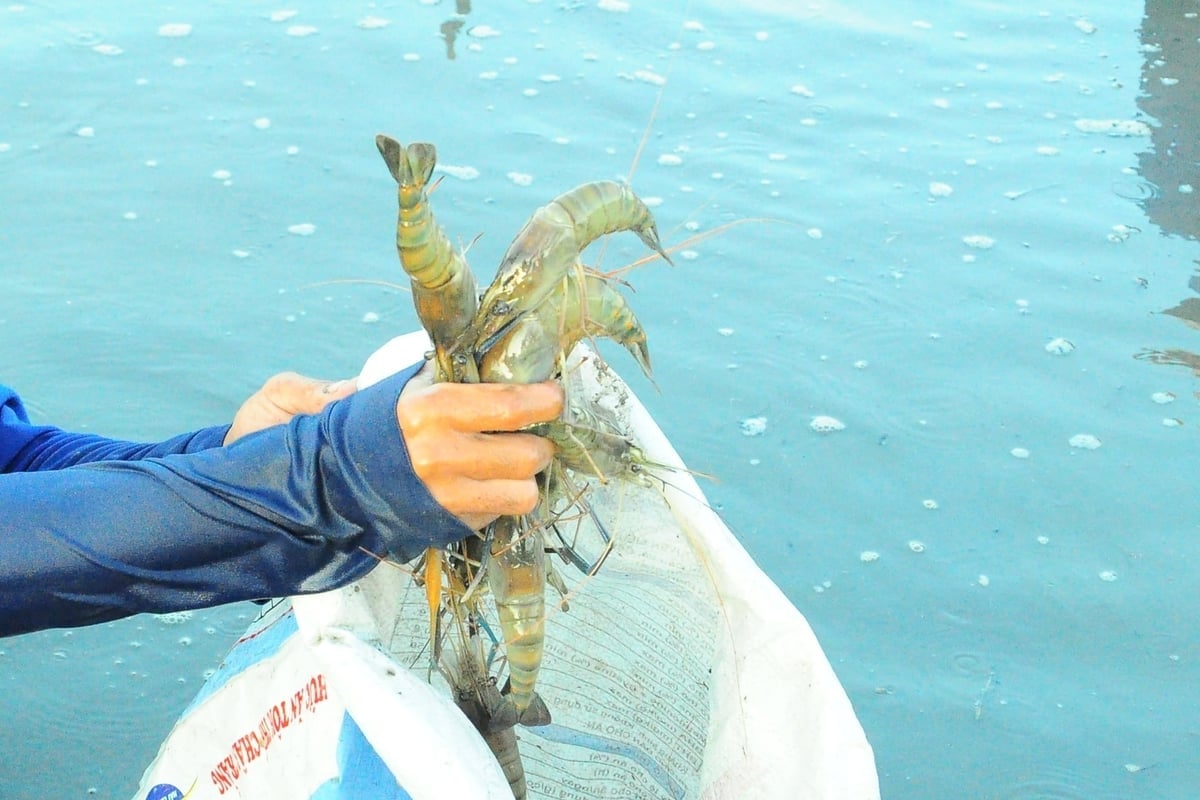
In the coming period, Can Tho City will have policies to encourage the linkage of production and consumption of products for the shrimp-rice farming region. Photo: Kim Anh.
Notably, the Department of Agriculture and Environment of Can Tho City strives to ensure that 100% of shrimp farming households in the shrimp-rice farming area are granted key product codes. Simultaneously, it aims to build at least one supply chain to evaluate the effectiveness of management after implementing the two-tiered local government model, serving as a basis for learning from experience and replicating it in the future.
With a synchronized approach, centered on the people and developing along the value chain, the shrimp-rice production development plan for 2026 is expected to create an important foundation for the safe, efficient, and sustainable development of Can Tho City's fisheries sector.
Source: https://nongnghiepmoitruong.vn/can-tho-huong-den-cap-cap-ma-so-chu-luc-toan-vung-tom--lua-d789866.html
































































Comment (0)