

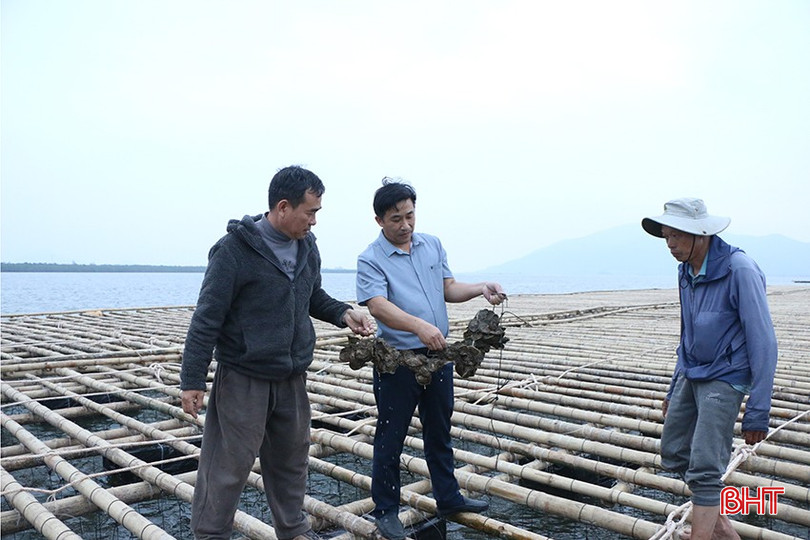
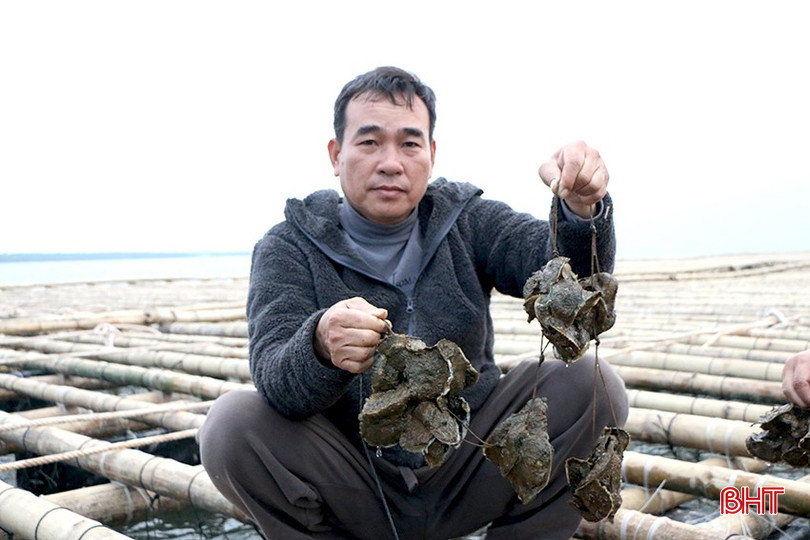
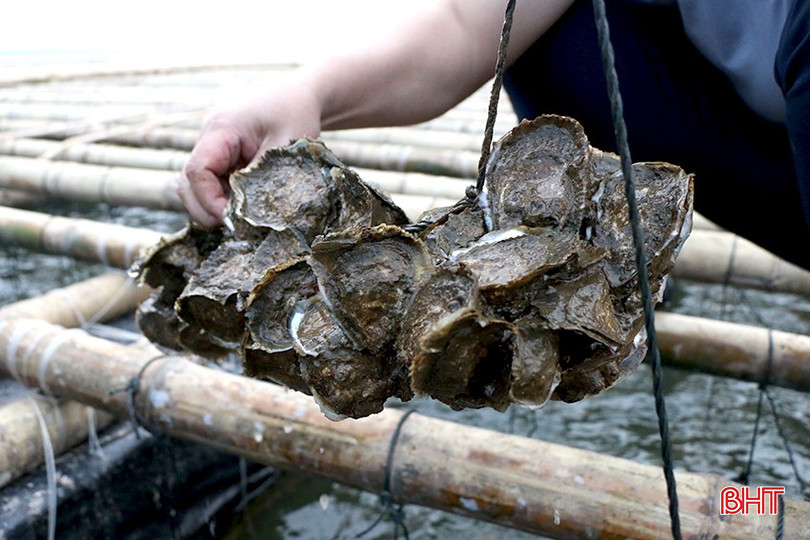
After years of research and learning from experience, Mr. Hoang Van Dao (Vinh Son village) decided to invest 3 billion VND in raising ocean oysters. This is the first model in Thach Khe commune to try its hand at this new type of mollusk. Mr. Dao shared: “The area at the foot of Cua Sot bridge has a large water surface area and is located near the sea, so it has many advantages for developing the cultivation of several species of mollusks with high economic value, especially ocean oysters. I have long harbored the intention of trying this type of farming, researching and visiting ocean oyster farming models in Quang Ninh and Hung Yen provinces. Thanks to the encouragement and support from local leaders and specialized departments, I am confident in implementing the model in a systematic way, ensuring technical procedures.”
Spanning over 1 hectare, he invested in 11 rafts and released 60,000 oyster spat using a hanging method on the Cua Sot River. “I started releasing the spat about 20 days ago. Initially, I released a few rafts to test the spat's adaptability, and the survival rate was very high, suitable for the surveyed area. For this model, although the initial investment is quite high, it doesn't require overly complex technical procedures or labor. The food for ocean oysters is plankton from the water, so it takes advantage of the river's resources and ensures the farming follows a natural process, with almost no impact on the environment. According to estimates, ocean oysters can be harvested in 7-8 months, and the market is huge, especially during peak tourist season. Currently, I have found buyers for my first batch of oysters,” Mr. Dao further shared.
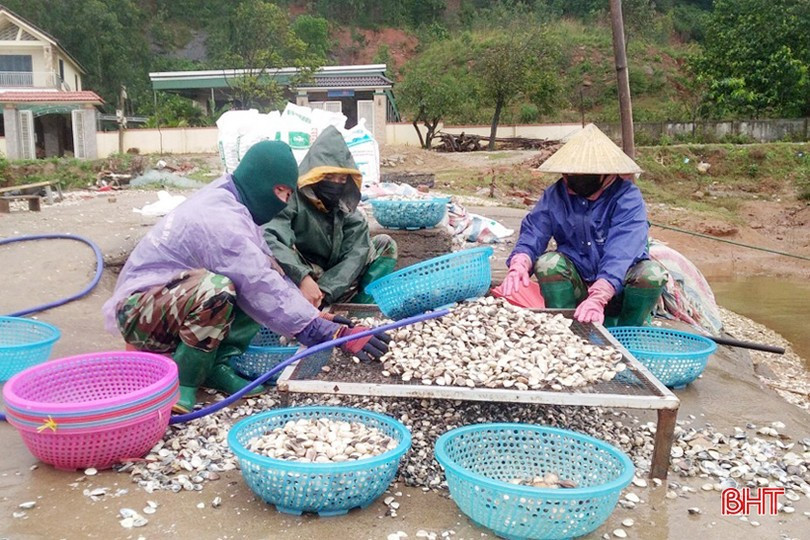
In fact, shellfish farming has existed for a long time in Thach Khe, at the foot of Nam Gioi mountain, a region blessed by nature with vast farming areas and numerous alluvial plains. Taking advantage of this, many local people have developed clam farming, generating high incomes. Currently, the entire commune has over 30 households engaged in clam farming in the alluvial plains along the river and coast.
Dinh Ban Aquaculture Cooperative is one of the earliest establishments to engage in clam farming, starting in 2015. After 10 years, the cooperative has a 60-hectare farming area, producing approximately 700-800 tons annually, achieving a production value of 7-8 billion VND, with a profit margin of about 40-50%, creating jobs and income for many local farmers.
Mr. Duong The Vo, Director of Dinh Ban Aquaculture Cooperative, said: “Currently, clam farming is the main and stable source of income for many people. Especially thanks to the favorable natural conditions, the farming area on the riverbanks near the estuary has a clean environment, and clams from the Cua Sot alluvial plain always yield high-quality products that are favored by the market. Currently, the cooperative has 20 members, and we regularly apply scientific and technical methods, focusing on seed quality to improve production efficiency and provide the market with high-quality products.”
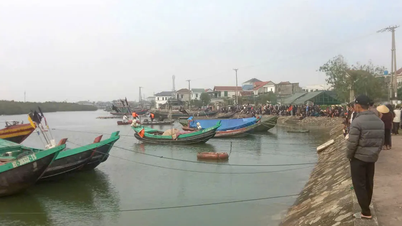
Cua Sot is a large river that receives water from three rivers: the Cay River, the Rao Cai River, and the Nghen River, before flowing into the sea through Cua Sot. Therefore, it is considered to possess unique advantages such as a stable, nutrient-rich water environment with high levels of sediment and plankton, making it very suitable for mollusks like clams, oysters, mussels, and oysters. The Cua Sot area always experiences tidal fluctuations, ensuring constant water exchange and natural purification, limiting disease outbreaks, and reducing care costs for farmers. In addition, the vast tidal flats and alluvial plains along the riverbanks, with their suitable seabeds, become valuable "natural farming grounds." These advantages not only enhance the economic efficiency for people living along the river and coast but also create a foundation for the locality to develop a concentrated mollusk farming area, linked to processing, consumption, and sustainable development in the future.
In the coming time, we will continue to research solutions and apply advanced science, technology, and engineering to mollusk farming models to improve productivity and production efficiency for farmers. In particular, the locality will focus on developing and replicating models, expanding farming areas, and introducing more new high-economic-value species such as ocean oysters, green mussels, and clams… This will diversify products, maximize the advantages of riverside and coastal aquaculture, and create a foundation for the commune to build concentrated farming areas linked to value chains from production and processing to consumption, thereby increasing income and developing sustainable livelihoods for local people."
Mr. Nguyen Viet Hien - Head of the Economic Department of Thach Khe Commune
Source: https://baohatinh.vn/phat-develop-nghe-nuoi-nhuyen-the-tren-song-cua-sot-post301227.html
![[Photo] Prime Minister Pham Minh Chinh receives the Governor of Tochigi Province (Japan)](/_next/image?url=https%3A%2F%2Fvphoto.vietnam.vn%2Fthumb%2F1200x675%2Fvietnam%2Fresource%2FIMAGE%2F2025%2F12%2F16%2F1765892133176_dsc-8082-6425-jpg.webp&w=3840&q=75)

![[Image] Leaked images ahead of the 2025 Community Action Awards gala.](/_next/image?url=https%3A%2F%2Fvphoto.vietnam.vn%2Fthumb%2F1200x675%2Fvietnam%2Fresource%2FIMAGE%2F2025%2F12%2F16%2F1765882828720_ndo_br_thiet-ke-chua-co-ten-45-png.webp&w=3840&q=75)


![[Photo] Prime Minister Pham Minh Chinh receives Lao Minister of Education and Sports Thongsalith Mangnormek](/_next/image?url=https%3A%2F%2Fvphoto.vietnam.vn%2Fthumb%2F1200x675%2Fvietnam%2Fresource%2FIMAGE%2F2025%2F12%2F16%2F1765876834721_dsc-7519-jpg.webp&w=3840&q=75)










































![[Photo] Prime Minister Pham Minh Chinh attends the Vietnam Economic Forum 2025](https://vphoto.vietnam.vn/thumb/402x226/vietnam/resource/IMAGE/2025/12/16/1765893035503_ndo_br_dsc-8043-jpg.webp)





















Comment (0)