

Needs arising from practice
As production capacity stabilizes, the biggest challenge for many startups shifts to scaling up to meet the demands of the rapidly changing international market, which requires consistent output.
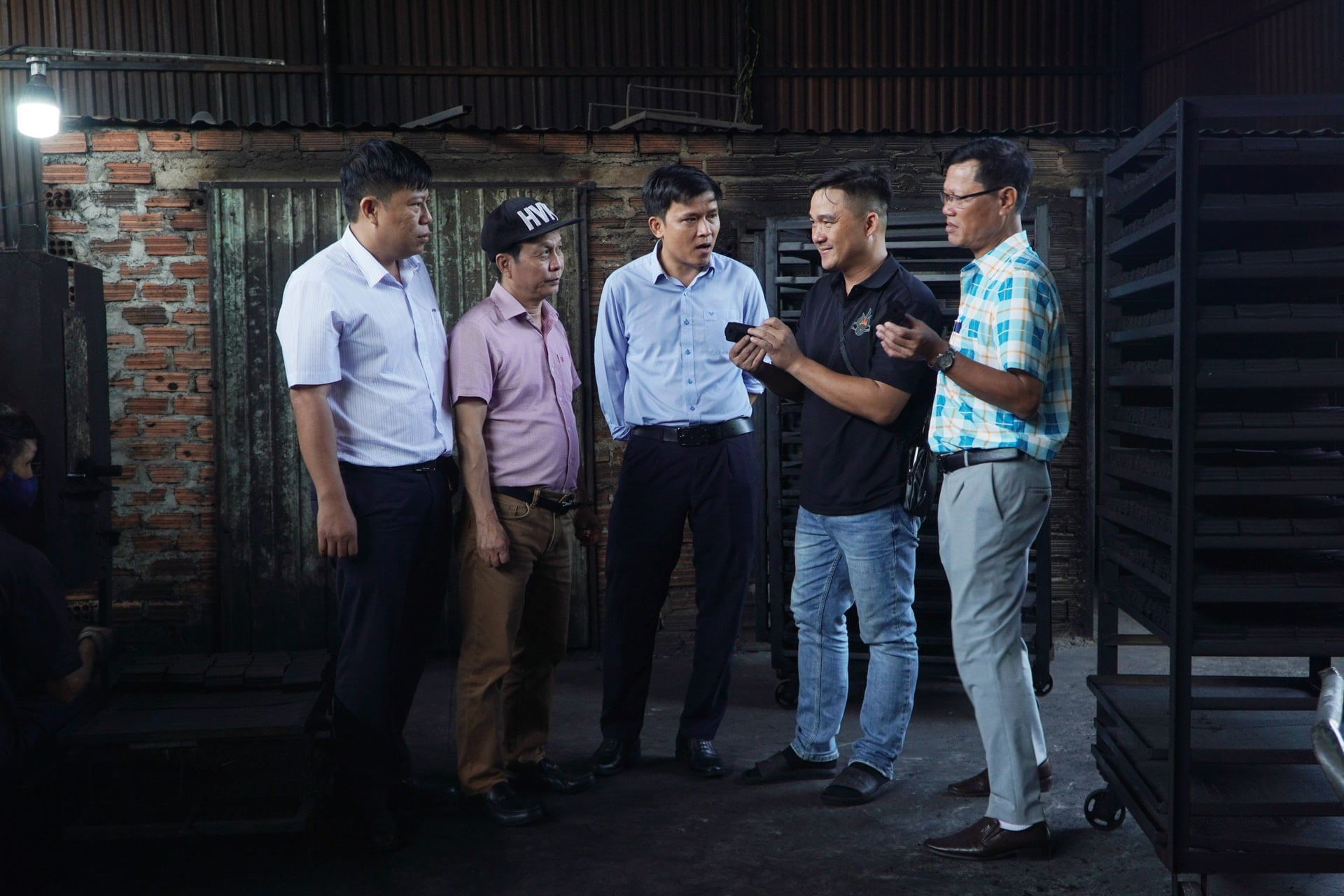
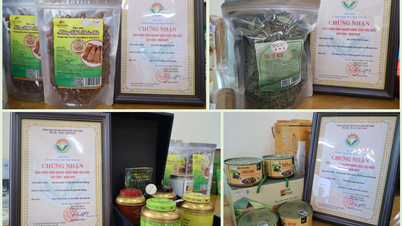
Based on practical experience, Mr. Nguyen Xuan Son, Director of Huong Que Production - Processing - Trading - Import & Export Co., Ltd., a company specializing in producing shoe insoles from cinnamon bark, believes that market demand is always higher than existing capacity, but the business still faces limitations in investment capital and production equipment.
“We have orders and a market, but increasing capacity requires medium and long-term capital. If we can access the right resources to invest in machinery and production systems, the business can expand immediately. The difficulty lies in the fact that small businesses find it very hard to meet the collateral requirements for loans, while market time doesn't wait,” Mr. Son shared.
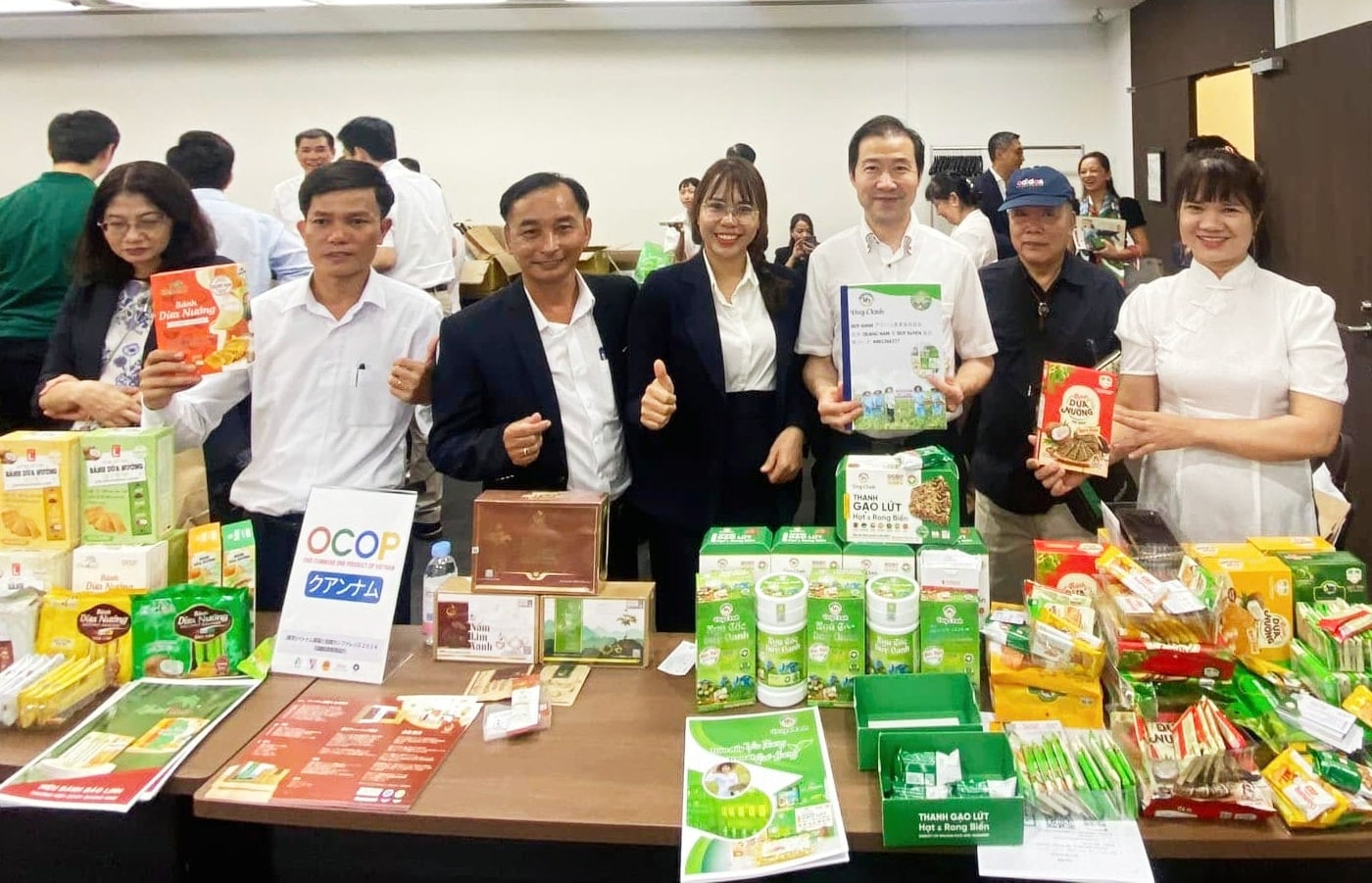
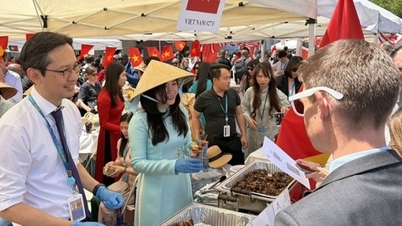
Meanwhile, Mr. Phan Dinh Tuan, Director of Bao Linh Production and Trading Co., Ltd., believes that building a brand and participating in international trade fairs and exhibitions plays a crucial role in helping local products gradually establish themselves in the market.
"Many products are of good quality, but lack the opportunity to directly access international markets. If supported in participating in trade promotion events, businesses can reach customers, understand market demands, and adjust their products accordingly," Mr. Tuan commented.
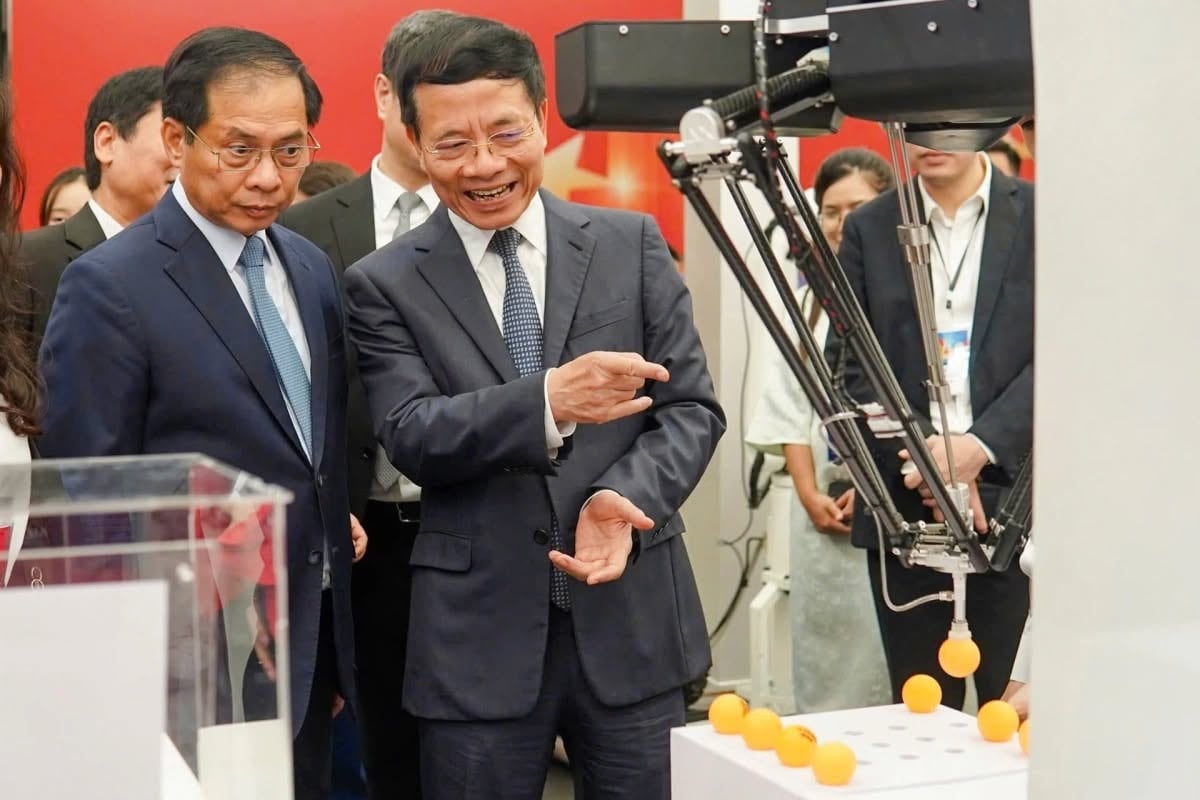
In the technology sector, the story offers a different perspective on ecosystem needs. Doan Hong Trung, CEO and founder of Delta X – a company specializing in robot manufacturing – argues that for a technology startup to achieve sustainable exports, the human element plays a crucial role, as it forms the foundation for product development, revenue generation, and long-term strategy building.
“Besides difficulties with capital and standards, the lack of a synchronized support ecosystem is also a major obstacle. Businesses need more specific policies on finance, legal matters, and market connections, as well as support for housing for high-quality personnel, more flexible loan mechanisms, and land for production development,” Trung shared.
According to the founder of Delta X, the establishment of production, testing, and certification centers is also crucial, helping businesses shorten the time it takes to perfect products before launching them internationally. With a strong "support system," startups will be able to develop in stages, instead of having to fend for themselves in the early, risky phase.
Support from policy
With an increasing number of startups choosing to enter international markets early, local support policies are also gradually adjusting to provide deeper support to businesses.
One of the key pillars is the specific framework adopted by the National Assembly in Resolution No. 259/2025/QH15 dated December 11, 2025, amending and supplementing several articles of Resolution No. 136/2024/QH15 dated June 26, 2024, opening up a space for testing new models, including the Da Nang Free Trade Zone. This space is positioned as a platform to support businesses operating in the manufacturing, logistics, and high-tech sectors, with preferential tax policies and streamlined administrative procedures. This is considered a crucial condition for startups to gradually develop their competitiveness when participating in the international market.
Simultaneously, policies supporting startups directly have been concretized through resolutions of the City People's Council, allowing for the implementation of support packages from the state budget at various stages, from incubation to acceleration. In practice, this resource helps many businesses refine their products and test the market before entering export orders with higher quality and scale requirements.
Notably, from a production support perspective, the industrial promotion program is playing a crucial role in assisting businesses to upgrade equipment and improve processes to meet international standards. Mr. Dinh Van Phuc, Deputy Director of the Center for Industrial Promotion and Trade Promotion, stated that the current support focuses on environmentally friendly production models with high added value and a clear export orientation.
"We prioritize businesses that can participate in global value chains, especially those with products that leverage local raw material advantages and meet requirements for traceability and environmental protection. Support goes beyond just equipment; it also includes accompanying businesses throughout the process of transforming their production models towards sustainability," Mr. Phuc stated.
Another noteworthy point is the city's increased support for businesses in obtaining international certifications such as ISO, HACCP, GlobalGAP, as well as green standards that are gradually becoming mandatory in many markets. Along with this, support for registering intellectual property protection abroad helps businesses minimize risks during market expansion.
At the foundational level, investment in infrastructure and digital transformation is seen as a long-term strategy. High-tech zones, free trade zones, and preferential land policies are creating conditions for businesses to expand production, while technology application support programs help startups gradually access global operating methods.
More broadly, these policies are contributing to the formation of a relatively clear support "corridor" for export-oriented startup projects. In this context, each business entering the international market is no longer alone, but gradually gains support to overcome barriers related to capital, standards, and markets, progressively building the position of Vietnamese products in the global value chain.
Source: https://baodanang.vn/xay-dung-he-sinh-thai-ho-tro-ben-vung-3329862.html

![[Photo] General Secretary and President To Lam presides over a meeting with the Central Organizing Committee.](https://vphoto.vietnam.vn/thumb/1200x675/vietnam/resource/IMAGE/2026/06/03/1780482764658_a1-bnd-4741-3342-jpg.webp)

![[Photo] First session of the 14th Congress of the Vietnam Trade Union](https://vphoto.vietnam.vn/thumb/1200x675/vietnam/resource/IMAGE/2026/06/03/1780465947883_ndo_br_img-3852-jpg.webp)
![[Photo] Secretary of the National Assembly Party Committee, Chairman of the National Assembly presides over the meeting of the Standing Committee and Executive Committee of the National Assembly Party Committee.](https://vphoto.vietnam.vn/thumb/1200x675/vietnam/resource/IMAGE/2026/06/03/1780480353201_ndo_br_bnd-2585-jpg.webp)









































![[Video] Sunset at Lap An Lagoon – Where the sun sets over the fishing nets](https://vphoto.vietnam.vn/thumb/1200x675/vietnam/resource/IMAGE/2026/05/31/1780192137701_beach-landscape-sea-water-nature-grass-745871-pxhere-com.jpeg)


























Comment (0)