

The ecosystem for leveraging FTAs in the fisheries sector helps businesses optimize the benefits from FTAs and promotes cooperation between regulatory agencies and businesses.
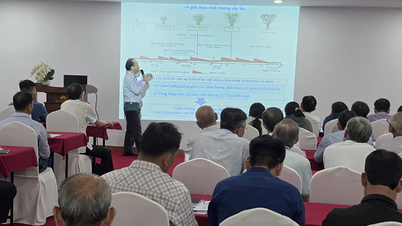
On the morning of November 18th, in Tam Ky City, the Multilateral Trade Policy Department of the Ministry of Industry and Trade , in coordination with the Department of Industry and Trade of Quang Nam province, organized a seminar to directly exchange ideas with business leaders in provinces and cities about leveraging FTAs, including the EVFTA Agreement, in the fisheries sector in Quang Nam.
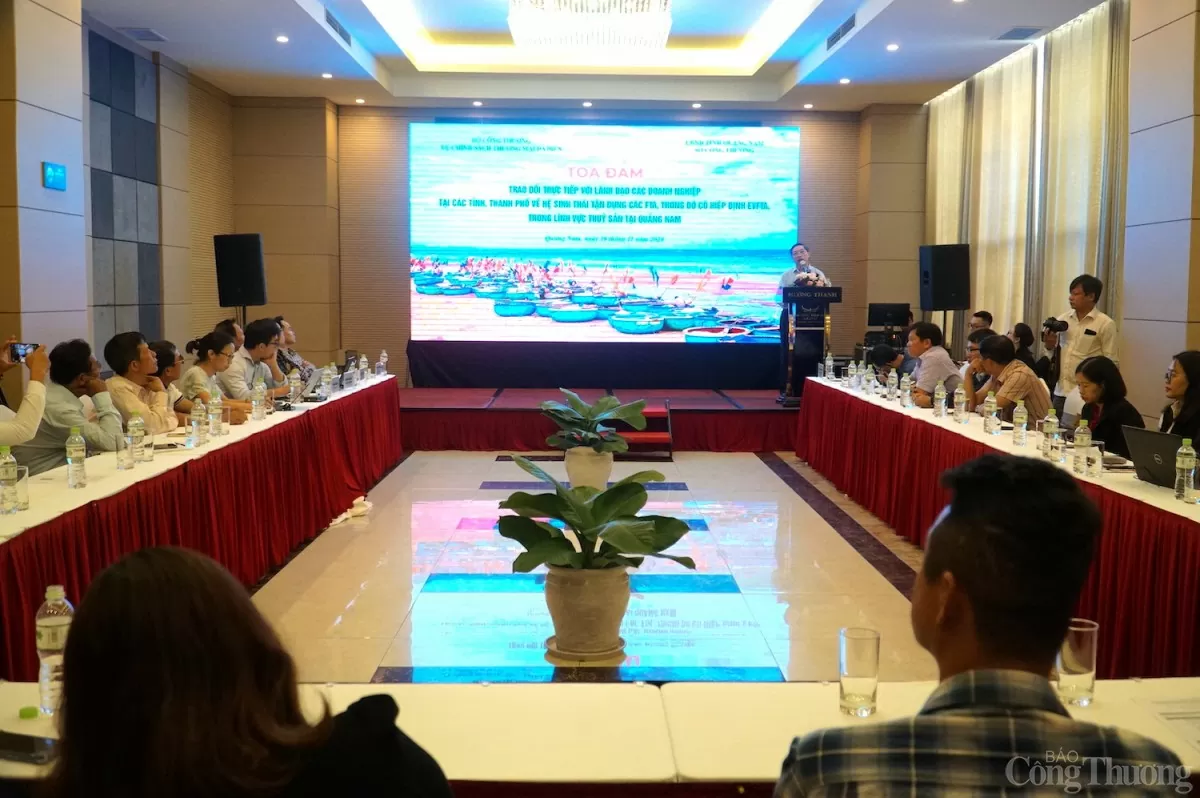 |
| A discussion with business leaders on the ecosystem for leveraging FTAs, including the FTA in the fisheries sector, was held in Quang Nam province. |
At the conference, Mr. Huong Van Minh, Deputy Director of the Department of Industry and Trade of Quang Nam province, stated that in recent years, the Free Trade Agreements (FTAs) signed by Vietnam have made a positive contribution to the import and export of goods nationwide in general and in Quang Nam province in particular, achieving positive results. Businesses have taken advantage of many benefits to promote trade, bringing products and goods to many large markets around the world , boosting production and business activities, and expanding markets.
In Quang Nam province, according to representatives from the Provincial Department of Industry and Trade, import and export activities in the seafood sector are gradually improving and increasing in proportion. According to data from the Quang Nam Customs Department, export turnover reached US$88 million in the 2020-2023 period, achieving a growth rate of 2.5% per year, and in the first eight months of 2024, export turnover exceeded US$15 million. Exports focused on items such as: octopus, frozen seafood-filled pastries, various types of fish, squid, frozen shrimp, tuna steak, seasoned dried fish, etc., to markets in China, Australia, South Korea, Japan, Hong Kong (China), Thailand, and other countries.
However, Quang Nam's fisheries sector still faces many difficulties, such as the small scale of exports; the fact that exported seafood is mainly processed seafood; the lack of modern technology investment in fisheries infrastructure; low added value in the fisheries sector; only a few fisheries enterprises have adopted high-tech models for shrimp products; and a lack of linkages among fisheries enterprises.
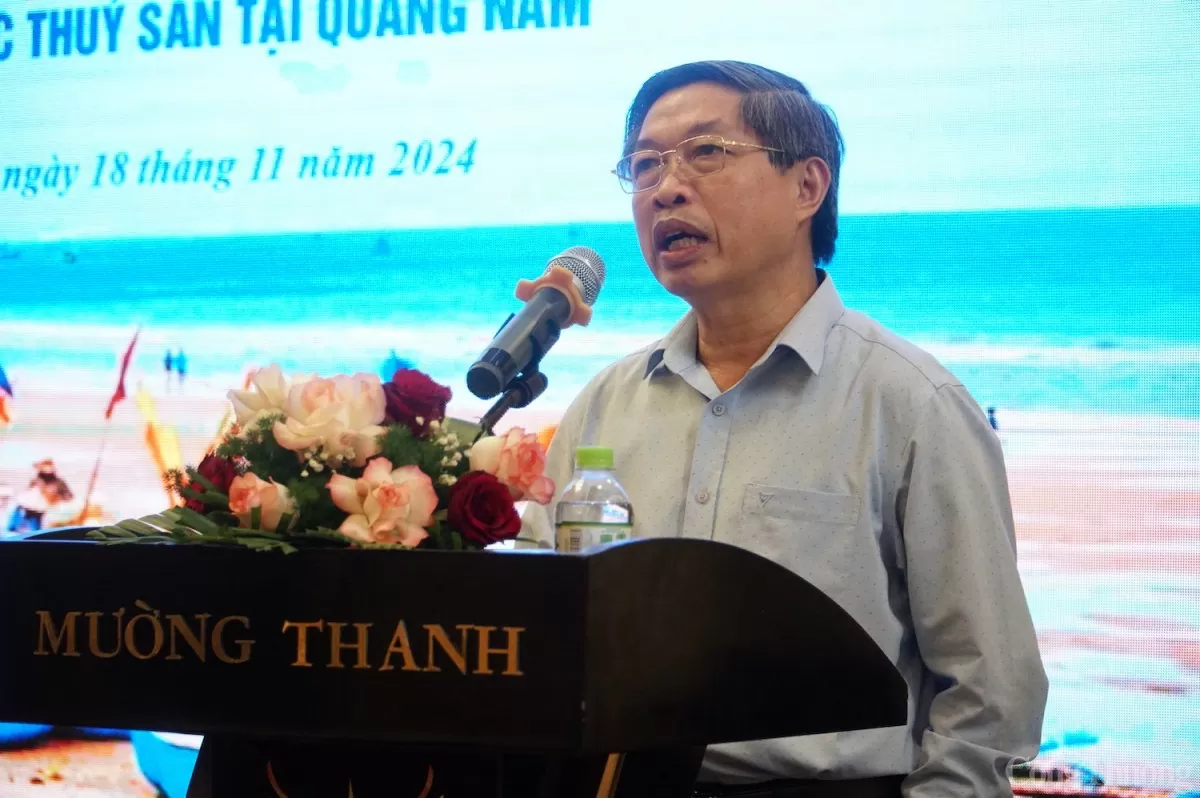 |
| Mr. Huong Van Minh - Deputy Director of the Department of Industry and Trade of Quang Nam province |
Mr. Huong Van Minh stated that in the coming time, Quang Nam province will gradually increase aquaculture production; invest in building high-tech and modern infrastructure for aquaculture areas; form a production and consumption chain linking businesses with aquaculture households; and increase exports to European and American markets to take advantage of the benefits from agreements such as CPTPP, EVFTA, and UKVFTA… “ Through this seminar, the Department of Industry and Trade of Quang Nam province hopes to provide useful information to relevant units in the field of seafood processing and export. At the same time, we aim to build an ecosystem to jointly address difficulties and obstacles, maximize opportunities, and minimize risks from FTAs to develop production and boost exports,” Mr. Huong Van Minh said.
At the program, delegates were updated on existing issues in Vietnam's fisheries industry and seafood exports to FTA partner markets (focusing on CPTPP, EU, and UK markets); introduced to the ecosystem for leveraging FTAs, including problem-solving, methods, roadmap for development, and benefits from building and operating such an ecosystem; and exchanged ideas and provided feedback on the content of the plan for operating the FTA ecosystem for the fisheries sector.
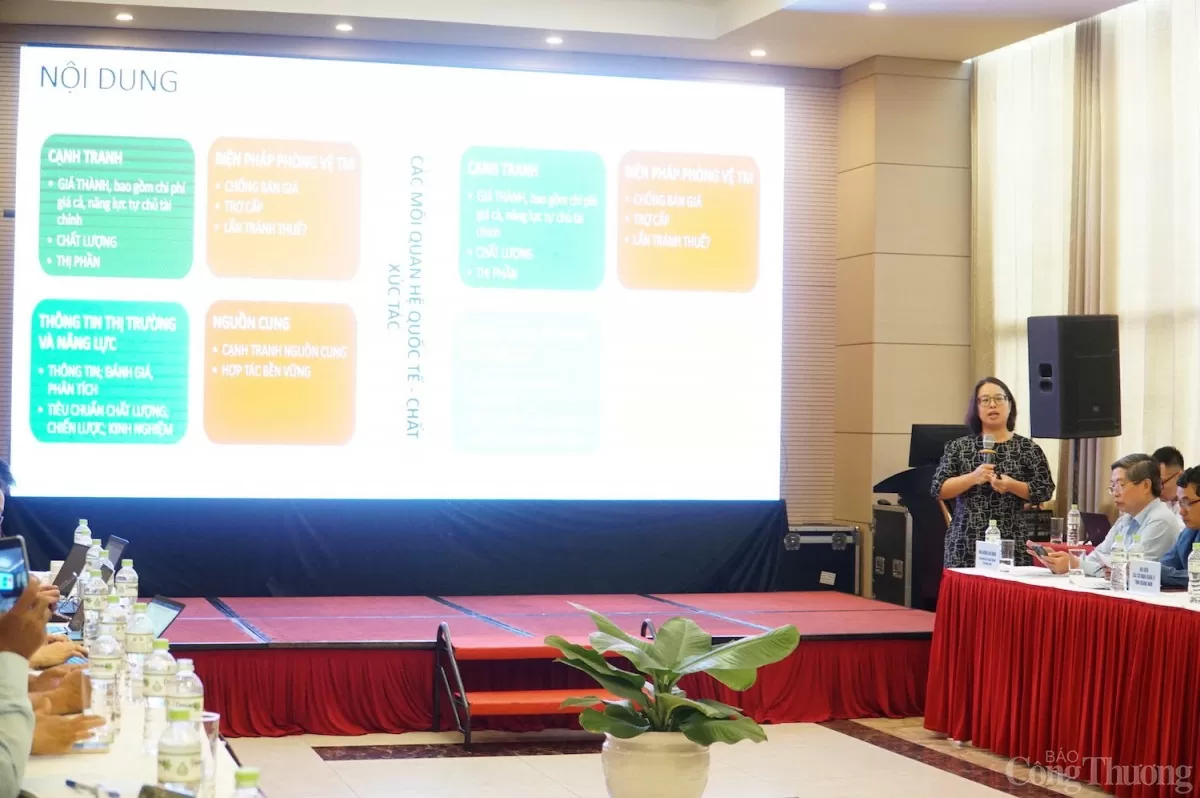 |
| Ms. Nguyen Thuy Linh - Department of International Cooperation, Ministry of Agriculture and Rural Development, provided information on the existing problems of the Vietnamese fisheries sector and seafood exports to FTA partner markets. |
Assessing the difficulties, challenges, opportunities, and advantages for Vietnam's seafood industry, Ms. Nguyen Thuy Linh – Head of International Cooperation Department, Ministry of Agriculture and Rural Development, stated that in seafood export activities, Vietnamese and international businesses must understand four main factors: Competition (competition in price, quality, and market share), safeguard measures (anti-dumping, subsidies, and tax evasion); market information and capacity; and supply (competition in supply, sustainable cooperation). The distinguishing factor between Vietnamese businesses and the world is international relations – a catalyst.
Specifically regarding competitiveness, Vietnamese seafood businesses have a significant advantage due to their increasingly prominent position internationally. Furthermore, Vietnam is one of the world's leading countries in economic openness and international integration, with 20 Free Trade Agreements (FTAs) already negotiated or under implementation. Vietnam also benefits from low labor costs and increasingly streamlined procedures. However, Vietnamese seafood businesses still face difficulties and challenges related to transportation costs, the rudimentary and limited ability to preserve seafood products, small scale operations, weak financial capacity, and difficulties in obtaining raw materials, resulting in high production costs.
To leverage and maximize the advantages of FTAs in the fisheries sector, Ms. Nguyen Thi Thuy Linh believes that the aforementioned difficulties and shortcomings need to be addressed. These include reducing costs through the improvement and modernization of transportation and other logistics, with particular emphasis on seafood traceability; aiming for antibiotic self-sufficiency; ensuring a proactive approach to raw material supply; and implementing credit support policies such as diversifying products and credit resources, ensuring easy access to loans, and amending Decree 67.
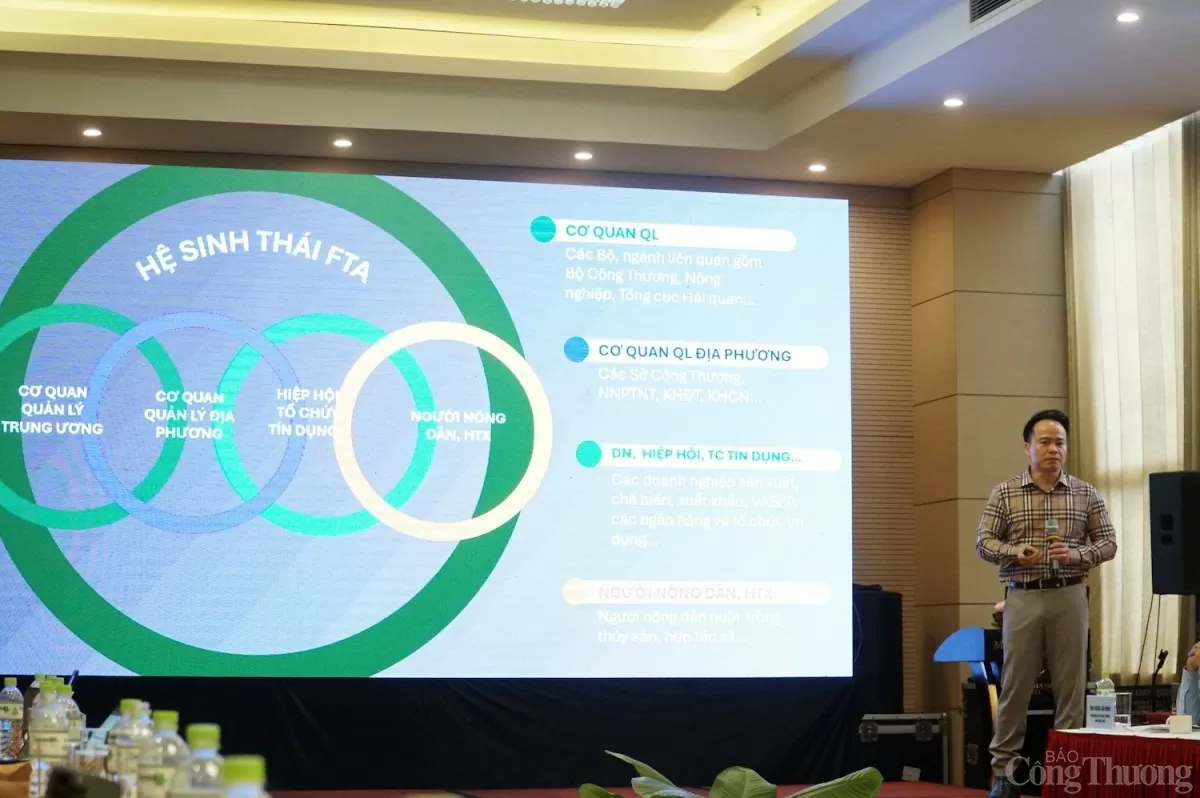 |
| Mr. Ngo Chung Khanh - Deputy Director of the Multilateral Trade Policy Department, Ministry of Industry and Trade |
Mr. Ngo Chung Khanh, Deputy Director of the Multilateral Trade Policy Department, stated that Vietnam is currently negotiating, signing, and implementing 20 free trade agreements (FTAs), with 16 out of 20 already in effect. Currently, many sectors, including the fisheries sector, have not fully utilized the benefits from these FTAs. To support businesses in effectively leveraging and maximizing the benefits of FTAs, the Ministry of Industry and Trade is developing an FTA ecosystem to link four key stakeholders: central government agencies; local government agencies; businesses, business associations, and credit institutions; and the people and cooperatives (aquaculture farmers, cooperatives, etc.). The goal of this ecosystem for leveraging FTAs in the fisheries sector is to help businesses optimize the benefits from FTAs; build a culture of connection and cooperation; and promote collaboration between government agencies and businesses.
| The FTA Ecosystem Project is being developed based on feedback from businesses and relevant agencies across six industry groups (textiles, seafood, etc.). Regarding the project's implementation roadmap, feedback will be gathered for the draft project in 2024. A draft of the FTA Ecosystem Project will be developed and feedback will be solicited in January 2025. A national conference will be held in April 2025 to gather feedback on the overall draft project. The project will be submitted to the Prime Minister in May 2025, and a working group will be established. Official implementation is expected to begin in September 2025. |
Source: https://congthuong.vn/quang-nam-xay-dung-he-sinh-thai-tan-dung-fta-trong-linh-vuc-thuy-san-359389.html
![[Photo] General Secretary and President To Lam presides over a meeting on the implementation of Directive No. 34-CT/TW of the Party Central Committee.](https://vphoto.vietnam.vn/thumb/1200x675/vietnam/resource/IMAGE/2026/05/19/1779187768672_a1-bnd-2350-631-jpg.webp)
![[Photo] National Assembly Chairman Tran Thanh Man attends the groundbreaking ceremony for the National Highway 1A spatial axis project.](https://vphoto.vietnam.vn/thumb/1200x675/vietnam/resource/IMAGE/2026/05/19/1779161360398_ndo_br_bnd-1412-jpg.webp)
![[Photo] Capturing the moment the tide recedes at Yen Binh Son rapids - a million-year-old scenic spot in Quang Ngai.](https://vphoto.vietnam.vn/thumb/1200x675/vietnam/resource/IMAGE/2026/05/19/1779175463885_yen9-1199-jpg.webp)


































![[Photo] General Secretary and President To Lam receives Indian Defense Minister Rajnath Singh](https://vphoto.vietnam.vn/thumb/402x226/vietnam/resource/IMAGE/2026/05/19/1779184046302_anh-man-hinh-2026-05-19-luc-16-46-58.png)
















Comment (0)