

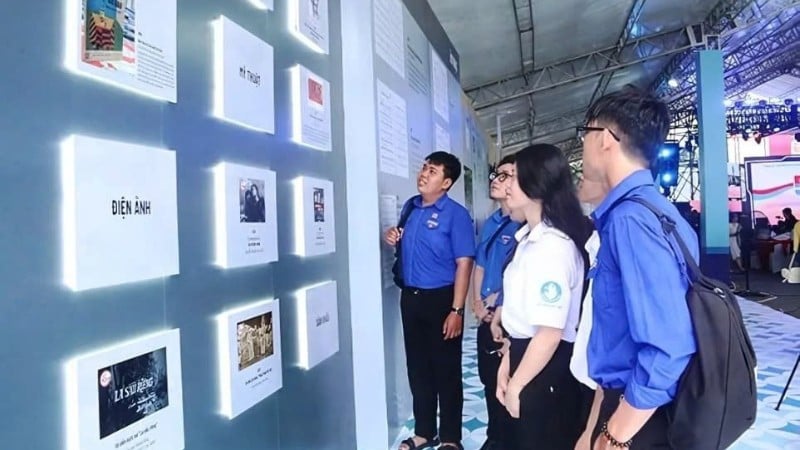
Establishing a strategic development direction for literature and art has become an urgent requirement, not only to preserve and promote national identity but also to integrate Vietnamese culture and people strongly into international life, contributing to the sustainable development of the country.
The demands of the times
Throughout history, Vietnamese literature and art have achieved remarkable successes. From rich and distinctive folk literature to classic literary works, from traditional theater to modern cinema, music , and fine arts, many works have affirmed their ideological and artistic values and left a lasting mark on the community's consciousness.
Many of his works have been translated and introduced to the world , winning international awards and contributing to bringing the image of Vietnam and its people closer to friends around the globe.
Currently, the involvement of a younger generation of artists, along with their awareness of preserving traditional cultural values and actively absorbing the best of human culture, has created a new wave in the creative arts and literature of our country.
However, it is also necessary to face the reality: Vietnamese literature and art still lack long-term and comprehensive development strategies. Artistic activities are often fragmented, lacking interdisciplinary coordination to create an ecosystem that nurtures outstanding works.
The markets for books, theater, film, and music have not yet formed a sufficiently strong structure to sustainably support creative work. Meanwhile, imported cultural products are flooding in rapidly, diversely, and with high quality, creating fierce competition.
In the context of changing public tastes and a growing dominance of purely entertainment-oriented trends, aesthetic education and the cultivation of healthy artistic sensibilities have become strategic tasks.
It is evident that the exchange and influence of global intellectual and cultural trends are inevitable, but without strategic direction, the spiritual life of society can easily be swept away by short-sighted, superficial tastes, diminishing cultural depth.
Since the August Revolution of 1945, Vietnamese literature and art have always been closely linked to the revolutionary cause. President Ho Chi Minh once affirmed: "Culture and art are also a battlefront. You are soldiers on that battlefront." This guiding principle has become the compass for building a revolutionary literature and art, for the people and for the Fatherland.
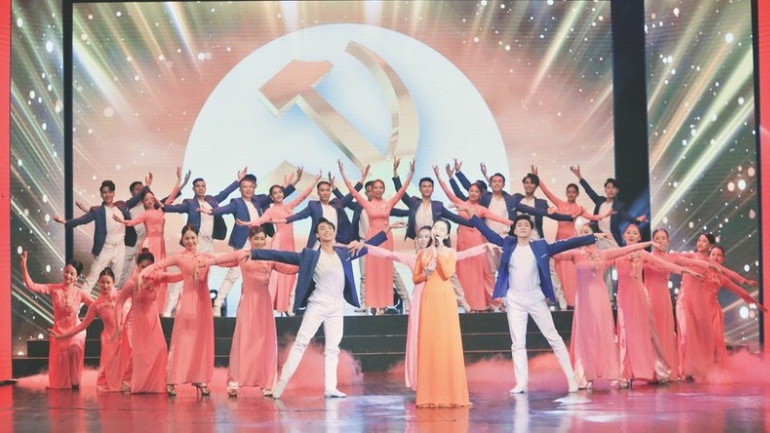
In Party Congresses, the issue of culture and art has always been placed at the center of human development and national development. Resolution No. 5 of the 8th Central Committee (1998) stated: Building and developing an advanced Vietnamese culture imbued with national identity.
At the 9th Central Committee Meeting of the 11th Party Congress (2014), the Party continued to emphasize the requirement for comprehensive development of the field of literature and art, considering culture as the spiritual foundation of society, both as a goal and a driving force for development.
In the documents of the 13th National Congress, the Party requested: Focus on improving the quality and effectiveness of all forms of culture and arts. Emphasize enhancing ideological and artistic values, while ensuring freedom and democracy in literary and artistic creation; encourage new explorations to enrich Vietnamese cultural identity; limit deviations and manifestations of chasing after vulgar tastes. Pay attention to and create conditions for the development of culture and arts of ethnic minorities.
The correct policies and guidelines of the Party and the State have created conditions for the revival and development of many art forms; the mechanism of socialization has been encouraged, and cultural institutions have gradually been strengthened.
However, some limitations still exist, such as: investment resources are still scattered; the mechanisms for protecting copyright and related rights are not strong enough; funding policies are spread thinly; and management is sometimes bureaucratic and lacks flexibility.
Associate Professor, Dr. Bui Hoai Son, a full-time member of the National Assembly's Committee on Culture and Society, analyzed: For literature and art to develop sustainably, it is necessary to continue improving institutions, encouraging social participation, increasing investment, and simultaneously reforming funding mechanisms towards transparency and flexibility, creating a favorable environment for artists to create.
Seize the opportunity for growth.
The digital age opens up new opportunities for literature and art. Online platforms, e-publishing, digital music, and films released through OTT platforms are changing the way works are produced, distributed, and received.
Digitizing heritage, applying artificial intelligence in creative work, and promoting works on international platforms such as Netflix, Spotify, and Kindle can help Vietnamese literature and art reach a global audience.
However, the current reality shows that we still lack a systematic strategy to capitalize on this opportunity. Startups in the creative content sector have not received adequate support; collaboration with international platforms remains limited; and many artists are unfamiliar with new technologies.
On the other hand, the demands of international integration also pose challenges regarding cultural identity. How can we preserve and promote traditional cultural values while simultaneously innovating and keeping pace with the trends of the times?
This is a challenging task, requiring close coordination between government policies, the efforts of artists, and the support of society.
For Vietnamese literature and art to truly become a soft resource, contributing to enhancing the nation's standing in the new era, a comprehensive, long-term development strategy is needed, focusing on key directions: First, it is necessary to clearly define that literature and art not only meet the spiritual needs of all segments of the population, but also actively contribute to the development of the national cultural industry.
Therefore, it is necessary to innovate the mechanisms and policies for the development of literature and art in a way that is open and flexible, creating a healthy creative environment, encouraging experimentation, nurturing talent, and strengthening the ranks of artists and writers who possess both creative talent and political integrity and a sense of responsibility.
It is necessary to continue improving the legal system regarding copyright, protecting the legitimate interests of artists and writers; increasing investment and socializing resources for literature and art; building a creative ecosystem for literature and art linked to the cultural industry, and promoting the application of digital technology.
Furthermore, it is necessary to develop a cultural and artistic market connected with tourism, education, and media to expand the sphere of influence of literature and art; proactively introduce Vietnamese works to the world, participate in international art events, and cooperate with global platforms, thereby promoting the image of Vietnam as a country rich in identity, creativity, and integration.
Vietnamese literature and art are facing a great opportunity for breakthroughs. Creating a strategic direction for literature and art in this new era means shaping the cultural future of the nation, one that is both deeply rooted in Vietnamese identity and in harmony with the rest of the world.
Source: https://nhandan.vn/xay-dung-nguon-luc-mem-post909038.html



![[Video] Hue and Quang Ninh mark strong tourism growth](https://vphoto.vietnam.vn/thumb/402x226/vietnam/resource/IMAGE/2025/12/12/1765555481742_dung00-22-16-02still007-jpg.webp)






















































Comment (0)