

After four years of pilot implementation, the standardized agricultural and forestry raw material areas have become more clearly defined in terms of scale, quality, and level of linkage.
The total area of raw material production in the 11 provinces participating in the project reached nearly 170,000 hectares, an increase of approximately 20% compared to before the project's implementation. Of this, more than 71% of the area has consumption linkages with businesses, fundamentally changing the way production is organized towards a commodity-based and market-oriented approach.

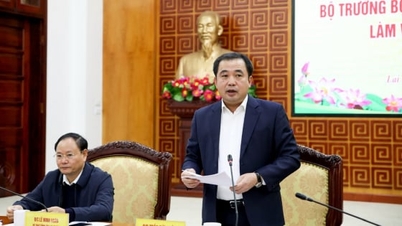
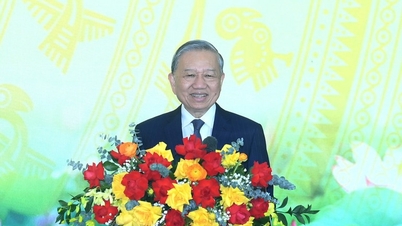
Deputy Minister Tran Thanh Nam delivered a speech at the conference. Photo: Bao Thang.
According to the Department of Cooperative Economics and Rural Development, these results highlight a common point: raw material areas are only effective when closely linked to key crops and the ecological advantages of each region.
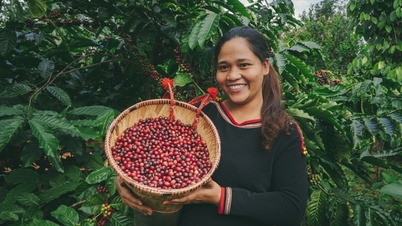
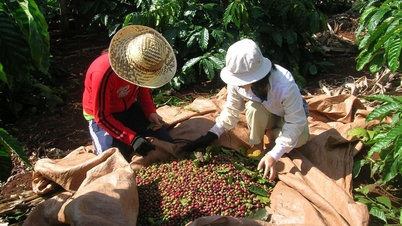
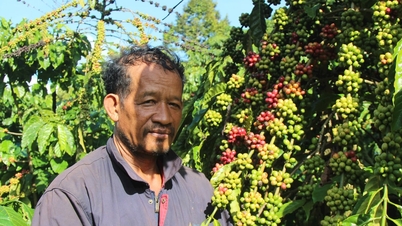
In the Northern Midlands and mountainous regions, fruit trees are organized into cooperative-enterprise clusters, forming mango, longan, and banana growing areas with registered planting area codes, meeting the requirements for official export. In the Central Highlands, coffee is identified as the main crop, accompanied by investment in storage facilities, drying yards, and internal field roads, helping to reduce post-harvest losses and increase processing capacity.
In the Mekong Delta, rice and fruit crops continue to be the foundation, with a synchronized investment in pumping stations, regulating sluices, and internal transportation infrastructure to reduce logistics costs.
At the conference summarizing the pilot phase on the morning of December 19th, the Department noted that: transportation costs for agricultural products in many regions decreased by 20-30%, and transportation time was shortened by half compared to before. Crop yields increased by an average of 10-15%, and production value per hectare increased by approximately 20-25%.
Farmers' incomes in the project areas have increased steadily by 5-10% annually, reflecting the direct economic efficiency of investing in key crops and infrastructure serving the raw material production areas.
Another significant change is the role of cooperatives. Instead of being just production units, many cooperatives have become centers for coordinating raw material areas, managing quality, organizing preliminary processing, and connecting with businesses. The percentage of agricultural products consumed through cooperatives has increased from 35% to over 57%. More than 90 production-processing-consumption linkage chains have been formed, many of which have long-term guaranteed purchase contracts, helping to stabilize output and reduce market risks.
Investing in infrastructure from project funds creates many "leveraging" projects, such as access roads to growing areas connected to processing plants, storage facilities connected to coffee growing regions, or pumping stations serving concentrated rice fields, resulting in significantly higher efficiency compared to scattered investments.
For every dollar of central government budget mobilized, nearly six dollars of matching funds were contributed by localities, businesses, cooperatives, and individuals. This "seed capital" mechanism demonstrates the effectiveness of the state leading while the private sector and community participate in investing in raw material areas. This also serves as a basis for expanding the model towards public-private partnerships in the 2026-2030 period.
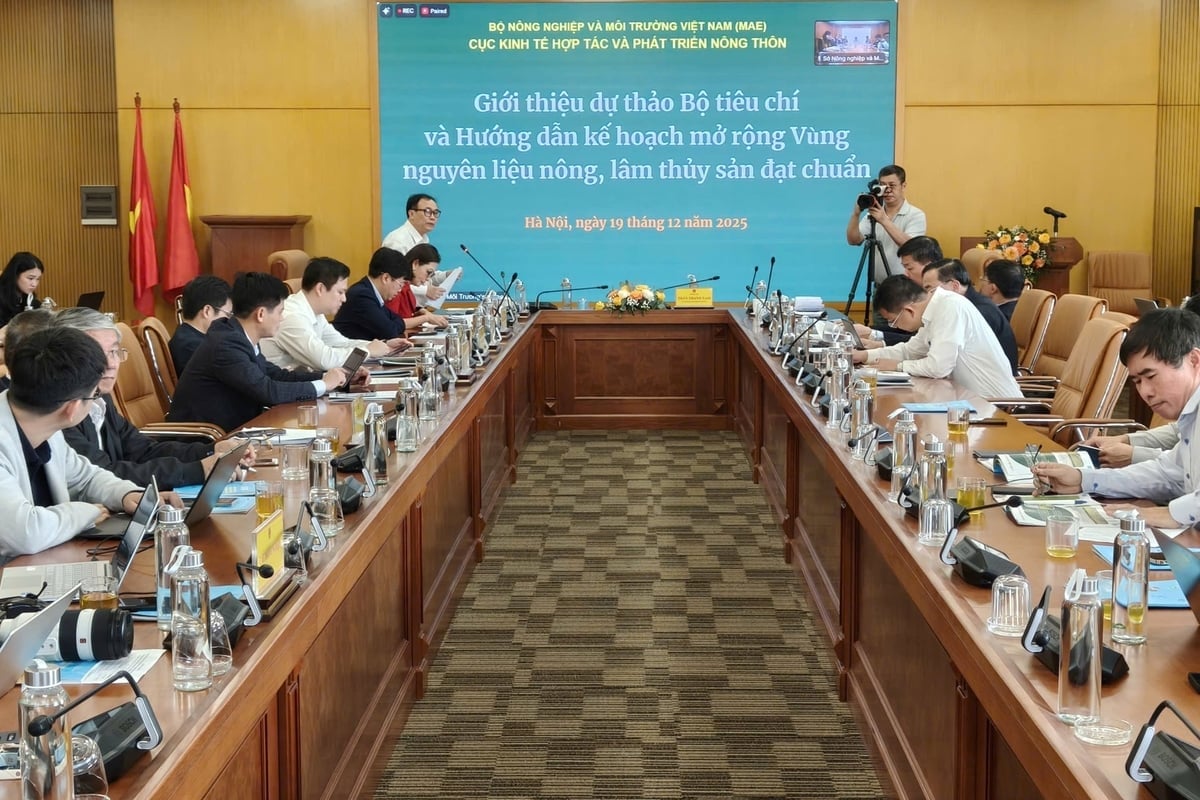
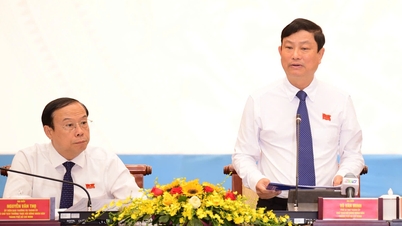
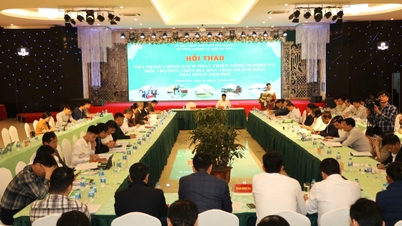
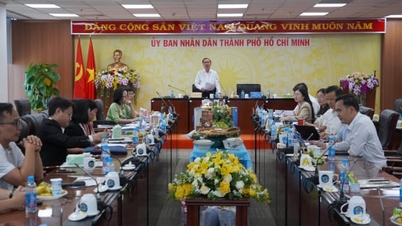
The conference was connected online to 11 provinces and cities in the project area. Photo: Bao Thang.
According to Mr. Nguyen Thanh Cong, Vice Chairman of the Son La Provincial People's Committee, the biggest strength of the project is the investment in infrastructure directly serving production. The internal transportation routes facilitate better mechanization, especially the more than 6 km connecting Chieng Sung commune to the Mai Son Industrial Park, creating conditions for reorganizing production and increasing the value of local agricultural products.
In addition, organizing production chains according to standards helps input materials meet export requirements, contributing to the province's agricultural growth in 2025, with coffee being a bright spot.
However, according to Son La's leaders, the pilot area is still not large enough, the crop structure is limited, and the production cycle is not yet fully closed. This means that the potential for value enhancement has not been fully exploited. Based on this reality, Son La proposes expanding the model nationwide, especially in localities with clear plans for key crops, while also investing more heavily in infrastructure, particularly in rural transportation and connections to processing plants.
Concluding the conference, Deputy Minister of Agriculture and Environment Tran Thanh Nam acknowledged that all localities have planned production areas, but the biggest gap is the lack of clear identification of which crops to plant in each locality. According to him, the raw material area project addresses this issue, helping localities and businesses identify key crops for cooperative investment, thereby fulfilling the "historical mission" of the pilot phase.
Based on that, the Ministry's leadership requested localities to uniformly implement planting area codes for the identified key crops. Along with that, they should strengthen the application of technology, good agricultural practices (GAP), and traceability, considering these as mandatory conditions for participating in value chains and export markets.
Another key point emphasized was crop and livestock insurance, aimed at reducing risks for farmers, ensuring social security, and promoting green growth. According to the Deputy Minister, green growth is not just about reducing emissions, but about improving the quality of life for rural people.
In the long term, the Ministry of Agriculture and Environment will develop a nationwide raw material area plan. Provinces that already have a list of key crops will continue to expand and form concentrated raw material areas. Based on the national-level plan for key crops, specifying it at the provincial level will help to monitor more closely and create long-term commitments with businesses regarding the stability of the raw material areas.
The government will focus on investing in "hardware" such as irrigation and essential infrastructure, while businesses are encouraged to invest in "software" including trade, logistics, and supply chain management. This division of roles aims to ensure the value and brand of export goods, while creating a sustainable foundation for replicating the model of raw material areas linked to key crops in the coming period.
By 2030, the Ministry of Agriculture and Environment aims to expand five key raw material areas to over 1.8 million hectares, requiring 100% of the area to have consumption linkage contracts. The focus is on developing raw material areas linked to the main crops of each region, avoiding fragmentation based on administrative boundaries, while simultaneously meeting the increasingly stringent standards of both domestic and export markets.
Source: https://nongnghiepmoitruong.vn/xay-vung-nguyen-lieu-gan-quy-hoach-cay-chu-luc-cho-tung-vung-d790234.html

![[Photo] Prime Minister Pham Minh Chinh attends the Conference on the Implementation of Tasks for 2026 of the Industry and Trade Sector](/_next/image?url=https%3A%2F%2Fvphoto.vietnam.vn%2Fthumb%2F1200x675%2Fvietnam%2Fresource%2FIMAGE%2F2025%2F12%2F19%2F1766159500458_ndo_br_shared31-jpg.webp&w=3840&q=75)


































































Comment (0)