

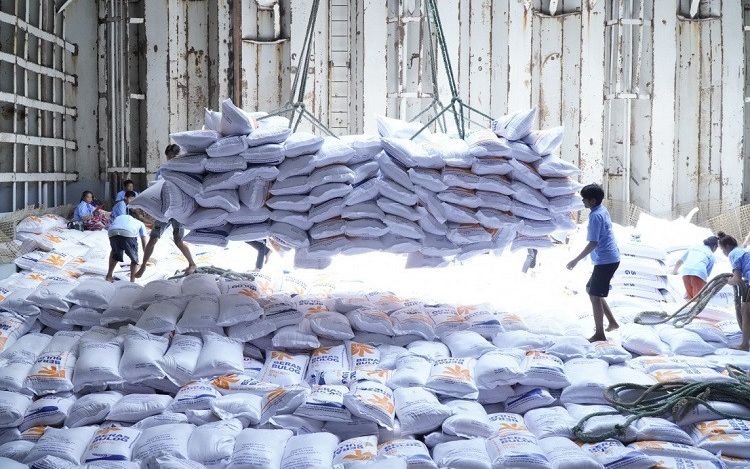
This decline, coupled with non-tariff barriers related to low emissions in developed markets, has forced the rice industry to rapidly shift towards a high-quality and green development strategy.
The decline was due to macroeconomic and major market pressures.
The global rice market in 2025 is expected to be highly volatile. For Vietnam, after reaching a historical peak in both volume and value in 2024, the first 11 months of 2025 have seen a significant decline. According to preliminary customs data, rice exports reached over 7.53 million tons with a value exceeding US$3.85 billion, a decrease of 10.9% in volume and 27.4% in value compared to the same period in 2024. The average export price was US$511.09 per ton.
Explaining the reasons for the decline, Mr. Nguyen Anh Son, Director of the Import-Export Department ( Ministry of Industry and Trade ), stated that the market is experiencing a double impact from global macroeconomic factors. According to Mr. Son, this decline stems from several notable causes. Firstly, escalating security and political instability in some regions of the world is causing unpredictable fluctuations in international trade. Secondly, although inflation has shown a downward trend, it remains high. This slows the recovery of global consumer demand and economic activity, directly affecting the purchasing power of import markets. Thirdly, protectionist policies and technical barriers from importing countries are becoming increasingly stringent. In particular, issues related to sustainable development, combating climate change, and ensuring consumer safety are becoming new standards that exporters must strictly adhere to.

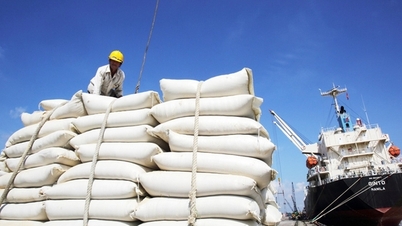
Rice exports declined in the first 11 months of 2025.
From a market perspective, the decline was mainly concentrated in major and traditional import markets. Specifically, exports to Indonesia plummeted by nearly 96.38%, while the Malaysian market also recorded a decrease of 32.5%.
However, the surge in other markets has somewhat offset this decline, demonstrating the flexibility and ability of Vietnamese businesses to find new markets. Notably, there were impressive growth rates in China (up 165.14%), Ghana (up 52.64%), Bangladesh (up 238.48 times), and Senegal.
The strategy focuses on quality and fragrant rice.
Despite the difficulties, the structure of rice exports is shifting positively. As of October 2025, high-quality white rice and various types of fragrant rice accounted for up to 69% of total exports, confirming that the direction of shifting from quantity to quality rice is on the right track.
With rice production projected to decrease by approximately 0.2 million tons in 2026 due to reduced planted area, the focus of Vietnam's rice industry is no longer on increasing production but on optimizing value and meeting green standards.
Representatives from the Department of Crop Production and Plant Protection ( Ministry of Agriculture and Environment ) have recommended that localities focus on restoring production after natural disasters and accelerate the implementation of the Sustainable Development Project for 1 million hectares of high-quality, low-emission rice cultivation associated with green growth in the Mekong Delta by 2030.
The decline was mainly concentrated in large and traditional import markets such as Indonesia (a sharp decrease of nearly 96.38%) and Malaysia (a decrease of 32.5%). However, a surge in other markets such as China (up 165.14%), Ghana (up 52.64%), Bangladesh (up 238.48 times), and Senegal partially offset this decline, demonstrating the flexibility and ability of Vietnamese businesses to find new markets.
This project is considered a strategic key for Vietnam to not only improve the quality of its rice but also create a new competitive advantage in the context of major markets imposing carbon footprint standards. Participation in this project helps businesses build stable raw material areas, meeting the traceability and food safety requirements of demanding importing countries.
Mr. Le Thanh Tung, Vice President and General Secretary of the Vietnam Rice Industry Association, proposed that rice should be identified as a special commodity requiring close monitoring, and called on the Vietnam Food Association and businesses to actively cooperate in building pilot raw material areas that meet the criteria of the project.
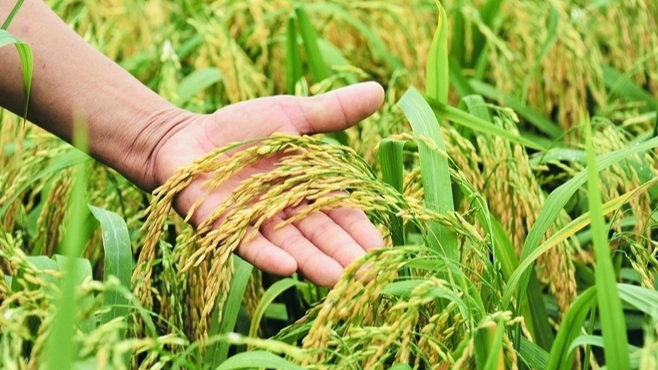
The quality of Vietnamese rice exports is constantly improving.
Besides the greening strategy for the rice industry, market factors are also showing optimistic signs for 2026. The Philippines is expected to resume imports from January 2026. Despite changes in import tariffs, this remains a major impetus for Vietnam's rice exports.
The return of imports from traditional markets such as China, Bangladesh, and African countries is expected to help boost export growth. In addition, rice trade agreements between Vietnam and other countries are also predicted to open up new opportunities. Representatives from the Import-Export Department assess that the increasingly improved quality of Vietnamese rice exports will enhance competitiveness in the global market.
According to economic experts, Vietnam's rice industry is at a critical juncture. Overcoming the temporary downturn in 2025, a green transition strategy towards high-quality, low-emission rice, along with strengthening traditional markets, is the only way for Vietnamese rice to reposition itself, not only as a food security product but also as a high-value commodity on the global trade map.
The synchronized role of stakeholders in the green strategy.
For the green transition strategy to be implemented effectively and achieve export results, a coordinated effort from the government to the farmers is needed.
On the part of the Government and the Ministry of Agriculture and Rural Development (MARD), the central task is to accelerate the approval of flexible financial mechanisms. Specifically, it is necessary to seek and effectively utilize international capital sources, especially revenue from carbon credits, to create incentives and provide direct support to farmers as they transition to low-emission farming. This is a key factor in ensuring income and reducing risks for farmers participating in the 1 million hectare high-quality rice project.
Meanwhile, the Ministry of Industry and Trade, in its role of managing import and export through the Import-Export Department, needs to focus on international trade negotiations. Simultaneously, developing and perfecting national standards for "low-carbon rice" is essential, creating a solid legal basis for export activities. This agency must also support businesses in improving their product traceability capabilities to meet stringent import requirements.
From a market perspective, export businesses need to proactively shift from purely trading to mastering the supply chain. This requires direct and sustainable linkages with cooperatives to build stable raw material areas and uniformly apply sustainable farming practices. Achieving international certifications such as Global GAP will be key to enhancing the reputation and brand value of Vietnamese rice.
Ultimately, farmers and cooperatives are the direct agents of change. They need to actively adopt emission-reducing farming techniques according to the Project's standards (such as reducing irrigation water and chemical fertilizer use) and participate in the electronic traceability system to ensure transparency throughout the entire supply chain, thereby enhancing accountability and product quality.
Source: https://vtv.vn/nganh-lua-gao-truoc-nga-re-xanh-sut-giam-xuat-khau-va-ap-luc-tai-dinh-vi-100251212192538781.htm


![[Image] Vietnam's colorful journey of innovation](/_next/image?url=https%3A%2F%2Fvphoto.vietnam.vn%2Fthumb%2F1200x675%2Fvietnam%2Fresource%2FIMAGE%2F2025%2F12%2F14%2F1765703036409_image-1.jpeg&w=3840&q=75)













































![[Image] Vietnam's colorful journey of innovation](https://vphoto.vietnam.vn/thumb/402x226/vietnam/resource/IMAGE/2025/12/14/1765703036409_image-1.jpeg)



























Comment (0)