

Packaging still has many limitations.
Vietnam's fruit and vegetable exports continue to grow well this year. At the "Improving Packaging and Packing for Export Fruits" workshop, held on December 12, 2025 in Ho Chi Minh City, Ms. Dinh Thi Tam, Deputy Director of the Vietnam Institute of Agricultural Mechanization and Post-Harvest Technology - VIAEP ( Ministry of Agriculture and Environment ), stated that in the first 11 months of 2025, the export value of fruits and vegetables is estimated to reach US$7.8 billion, an 18% increase compared to the same period last year; the projected figure for the whole year is approximately US$8.5 billion.
In particular, many key products such as durian, dragon fruit, pomelo, mango, passion fruit, etc., have continuously expanded their markets to the United States, the EU, Japan, South Korea, and the Middle East.
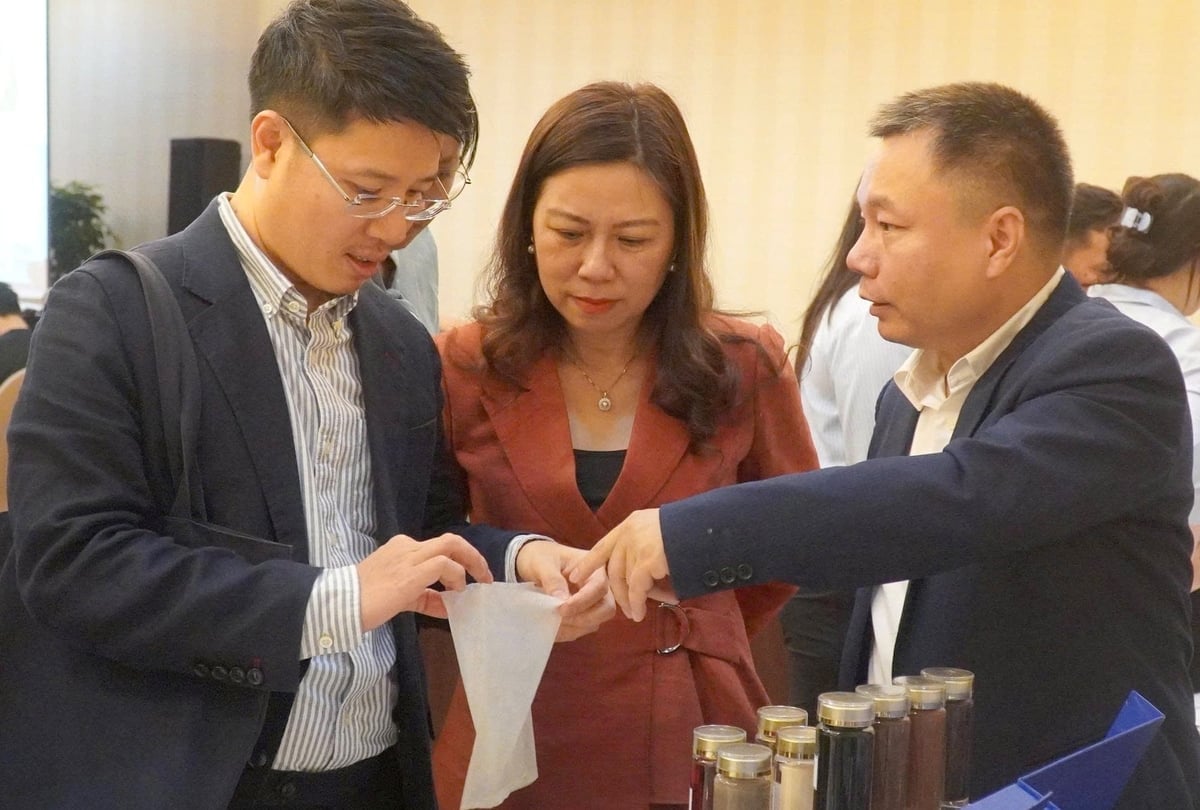
Delegates discuss a fruit packaging technology. Photo: Son Trang .
With the export results mentioned above, fruits and vegetables continue to be one of the leading export sectors of Vietnamese agriculture and have much potential to increase export turnover in the future.
However, for fruit and vegetable exports to continue to grow well and sustainably, penetrate and establish a foothold in distant and demanding markets, the fruit and vegetable industry still has much to improve, especially in packaging to help reduce post-harvest losses and meet increasingly stringent requirements for sustainability, traceability, and food safety.
Peter Johnson, an international expert on the tropical fruit value chain in Vietnam under UNIDO's GQSP program, believes that to expand fruit exports, diversify markets, and access modern retail markets, the Vietnamese tropical fruit industry needs to start addressing core issues related to packaging.
Mr. Peter Johnson pointed out the major limitations of current Vietnamese fruit packaging, such as: low durability of cardboard boxes, with most bottom layers of boxes being dented, crushed, or compressed; packaging design unsuitable for cooling or maintaining the temperature of the fruit; packaging not suitable for the type of product, leading to inefficiency in transportation; and the purchase of cardboard boxes mainly for cost savings, but buyers lack awareness of the associated losses.
Inappropriate packaging also significantly impacts the sustainability of Vietnam's fruit and vegetable industry. Ms. Le Thi Thanh Thao, UNIDO Country Representative in Vietnam, emphasized: "Packaging is never just an 'outer covering material,' but a technological solution. Inappropriate packaging causes far greater emissions than the packaging itself."
Improving packaging to enhance the image of Vietnamese fruits.
Regarding the fruit and vegetable sector, to boost exports in the coming period, Ms. Dinh Thi Tam stated that MAP (Modified Atmosphere Packaging) – a coating made from natural compounds – along with cold chain management, are becoming core solutions to extend shelf life, maintain sensory quality, and reduce losses during long-distance transportation.
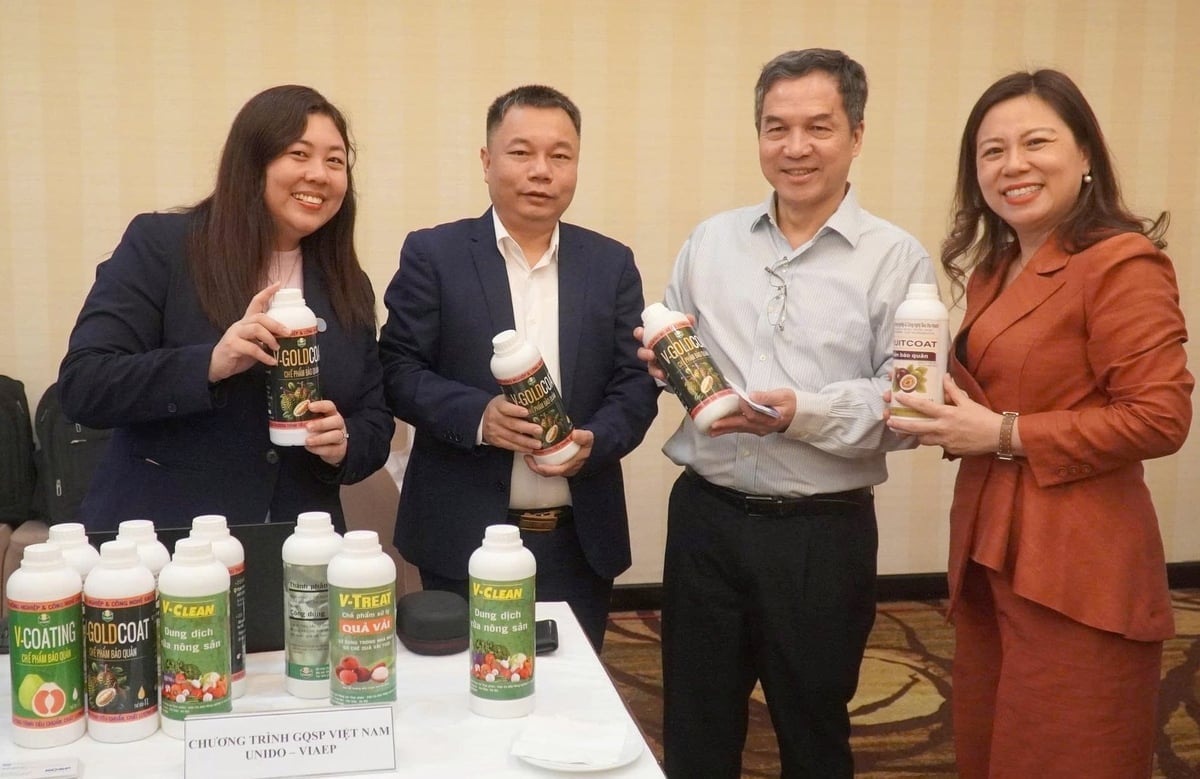
Some products from the GQSP Vietnam Program. Photo: Son Trang .
Master's degree holder Nguyen Manh Hieu (VIAEP) also stated that MAP technology has advantages such as reducing O₂, increasing CO₂ to slow respiration, reducing water loss to minimize fruit peel wrinkling, stabilizing humidity and temperature inside the bag, and increasing shelf life during long-distance transportation.
In fact, the MAP technology, when applied to lychees exported to the US, has extended their shelf life to 35 days. Passion fruit, when preserved using MAP and coating, still retained its freshness and flavor after 35 days.
Besides exports, the majority of Vietnam's fruit production is consumed in the domestic market. Therefore, fruit packaging and packing technology also plays a very important role in reducing fruit losses in the domestic market.
Dr. Nguyen Thanh My, Chairman of the Board of Directors of My Lan Group, shared that for pre-cut fruits such as cantaloupe, mango, guava, papaya, sapodilla... or fruits with separated segments like durian, jackfruit...., EMAP packaging technology will extend the shelf life from 7-14 days, and sapodilla can even be preserved for 10-20 days.
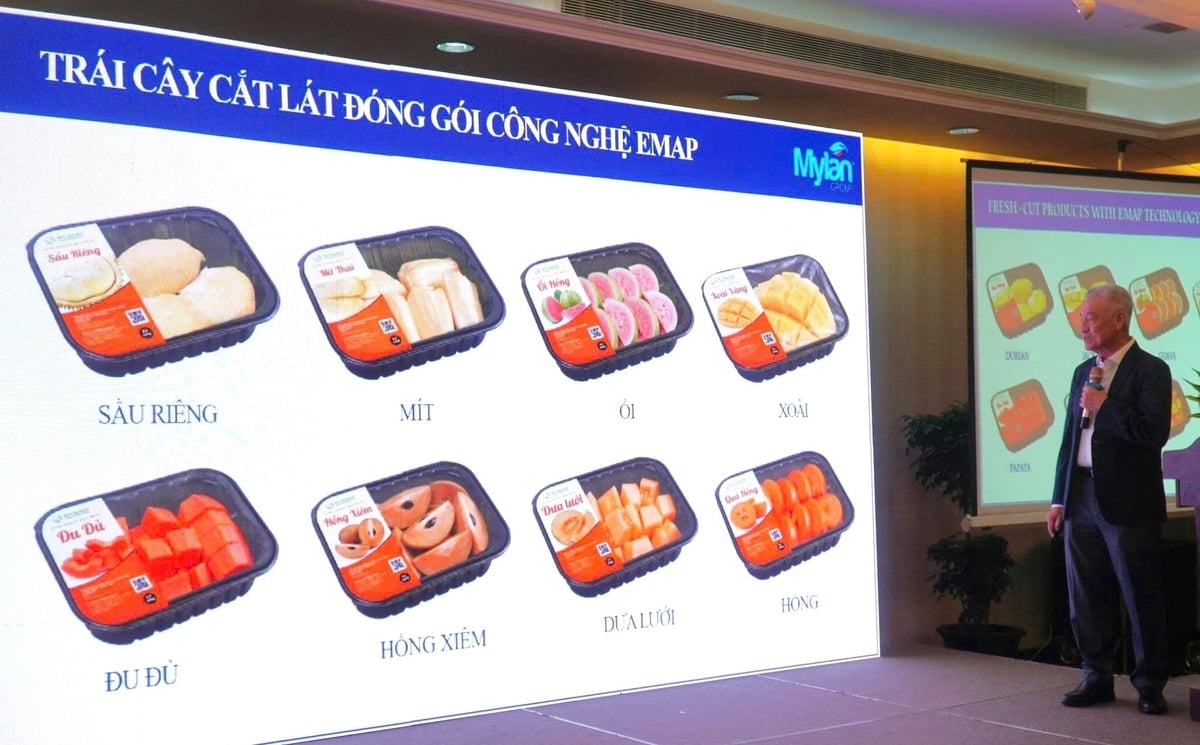
Dr. Nguyen Thanh My shared information about packaging sliced fruit using EMAP technology. Photo: Son Trang .
According to Mr. Nguyen Ngoc Minh Thy, Vice President of the Vietnam Packaging Association (VINPAS) and General Director of Liksin Industrial - Printing - Packaging Corporation, the application of packaging technology and cold chain in the fruit industry aims to extend shelf life, help maintain freshness, and expand distribution markets. The application of packaging technology and cold chain is implemented through solutions including the use of smart packaging and the design of optimal carton boxes for cold storage.
Furthermore, it is necessary to promote the development of sustainable packaging to meet sustainability and EPR trends, creating a competitive advantage and enhancing the image of Vietnamese fruits. Solutions for sustainable packaging include: applying design principles for recycling; using sustainable and recycled materials; biodegradable and single-material packaging; packaging design with an ESG story; and preparing to meet regulations such as EPR, PPWR, and DPP.
In response to the increasingly stringent demands of fruit import markets, VINPAS proposes that the fruit packaging industry needs to improve and standardize packaging, prioritizing the use of durable, safe, and recyclable materials that meet the traceability requirements of export markets. Simultaneously, it should pioneer the application of preservation technologies to extend food shelf life and change market mindsets; continuously monitor and update changes and regulations in international markets, and promote digitalization and traceability through packaging.
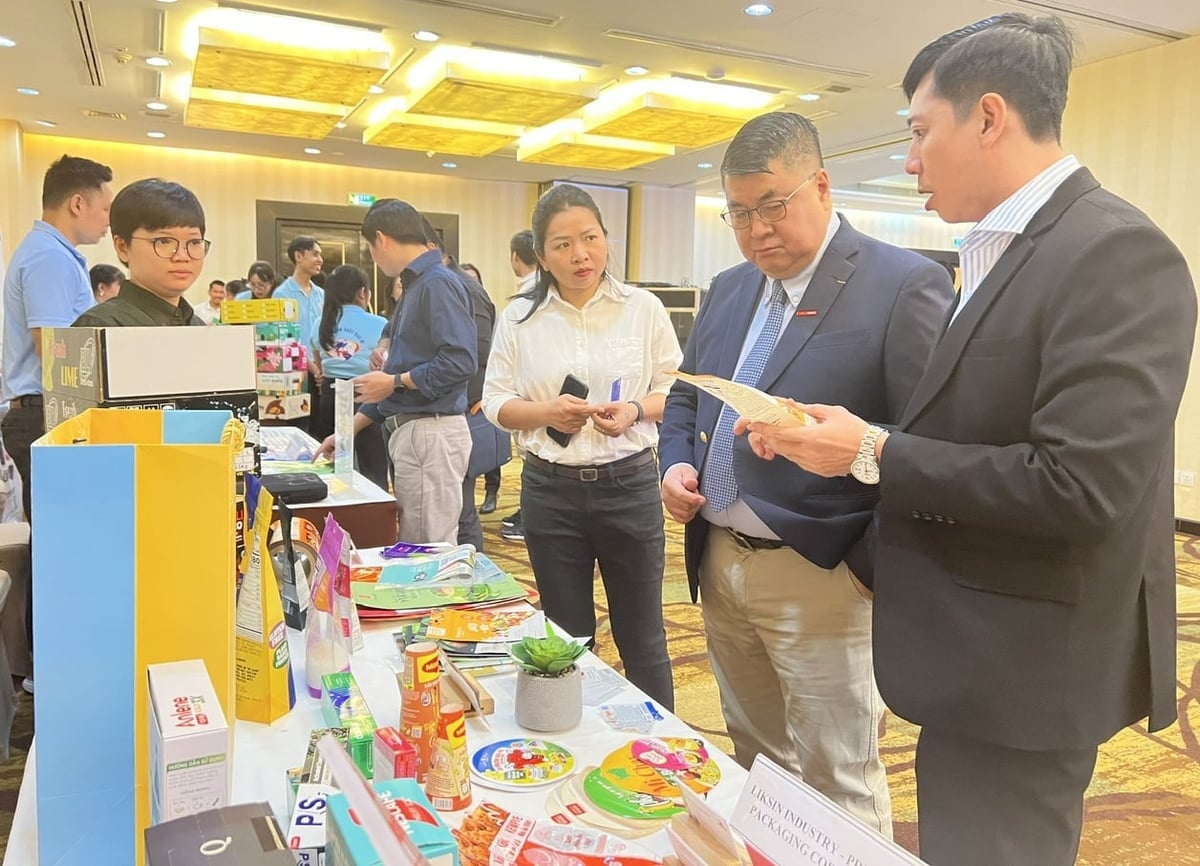
Delegates visit and learn about some of Liksin's agricultural packaging products. Photo: Son Trang .
Sustainable direction for agricultural product packaging
According to Le Thi Thanh Thao, UNIDO's Country Representative in Vietnam, UNIDO has just published the report "Identifying the Paradox of Food Waste and Loss" (co-published by UNIDO , WUR, and the World Packaging Organization - WPO) . The report emphasizes the crucial role of packaging in reducing food loss and waste, and introduces a set of five packaging design principles as a scientific basis for guiding the design of appropriate packaging for agricultural products.
Peter Johnson: "Packaging is not necessarily an expense, but an investment for the business. Sturdy cardboard boxes help protect fruit quality, minimize losses, and ensure successful access to export markets."
The five principles include: design to contain and protect the product, design to extend shelf life, design for consumer convenience, suggestions for communication and information provision, and a balance between reducing food loss and reducing packaging waste.
Sharing her views on the current direction for agricultural product packaging, Ms. Nguyen Ngoc Minh Thy, Vice President of the Vietnam Packaging Association (VINPAS) and General Director of Liksin Industrial - Printing - Packaging Corporation, mentioned the criteria: safety, convenience, sustainability, transparency, and certification.
Specifically, safety includes ensuring food safety and consumer safety. Convenience means easy transportation and multi-channel access. Sustainability means reducing packaging waste and minimizing food loss. Transparency in origin, product information, and the entire value chain is also crucial. Quality control certification meets export market standards.
In particular, the issue of standardizing packaging for agricultural products and food is being discussed by many experts and businesspeople. Ms. Nguyen Mai Minh Thu, Director of Mai Thu Packaging Joint Stock Company, suggested that coordination is needed between VINPAS, management agencies, research institutes, universities, and businesses to develop packaging standards for exported agricultural products. Ms. Minh Thu emphasized: "If we standardize packaging, we will standardize the world's trust in Vietnamese agricultural products."
Source: https://nongnghiepmoitruong.vn/chuan-hoa-bao-bi--chuan-hoa-niem-tin-cua-the-gioi-ve-nong-san-viet-d789067.html


















![Staying Ahead: [Part 3] The Secrets to Wealth Creation of Successful Farmers](https://vphoto.vietnam.vn/thumb/402x226/vietnam/resource/IMAGE/2025/12/15/1765749306197_dsc06979-214643_142-045225.jpeg)




























































Comment (0)