
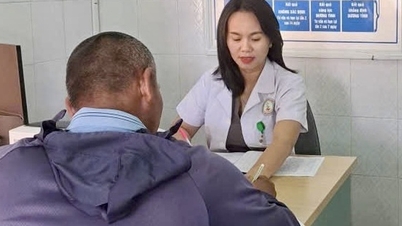
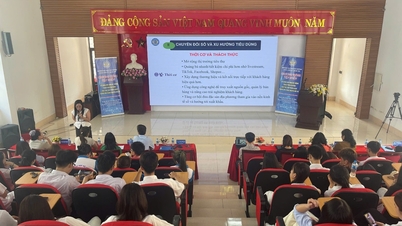
Providing HIV testing counseling to the public.
According to Dr. Ton That Toan, Deputy Director of the Khanh Hoa Provincial Center for Disease Control, in 2025, Khanh Hoa province will implement comprehensive measures for HIV prevention, counseling, and treatment. This will lead to significant positive changes, with most people no longer fearing or discriminating against those living with HIV.
Furthermore, HIV patients are very confident in their ARV antiviral treatment, so their health is ensured. Some patients participate in healthy cultural and sports activities in public as usual.
According to Dr. Toan, group communication programs for high-risk individuals or people with HIV in Khanh Hoa are becoming increasingly flexible and effective. Participants quickly and effectively grasp a lot of useful knowledge.
According to the Khanh Hoa Provincial Center for Disease Control, in the first nine months of 2025, the number of newly detected HIV infections in Khanh Hoa was 125 cases, and the number of deaths due to AIDS was 22. The total number of people living with HIV/AIDS and under management in the province is 1,938.
In reality, most patients have had access to treatment medication as well as the necessary knowledge to prevent infection among family and friends. In cases where patients neglect their treatment, doctors will promptly encourage and advise them to avoid interruption in their treatment.

HIV prevention medication is recommended for people at high risk. (Illustrative image)
In Khanh Hoa, along with preventive health care workers, peer educators are very active in communicating to reduce stigma towards people living with HIV. Through these communication efforts, many people have come to understand that "anyone can be infected with HIV/AIDS if they lack knowledge and engage in unsafe behaviors"; "HIV/AIDS is dangerous but preventable"; and that stigma and discrimination against HIV patients only worsen their condition. Because, if stigmatized, people living with HIV will not dare to disclose their infection status to their spouse, family, or close friends. At the same time, they are more likely to delay or even refuse care and treatment.
Mr. NB, a person living with HIV in Van Ninh (Khanh Hoa), shared that eliminating stigma and discrimination helps people with HIV like him happily participate in healthy community activities. At the same time, it allows them to confidently receive effective treatment and readily share their experiences with others in similar situations during meetings organized by peer educators or healthcare workers. As a result, people with HIV can confidently strive for success in their work, business, and production, ensuring their livelihoods.
Many peer educators also stated that HIV patients desperately need support and empathy from their loved ones and the community. They are special patients. Therefore, peer educators are always flexible in their approaches to help people with HIV happily open up and fully receive knowledge about treatment and preventing HIV transmission to others.
According to Dr. Ton That Toan, with the advancements in modern medicine, HIV patients can absolutely lead healthy and happy lives like other people without HIV in society if they are diagnosed early and adhere to antiretroviral (ARV) treatment. Besides taking care of their own health, people with HIV can proactively prevent HIV transmission to others when their HIV status is controlled below the detection threshold (U=U, or Undetectable = Untransmissible, meaning that if a person with HIV adheres to ARV treatment and reduces their viral load to below 200 copies/ml of blood, they are no longer able to transmit the virus to others).
At the same time, preventive treatment helps prevent HIV infection in high-risk individuals. In Khanh Hoa, when peer educators and outreach workers have a deep understanding of PrEP (HIV prevention) and master the methods of outreach and counseling, they can perform their work more effectively, thereby increasing access to this service for those at high risk of HIV infection.
In many training sessions, peer educators and counselors are also taught soft skills that can be applied in their interactions with HIV patients. For example, many peer educators have helped high-risk groups for HIV to seriously adopt condom use for prevention. Condoms remain a crucial and highly effective method for preventing HIV infection. Besides HIV, condoms also prevent other sexually transmitted diseases such as syphilis, gonorrhea, chlamydia, and several others.
Some people at high risk of HIV in Khanh Hoa province said that during local free condom distributions, they always volunteer to receive and use condoms correctly. This has helped them develop safe sex habits with their partners, especially new ones, to protect themselves and their partners.
D. Hung
Source: https://suckhoedoisong.vn/xoa-bo-ky-thi-voi-nguoi-co-ho-khanh-hoa-169251119103714.htm







![[Image] Hanoi's urban life under the challenge of a "scorching hot" environment](https://vphoto.vietnam.vn/thumb/1200x675/vietnam/resource/IMAGE/2026/05/25/1779706979265_nang-nong-t5-2026-minh-duy-7-4636-jpg.webp)


























































































Comment (0)