

As an inevitable trend, with Vietnam's major import partners increasingly focusing on ESG (environmental, social, and corporate governance) sustainable development indicators and using them as input standards to "evaluate" goods and products that are Vietnam's export strengths, manufacturers are required to make appropriate adjustments.
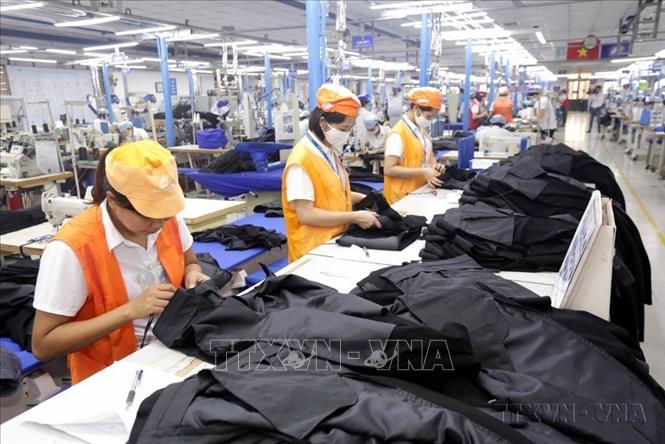
The transformation of technology, investment in upgrading equipment, and the complete digitalization of operational processes are aimed at reducing emissions and achieving the Net Zero target by 2030, as committed by the Prime Minister to the international community.
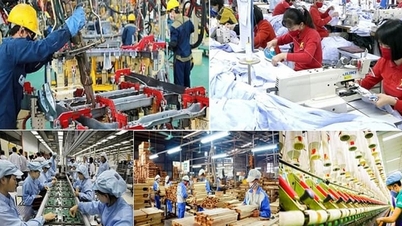
Representatives from industry associations and businesses in the textile, garment, and footwear sectors shared their experiences in implementing green transformation and digital transformation models, lessons learned, and proposed solutions to support businesses in making further progress.
Mr. Vu Duc Giang, Chairman of the Vietnam Textile and Garment Association (VITAS):
To meet the stringent requirements of major importers, Vietnamese textile and garment businesses need to actively transform to adapt to changing consumer trends and the greening demands of export markets. The application of technology, innovation, and the adoption of green standards will not only improve productivity but are also crucial for the industry to achieve sustainable development and enhance its competitiveness in the global market.
From now until 2030, the textile and garment industry will gradually shift its focus from rapid development to sustainable development, aiming towards a circular economy . During the period from 2031-2035, the industry will effectively develop this model; simultaneously, perfecting the domestic value chain and participating deeply in the global supply chain. Improving productivity and product quality, combined with innovation and the application of green standards, will be key to helping the Vietnamese textile and garment industry maintain competitiveness and achieve sustainable development.
Mr. Than Duc Viet, General Director of May 10 Corporation:
In the context of the textile and garment industry being strongly impacted by the "greening" trend and the increasingly stringent requirements of international partners, May 10 Corporation has proactively built a sustainable development roadmap and strived to implement three main criteria in factory construction: building a green production environment, using recycled or environmentally friendly materials, and transitioning to new energy sources. These criteria not only help the company meet international market demands but also affirm its commitment to sustainable development in the textile and garment industry.
This "greening" trend is not only a mandatory requirement from importers but is also a great opportunity to help Vietnamese textile and garment businesses increase the value of their export orders.
Ms. Phan Thi Thanh Xuan, Vice President and General Secretary of the Vietnam Leather, Footwear and Handbag Association (Lefaso):
Green manufacturing is a common trend among footwear businesses today to maintain export turnover. However, the biggest challenge for the footwear industry right now is meeting the new standards set by many major footwear importing countries, namely sustainability in production and requirements for social responsibility.
Previously, sustainable development activities were primarily initiated and encouraged by customers, but today they are codified through policies issued by the governments of major footwear importing countries. For example, the EU market has begun to introduce new requirements such as eco-design with sustainable designs, traceability, and supply chain transparency. These changing import market policies will have a significant impact on businesses in the industry.
In the context of importing markets demanding higher standards of sustainability and transparency in production, businesses need to quickly improve and make their product supply chain information more transparent, starting from the raw materials stage, adopting sustainable production practices geared towards a circular economy, and ensuring social and environmental responsibility.
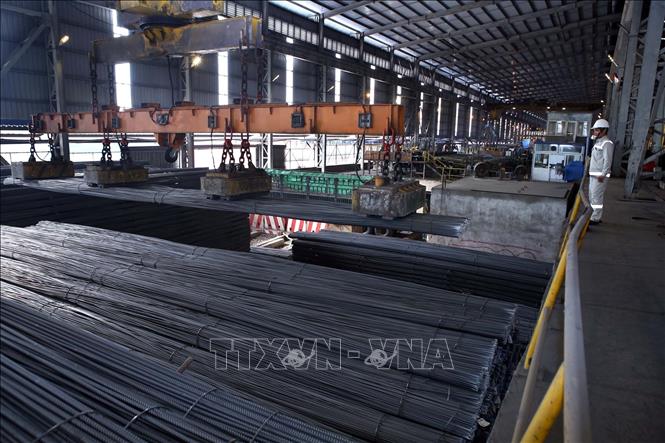
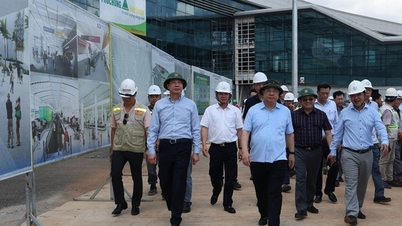
Mr. Nguyen Quang Loc, Head of the Hoa Phat Dung Quat 2 Iron and Steel Production Complex Project:
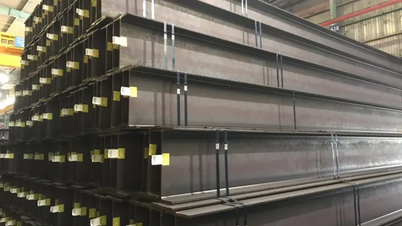
Currently, many export markets require businesses to meet international standards, especially regarding greenhouse gas emission reduction and the production of "green steel." This is something businesses cannot achieve overnight; it requires a roadmap for transforming production investments, demanding both capital and time.
Recently, the corporation completed its greenhouse gas inventory, a crucial step in its sustainable development strategy. Hoa Phat's policy is to proactively apply the latest quality standards, technologies, and operational practices to its production and business operations. In the next phase, Hoa Phat will continue to optimize production to control greenhouse gas emissions and meet the requirements of the new development phase.
In the coming period, to boost export orders, Hoa Phat will prioritize investment in developing high-tech steels and special steels serving the mechanical engineering, automotive, shipbuilding, and structural steel industries, etc. These are also the product development directions of the Dung Quat 2 project and subsequent projects.
At the same time, Hoa Phat always focuses on optimizing all production stages in a circular, closed-loop manner, reducing energy consumption and building a roadmap for green steel development, reducing CO2 emissions in line with the Government's general direction, aiming for carbon neutrality by 2050...
Mr. Nguyen Duc Thuan, Chairman of the Board of Directors of TBS Group:
The opportunities and potential for development in Vietnam's leather, footwear, and handbag industry remain enormous. However, the global trend of "greening" is increasingly demanding of businesses, especially export businesses. For footwear businesses, the pressure to transition to green is immense, as the footwear industry is still a major contributor to environmental pollution. Therefore, footwear businesses cannot remain outside the Fourth Industrial Revolution; they need to adopt automated production lines, artificial intelligence (AI), and green development if they do not want to be excluded from the global supply chain.
Lesson 3: Pressure on the Value Chain
According to VNA
Source: https://doanhnghiepvn.vn/kinh-te/xuat-khau-xanh-bai-2-lua-chon-song-con-de-tien-xa-hon/20250221103609837

![[Image] Hanoi's urban life under the challenge of a "scorching hot" environment](https://vphoto.vietnam.vn/thumb/1200x675/vietnam/resource/IMAGE/2026/05/25/1779706979265_nang-nong-t5-2026-minh-duy-7-4636-jpg.webp)

![[Image] Close-up view of the interchange connecting the two expressways and Long Thanh Airport.](https://vphoto.vietnam.vn/thumb/1200x675/vietnam/resource/IMAGE/2026/05/25/1779703378210_ndo_br_z7863716673926-224453a31600126cce10622af6290afd-4549-jpg.webp)











































































Comment (0)