

Experts offer solutions to help universities improve quality sustainably.
WE INVITE EXCELLENT LECTURERS WITH RESEARCH CAPABILITIES
According to Professor Nguyen Van Tuan (University of New South Wales, Australia), any indicator in university rankings can be abused, but when the number of published scientific papers is considered an important criterion for ranking, then the number of scientific papers is the most susceptible to manipulation.
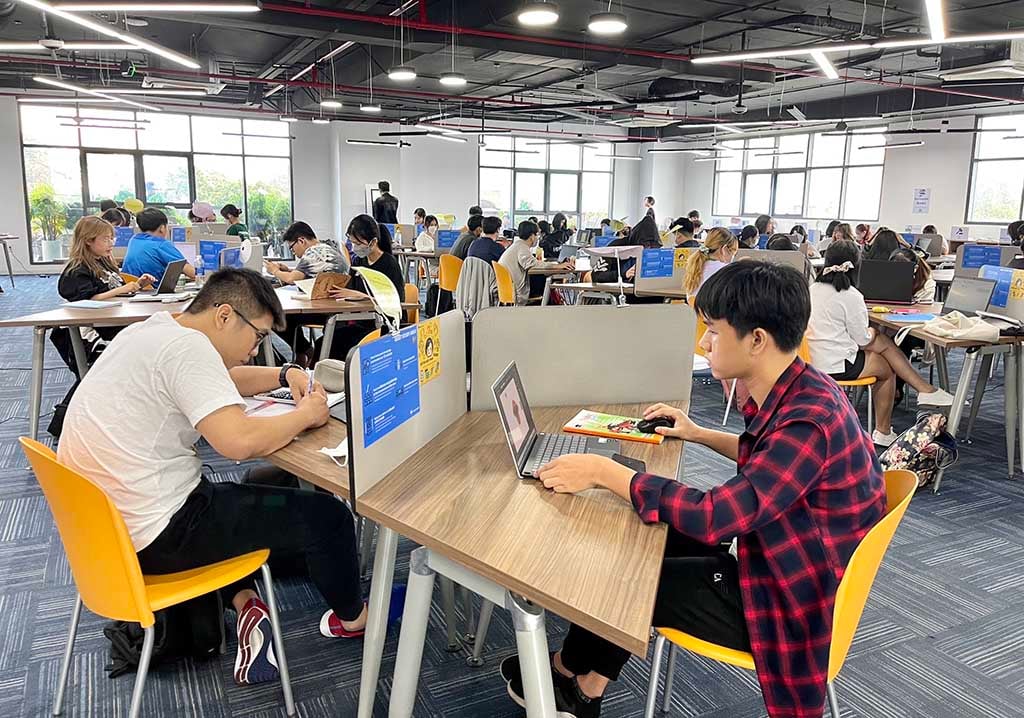
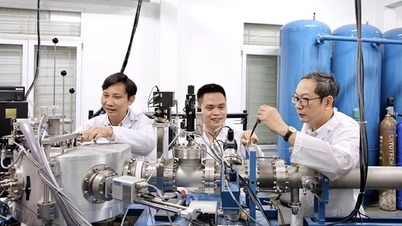
Developing infrastructure and investing in teaching staff are factors that help universities improve their quality.
"Some universities are abusing the convention regarding work and research addresses to increase their number of publications. There's a university in Saudi Arabia that doesn't conduct much research, but they contract with famous scientists in the US to list their research address in Saudi Arabia, thereby increasing their number of scientific publications and improving their ranking. This is an abuse that hasn't been addressed yet," Professor Tuan stated.
Concurring, Professor Luong Van Hy, University of Toronto, Chairman of the Research Ethics Council of the University of Social Sciences and Humanities, Vietnam National University Ho Chi Minh City, stated that buying articles in exchange for higher rankings in international rankings is dishonest with the academic community and the public, violates academic integrity, and does not contribute to the sustainable development of academic strength. If not rectified, the widespread practice of buying articles, along with other violations of academic integrity, can be likened to a cancer spreading throughout the body, posing a serious threat to the academic and higher education system.
According to Professor Hy, if a university in Vietnam, instead of using money to buy research papers, invited talented lecturers with strong research capabilities to work for them, shifting from widespread paper purchasing to focusing on long-term and sustainable development of their research skills, this would be a very positive change.
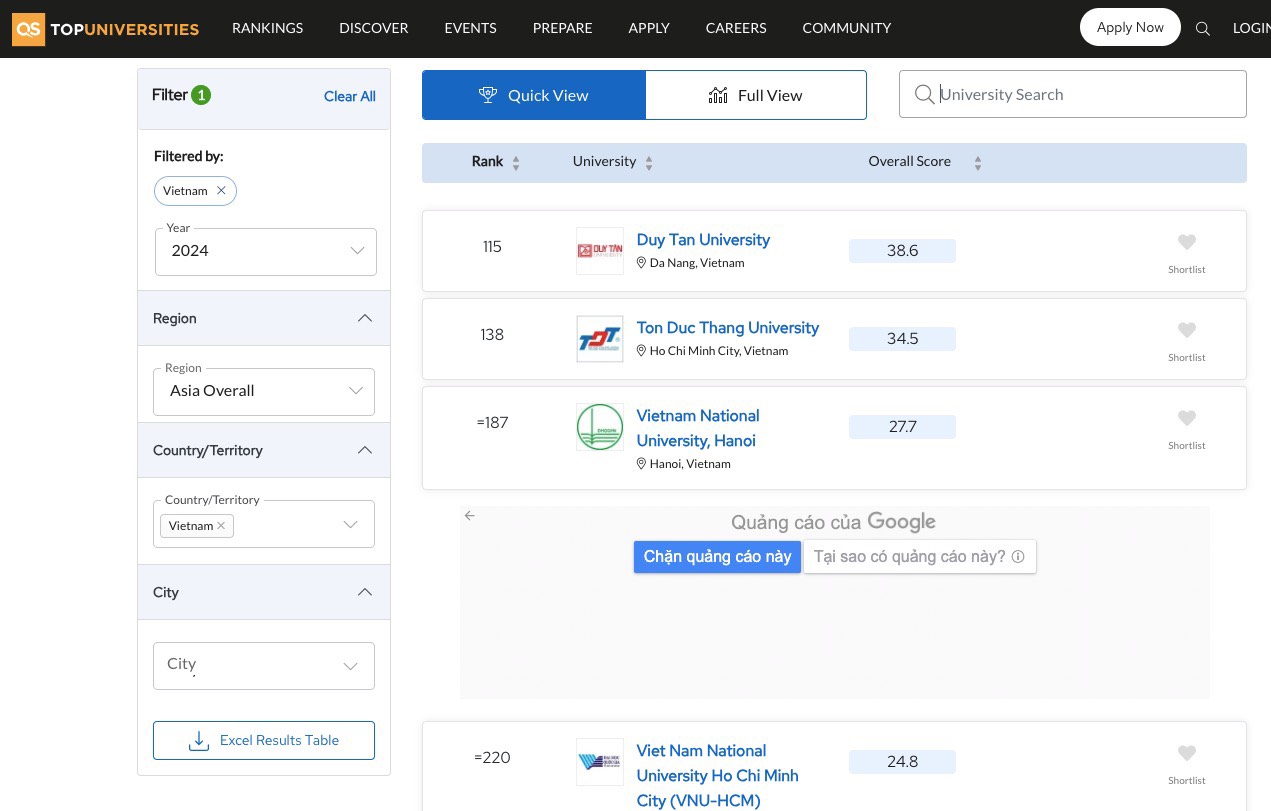
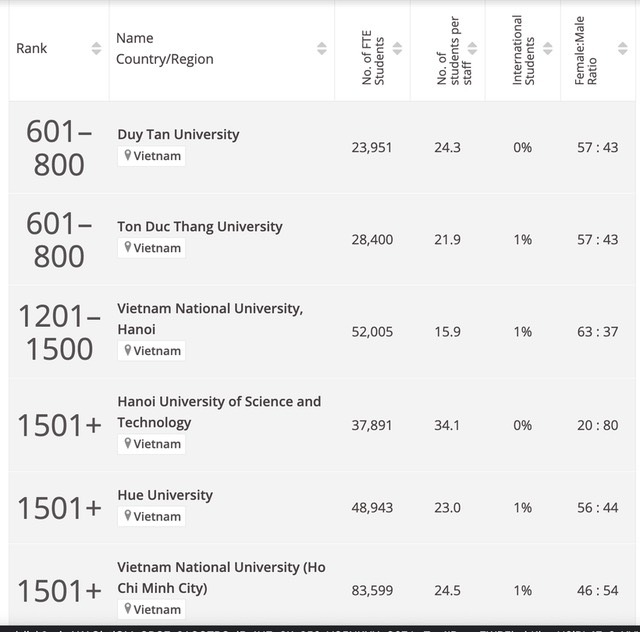
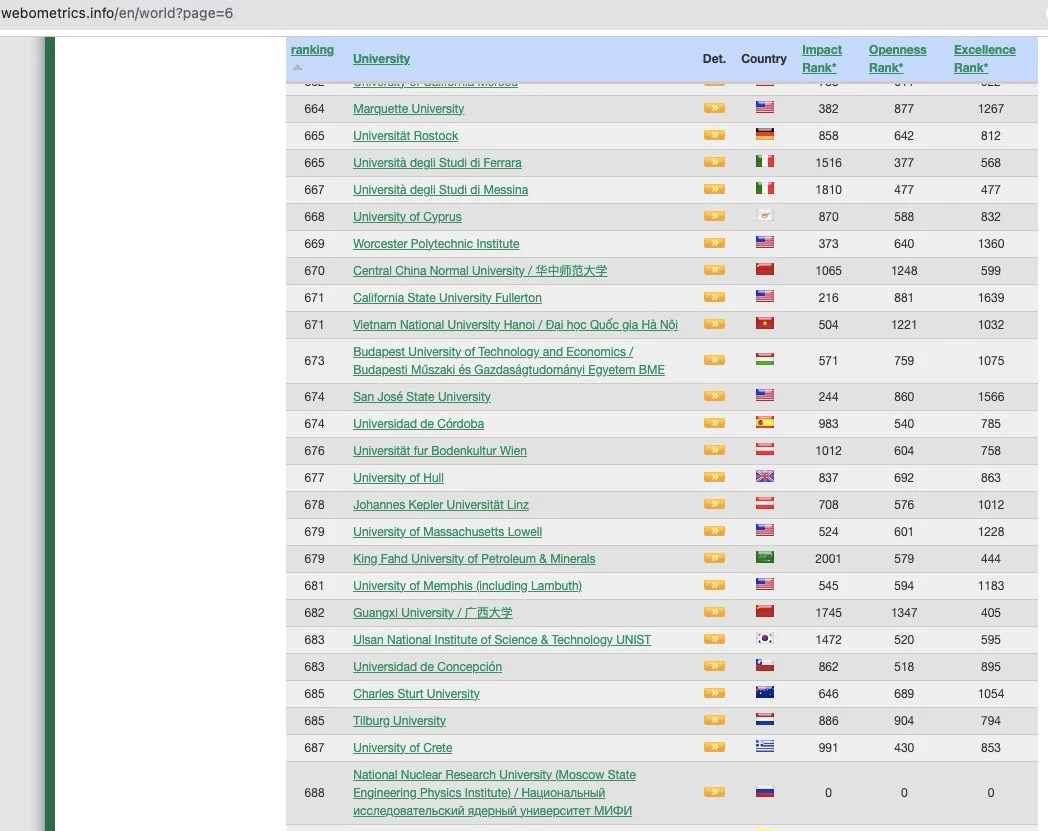
Vietnamese universities in various rankings.
INVEST IN TEAM AND INFRASTRUCTURE
Associate Professor Dr. Nguyen Xuan Hoan, Rector of Ho Chi Minh City University of Industry and Trade, said that when participating in rankings, the university is not so concerned about its position but rather about what it lacks in order to supplement and improve. He believes that if Vietnamese universities gradually improve their criteria and data provided by ranking organizations, their quality will increasingly approach that of the world .
However, according to Mr. Hoan, in the current context, to improve the quality of education at a university, people are the most important factor. They must dare to think, dare to act, dare to innovate, and dare to take responsibility. "We must invest in the teaching staff by creating the best working environment and policies, paying attention to their well-being, and increasing their income so that teachers can wholeheartedly dedicate themselves to the university. Secondly, we must invest in facilities to support teaching and learning. Finally, the leaders must set an example of responsibility," Mr. Hoan stated.
Meanwhile, according to Professor Nguyen Minh Ha, Rector of Ho Chi Minh City Open University, the key to building quality still lies in having a good training program, a good teaching staff, and excellent learning outcomes. Regarding learning outcomes, it is necessary to improve foreign language proficiency, computer skills, and soft skills to meet international standards. The quality of education is measured by whether graduates find employment in their field with high, stable incomes, develop their personal capabilities, and continue to self-train to adapt to the rapid changes in the modern socio-economic landscape of Vietnam and the world.
You should participate in the rankings, but don't focus too much on the ranking itself.
University rankings provide a platform for universities to compare themselves with other universities internationally, understand their strengths and weaknesses, and improve their quality and standing. We should all participate in this competition because it benefits everyone: universities, students, and society.
The ranking, whether high or low, doesn't matter because it depends on the global standard. In this race, I might not run fast because others are faster.
In any game, some people follow the rules, while others break them. In Vietnam, as well as around the world, some schools use "tricks" to improve their rankings.
Dr. Nguyen Quoc Chinh (Director of the Center for Testing and Evaluation of Training Quality, Vietnam National University Ho Chi Minh City)
Many ranking criteria are more practical than just the number of publications.
Ranking is necessary, but it must be based on reasonable criteria and ensure integrity. Therefore, a ranking solution based on criteria that parents and society care about and that are easier to verify (many schools in the US are following this approach) is recommended. These criteria could include facilities, number of faculty members, number of students enrolled and graduating with relevant jobs, number of applied research projects, and the total value of technology transfer contracts. This is more practical than simply counting the number of publications, as the mix of genuine and fake publications is difficult to control.
Professor Hoang Van Kiem (Former Rector of the University of Information Technology, Vietnam National University Ho Chi Minh City)
Source link


![[Image] Hanoi's urban life under the challenge of a "scorching hot" environment](https://vphoto.vietnam.vn/thumb/1200x675/vietnam/resource/IMAGE/2026/05/25/1779706979265_nang-nong-t5-2026-minh-duy-7-4636-jpg.webp)


![[Image] Close-up view of the interchange connecting the two expressways and Long Thanh Airport.](https://vphoto.vietnam.vn/thumb/1200x675/vietnam/resource/IMAGE/2026/05/25/1779703378210_ndo_br_z7863716673926-224453a31600126cce10622af6290afd-4549-jpg.webp)





























































































Comment (0)