

Seasonal calendar for each ecological zone
The Vice Chairman of the People's Committee of An Giang province, Ngo Cong Thuc, has just signed and issued a Notice on the seasonal planting schedule for rice crops throughout the year, applicable to the entire province. This is an important basis to help localities proactively arrange production, avoid floods and pests, adapt to climate change, ensure food security, and enhance the competitiveness of rice.
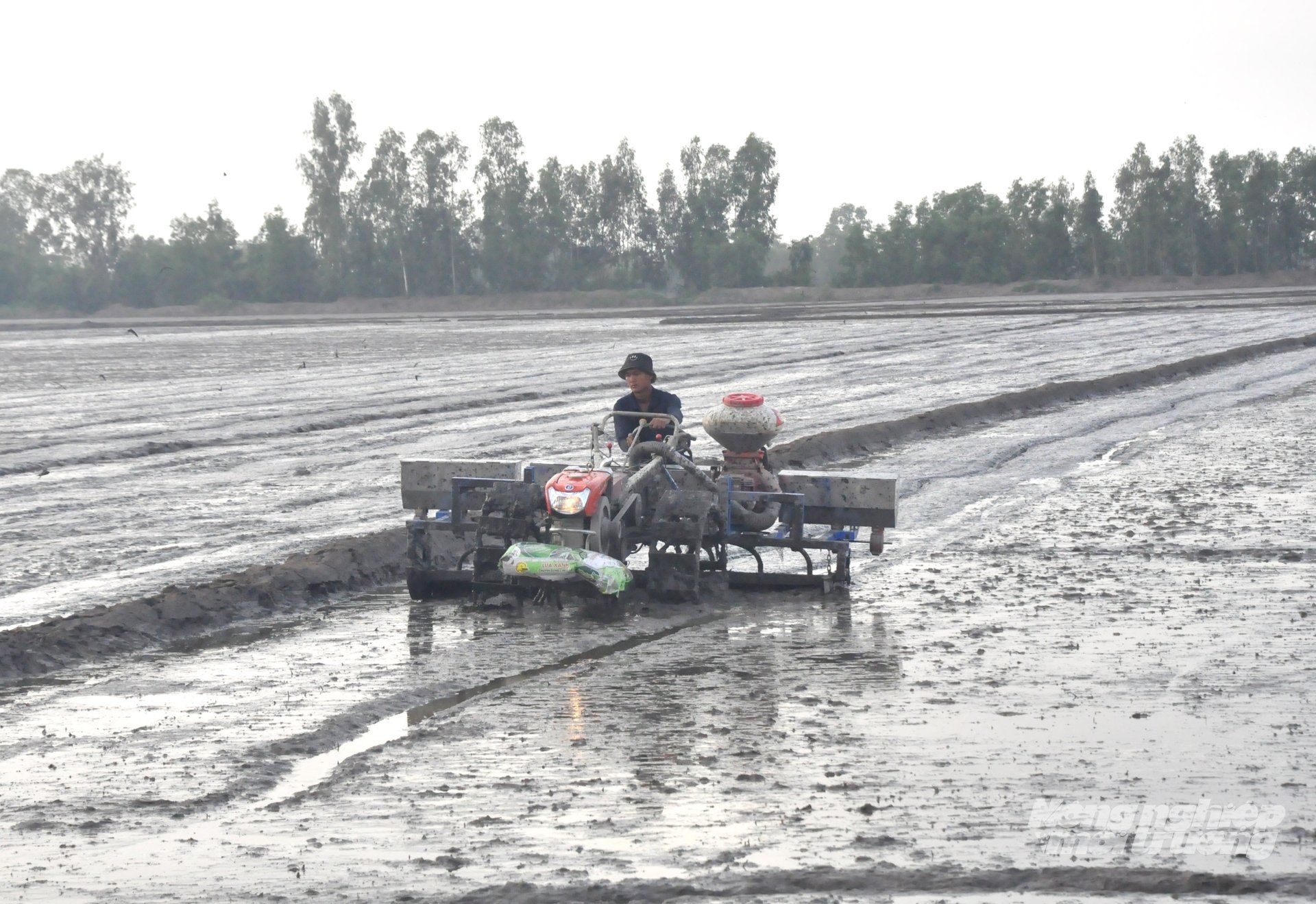
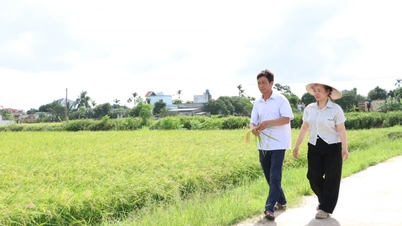
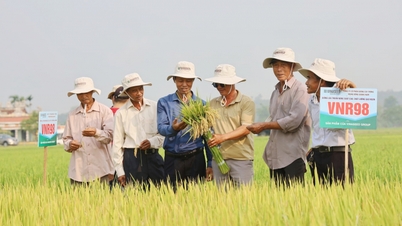
Establishing a planting schedule for rice crops throughout the year helps localities proactively plan production, prevent diseases and adverse weather conditions, and improve production efficiency. Photo: Trung Chánh.
Currently, An Giang province has over 623,000 hectares of rice land, divided into four distinct ecological zones. The area between the Tien and Hau rivers, with over 63,000 hectares, is a fertile alluvial plain, favorable for producing three crops per year. The Long Xuyen Quadrangle occupies the largest area, over 327,600 hectares, with a complete irrigation system, making it the province's "strategic rice granary". The area west of the Hau River has over 121,900 hectares with a reliable water source, while the U Minh Thuong area, with over 110,700 hectares, is affected by specific acidity and salinity, suitable for rice-shrimp farming or seasonal rice cultivation.
Based on the characteristics of each ecological region, the province has developed a seasonal planting schedule for four main crops: the main crop, winter-spring, summer-autumn, and autumn-winter. The main crop is planted between August 25th and October 20th, focusing on U Minh Thuong, along the Cai Lon River and the coast, and upland rice (in the Long Xuyen Quadrangle). The province recommends that saline-tolerant areas should leach out salt 20-30 days in advance and select drought- and salt-tolerant varieties for sowing and transplanting.
The winter-spring crop has a general planting schedule from November 1st to December 31st (except for U Minh Thuong, which runs from October 5th to November 15th to avoid salinity), and is the most important crop of the year, yielding high productivity and quality. Farmers are advised to plant in a concentrated manner, applying the 3 Reductions - 3 Increases, 1 Must - 5 Reductions, the process of the 1 million hectare high-quality rice project, and IPM.
The summer-autumn crop is planted between March 15th and May 15th, but is susceptible to drought, salinity at the beginning of the season, and storms at the end. In the U Minh Thuong region, planting should be delayed (May 15th - June 15th) depending on rainfall availability. The autumn-winter crop, from July 10th to September 10th, should only be planted in areas with safe dikes, using short-day, flood-tolerant varieties to ensure safety during the rainy season.
The People's Committee of An Giang province has requested localities to proactively monitor meteorological and hydrological conditions, and flexibly adjust within the prescribed framework, but without disrupting the overall plan. This is a key solution for An Giang to effectively respond to the increasingly complex climate change in the Mekong Delta.
Production is linked to the market.
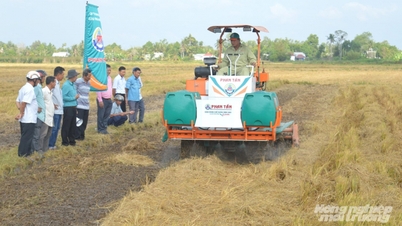
To ensure the effectiveness of the seasonal cropping calendar, the People's Committee of An Giang province has assigned clear responsibilities to relevant departments, agencies, and localities. The Department of Agriculture and Environment is responsible for guiding and training on technical aspects, forecasting pests and diseases, and monitoring implementation progress in communes and wards. The Department of Industry and Trade connects with markets, provides information on consumption and export demand to guide crop structure in accordance with market signals.
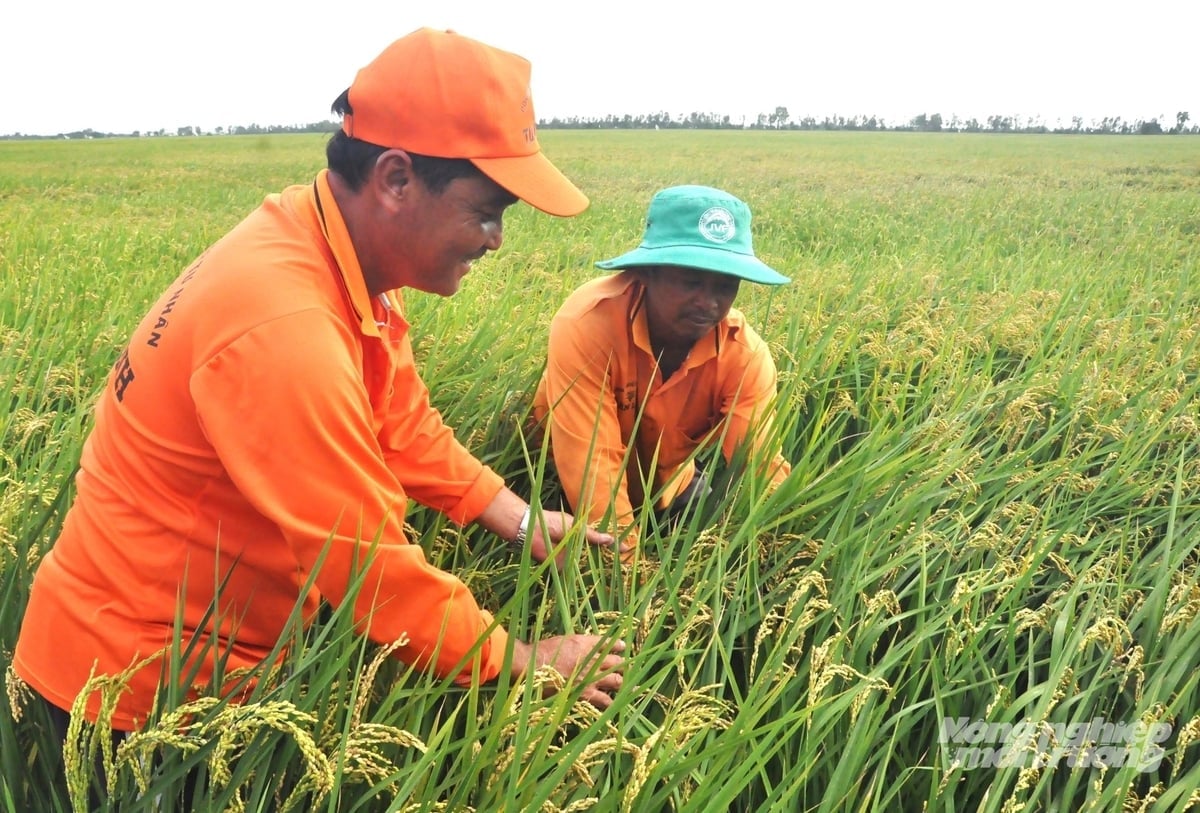
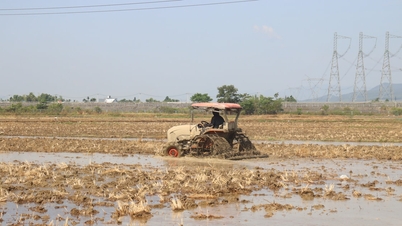
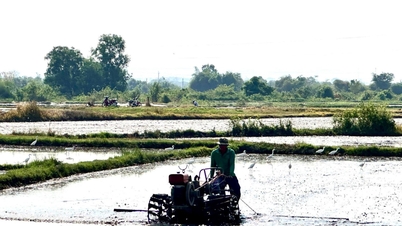
An Giang currently has over 623,000 hectares of rice land, arranged in a production schedule with 4 main crops, a total planted area of approximately 1.3 million hectares, and a harvest yield of 8.7-8.7 million tons of rice per year. Photo: Trung Chánh.
Local authorities at the commune and ward levels play a crucial role in directly establishing planting schedules for each field based on irrigation conditions, water sources, tidal patterns, and flood levels. They must encourage farmers to plant their crops simultaneously and in a concentrated manner. They should also review and upgrade dikes, dredge canals, proactively store freshwater during the dry season, and clean the fields before planting.
Organizing production according to a common schedule not only helps ensure crop safety but also creates large, stable raw material areas, increasing the ability to negotiate contracts. In this, cooperatives play a bridging role between farmers, businesses, and between production and the market. The province encourages cooperatives to use certified seeds, increase mechanization, and apply ecological technologies, IPM, and IPHM. Organizing synchronized production facilitates contract signing, enhances value, and increases transparency in the rice supply chain.
The issuance of a year-round seasonal planting schedule is an important step towards sustainable rice production, reducing natural disaster risks, proactively managing irrigation, and enhancing the competitiveness of An Giang rice in domestic and international markets.
Source: https://nongnghiepmoitruong.vn/an-giang-xay-dung-khung-lich-thoi-vu-san-xuat-cac-vu-lua-trong-nam-d784063.html
![[Photo] First session of the 14th Congress of the Vietnam Trade Union](https://vphoto.vietnam.vn/thumb/1200x675/vietnam/resource/IMAGE/2026/06/03/1780465947883_ndo_br_img-3852-jpg.webp)
![[Photo] Secretary of the National Assembly Party Committee, Chairman of the National Assembly presides over the meeting of the Standing Committee and Executive Committee of the National Assembly Party Committee.](https://vphoto.vietnam.vn/thumb/1200x675/vietnam/resource/IMAGE/2026/06/03/1780480353201_ndo_br_bnd-2585-jpg.webp)
![[Photo] General Secretary and President To Lam presides over a meeting with the Central Organizing Committee.](https://vphoto.vietnam.vn/thumb/1200x675/vietnam/resource/IMAGE/2026/06/03/1780482764658_a1-bnd-4741-3342-jpg.webp)










![The Essence of Viet Bac Villages: [Part 3] The Precious Fragrance of Nghinh Tuong](https://vphoto.vietnam.vn/thumb/402x226/vietnam/resource/IMAGE/2026/05/29/1780020600366_5237-tinh-tuy-ban-lang-viet-bac-bai-3-chuyen-o-nghinh-tuong-050626_700.jpeg)
![The Quintessence of Northern Vietnam's Villages: [Part 2] The Famous Cassava Noodles of Kunming](https://vphoto.vietnam.vn/thumb/402x226/vietnam/resource/IMAGE/2026/05/28/1779937455892_3929-3144-mien-dong-15-nongnghiep-023138.jpeg)
![The Essence of the Village: [Part 1] Wine on the mountain, tea in the clouds - Bang Phuc](https://vphoto.vietnam.vn/thumb/402x226/vietnam/resource/IMAGE/2026/05/27/1779841729178_3821-1jpg-nongnghiep-103814.jpeg)


















![[Video] Sunset at Lap An Lagoon – Where the sun sets over the fishing nets](https://vphoto.vietnam.vn/thumb/1200x675/vietnam/resource/IMAGE/2026/05/31/1780192137701_beach-landscape-sea-water-nature-grass-745871-pxhere-com.jpeg)


























Comment (0)