

 |
| The royal decree bestowing the title "Virtuous and Worthy of Commendation" by King Khai Dinh upon Mrs. La Thi Noi of Na Con village, Binh An commune, has been preserved by her descendants for many generations. |
Three "unique" royal decrees.
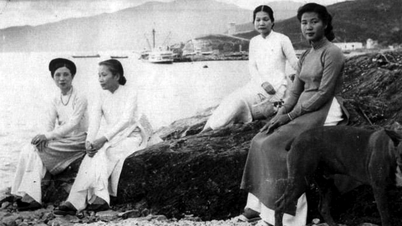
People often liken the fair skin and radiant smiles of Tuyen Quang's young women to the spiritual essence of the mountains and forests, bathed in the rich alluvial waters of the rivers. For generations, the Lo and Gam rivers have gently nurtured the girls, giving them a fresh and gentle beauty. However, when discussing the deeper beauty of Tuyen Quang, historians agree that even the most exquisite beauty will eventually show the marks of time. The enduring beauty of the women here doesn't lie in silk and brocade, but rather in their diligence, resourcefulness, and unwavering loyalty.
The history of this land clearly demonstrates this spirit. When the borderlands were threatened by invaders, these seemingly delicate and fragile women displayed extraordinary strength. Silently wiping away their tears, they devoted themselves to caring for their husbands' families, becoming a solid support system so that those on the front lines could confidently fight to protect the homeland. When their husbands bravely fell, they bore the full burden of widowhood but did not give up. Regarding this issue, folk culture researcher Tong Dai Hong shared: “Although they lost their husbands at a very young age, because of their filial piety, these women suppressed their grief. With the strength of women from the mountainous regions, they remained steadfast in their loyalty to their husbands, devotedly cared for their parents, and spent the rest of their lives toiling day and night to raise their young children to adulthood.”
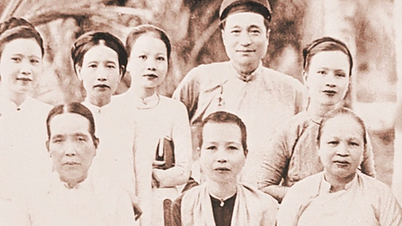
Because of their impeccable virtue and noble sacrifice, in 1918 (the third year of the reign of Emperor Khai Dinh), Emperor Khai Dinh decided to bestow the prestigious title "Virtuous and Worthy of Commendation" upon three women: Ma Thi Thieu, La Thi Noi, and Nguyen Thi Ninh. A particularly rare detail is that all three lived in the same small mountainous district (formerly Tho Binh district), now Binh An and Minh Quang communes. All three were daughters-in-law of the prestigious Ma Doan family.
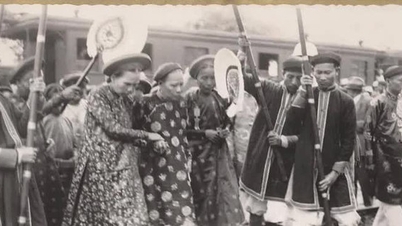
In feudal society, "Virtue Worthy of Emulation" was the highest recognition and the most solemn honor bestowed by the court upon women who remained faithful to their husbands, cared for their parents, and raised their children to be virtuous and talented. Usually, an entire large province would undergo a rigorous selection process to honor just one person, yet in this remote mountain region, three women received this special privilege. This clearly demonstrates the exemplary family values and radiant virtue of the women in this area.
Unlike the fragile, gold-leafed paper that easily decays with time, the three imperial decrees in this mountain village were crafted into solid blocks of precious wood. Each block measures approximately 1 meter long, 50 centimeters wide, and 10 centimeters thick, incredibly sturdy and imbued with the spirit of mountain culture. In the center of the wood surface, four large Chinese characters, "Virtue Worthy of Commendation," are exquisitely carved in relief and majestically gilded, defying the dust of centuries of change.
Deserving of the title "exemplary in virtue".
Among the three revered female heroes, the story of Mrs. Nguyen Thi Ninh, originally from Khuc Phu commune (now Minh Quang commune), always evokes deep emotion in posterity. Mrs. Ninh was the wife of Chief Commander Ma Doan Kham, a descendant of a prestigious military family and the granddaughter of the illustrious Duke Ma Doan Man.
When invaders invaded and harassed the land, Mr. Kham, with his loyal and patriotic blood, bravely fell on the battlefield. His death left behind a young wife, renowned throughout the region for her beauty, and three very young children. Ignoring all offers of marriage from powerful figures seeking to provide care and support, Mrs. Ninh resolutely remained a widow, faithful to her husband. With her delicate hands and small shoulders, she toiled day and night, enduring the sun and rain in the cornfields and rice paddies to raise her children.
That silent sacrifice bore sweet fruit. As the years passed, her three sons all became strong pillars of their homeland. Her eldest son, Ma Doan Khon, with his outstanding intelligence and upright character, served in the army and achieved many meritorious deeds. Later, he was entrusted with the position of District Chief of Chiem Hoa and then promoted to Provincial Governor of Tuyen Quang. Following in his footsteps, her two younger sons, Ma Doan Duong and Ma Doan Nghiem, also cultivated their talents and virtues, and later both rose to the position of Village Chief, bringing immeasurable honor and pride to their family.
Besides Mrs. Ninh, two other virtuous women from this region, Mrs. Ma Thi Thieu and Mrs. La Thi Noi from Tho Binh commune (now Binh An commune), also experienced similar grief. Their husbands sacrificed their lives for the country, yet they suppressed their sorrow, using the resilience and fortitude of Tuyen Quang women to protect and raise their children and grandchildren to become responsible adults.
Sitting in her traditional house, Mrs. Ma Thi Yeng from Na Con village, Binh An commune - who is directly tending to the ancestral tablet of Mrs. La Thi Noi - expressed her heartfelt feelings: "Looking up at the gold-plated wooden tablet passed down by our ancestors, even though modern life outside has many temptations and changes, the younger generation, and especially the women of the Ma Doan family, always remind ourselves to prioritize loyalty and diligence, living in a way that fulfills our love and loyalty to our family and homeland."
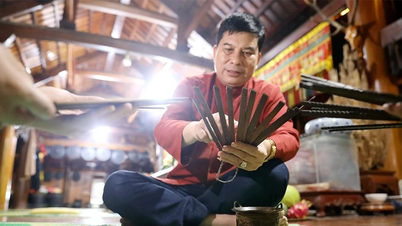
Folklorist Tong Dai Hong, who meticulously copied and deciphered the Chinese characters on the woodblocks, proudly remarked: "The fact that King Khai Dinh bestowed the woodblock decree upon three women demonstrates their immense influence in terms of morality and character. It is an affirmation that the women of Tuyen Quang are not only beautiful in appearance and gentle in demeanor, but their self-sacrifice and resilience have resonated far and wide, even reaching the capital."
On a leisurely weekend, sipping a hot cup of tea and reflecting on the three wooden plaques inscribed with the four golden characters "Virtue Worthy of Emulation," my heart is suddenly filled with emotion. It's not just a story of the past, but an eternal hymn of praise dedicated to the gentle yet incredibly strong and steadfast beauty of the wildflowers known as: the daughters of Tuyen Quang.
Giang Lam
Source: https://baotuyenquang.com.vn/van-hoa/du-lich/202603/ba-moc-ban-sac-phong-o-tho-binh-c1b0316/





































































































Comment (0)