

On October 17th, Dr. Nguyen Minh Tien, Deputy Director of Children's Hospital of Ho Chi Minh City, stated that there are two main groups of causes leading to milk poisoning.
Firstly, milk can become contaminated. When packaging or containers are torn, punctured, leaking, or the milk is past its expiration date, or stored in unsuitable environments, it can become contaminated with staphylococcus, salmonella, E. coli, fungi, etc., causing food poisoning.
Secondly, there is the group of milk products containing toxins, which have not been tested for safety and whose origin is unclear. These milk products are formulated with excessively high levels of ingredients, and the raw materials, if stored for too long, can spoil and cause poisoning.
People who suffer from milk poisoning will also have some characteristic symptoms such as abdominal pain, vomiting, diarrhea... In more severe cases, those poisoned may fall into a coma, have seizures, and experience acute respiratory failure.
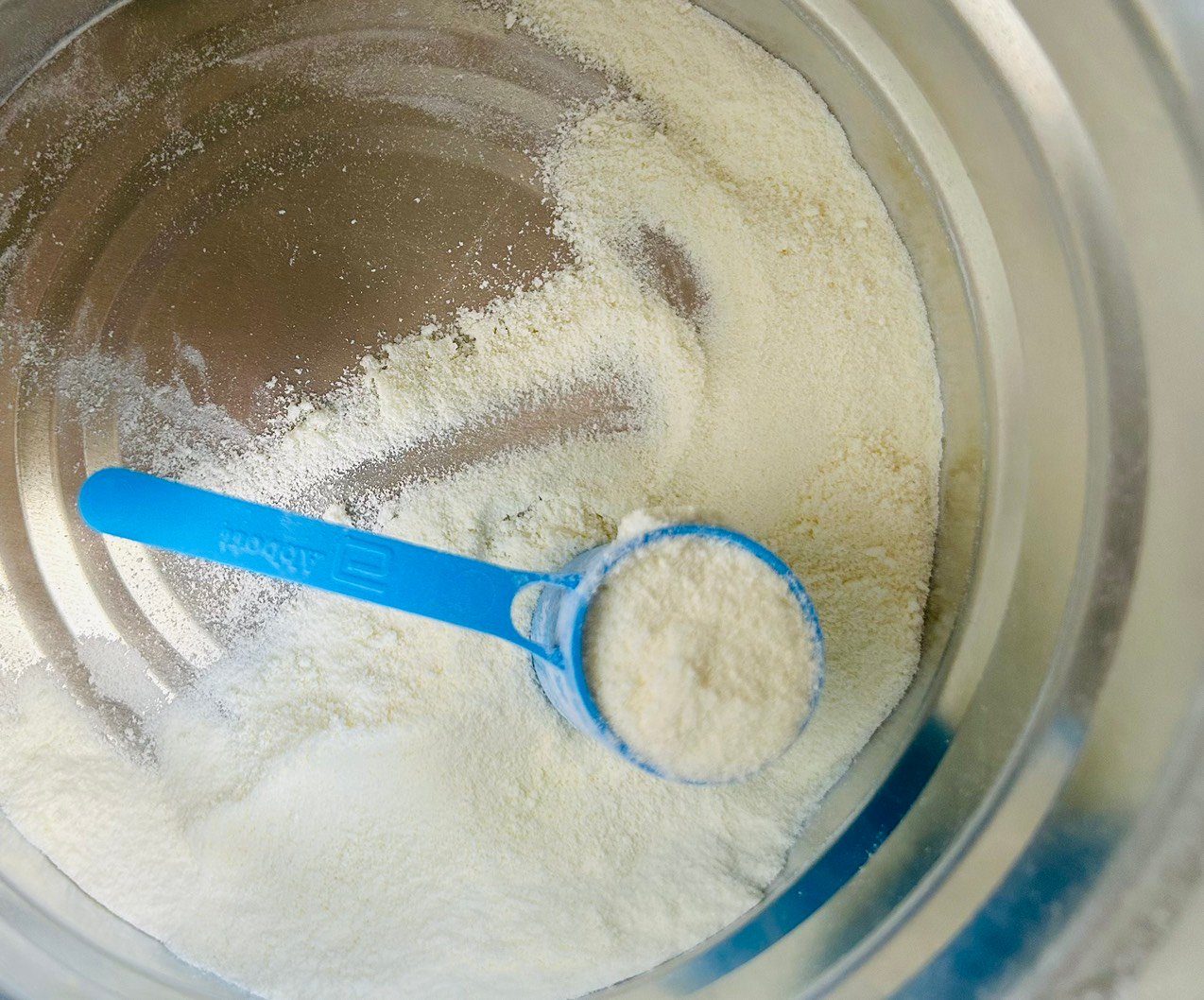
Do not use powdered milk if it is lumpy or discolored.
"As soon as symptoms of poisoning are detected, children and patients should be taken to a medical facility quickly. During that time, fluids and oral rehydration solution (ORS) should be given to replenish fluids and minerals lost due to vomiting and diarrhea," Dr. Tien shared.
To minimize the risk of milk poisoning, Dr. Tien advises parents to choose milk from reliable sources, with quality control, a long expiration date, and a safety seal. Additionally, depending on the child's milk consumption, a small 450g container can be used for 1-2 weeks. For older children who consume more, a 900g container should be used for 2-4 weeks or as recommended on the packaging. Do not use for more than 4 weeks after opening the container.
"Some signs that parents should look out for when milk is contaminated include clumping, loss of smoothness, and discoloration," the doctor shared.
According to recommendations from the Food Quality Management Department of the Ho Chi Minh City Food Safety Management Board, when purchasing canned or packaged milk and dairy products, we need to pay attention to the production date or expiration date. In addition, we should carefully check to ensure that the packaging is intact, not dented, bulging, rusty, or damaged.
Choose to buy products from stores that meet safety standards, such as: products are stored in a cool, well-ventilated place, not directly in sunlight, and not stacked too many cartons of milk or other products on top of each other; for yogurt products, storage conditions must comply with the manufacturer's requirements.
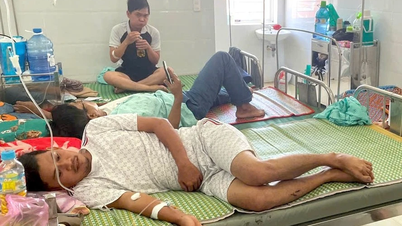
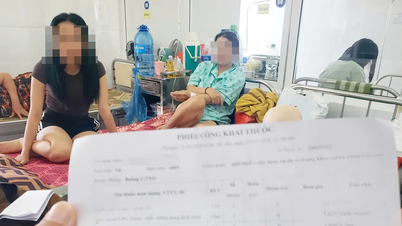
Investigating the suspected cause of milk poisoning in Tien Giang.
Regarding the suspected milk poisoning and deaths, as previously reported by Thanh Nien Online , the Food Safety Department ( Ministry of Health ) has requested the Tien Giang Provincial Department of Health to urgently direct the tracing of the origin of the milk product suspected of causing the poisoning.
Previously, on October 15th, there were two deaths and one person hospitalized with suspected food poisoning after drinking milk in Hoa Hung commune, Cai Be district, Tien Giang province.
The Food Safety Department requests the Tien Giang Provincial Department of Health to urgently provide information and coordinate with the Vinh Long Provincial Department of Health to direct hospitals where patients are being treated to focus on actively treating and saving the patients.
Directing relevant agencies of the Department of Health to coordinate with the local product management agency to trace the origin of the suspected milk product, inspect the production facility, stop the product's circulation, and take samples for testing food safety indicators (if the suspected product is produced or sold locally).
Source link
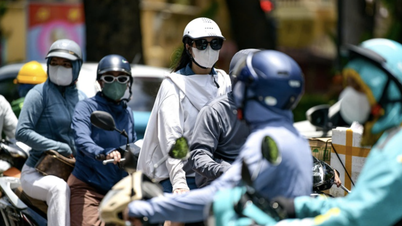
![[Image] Hanoi's urban life under the challenge of a "scorching hot" environment](https://vphoto.vietnam.vn/thumb/1200x675/vietnam/resource/IMAGE/2026/05/25/1779706979265_nang-nong-t5-2026-minh-duy-7-4636-jpg.webp)

![[Image] Close-up view of the interchange connecting the two expressways and Long Thanh Airport.](https://vphoto.vietnam.vn/thumb/1200x675/vietnam/resource/IMAGE/2026/05/25/1779703378210_ndo_br_z7863716673926-224453a31600126cce10622af6290afd-4549-jpg.webp)





















































































Comment (0)