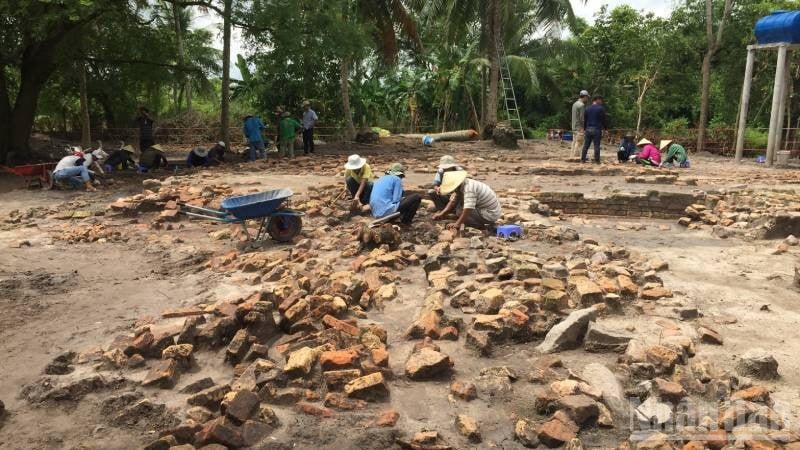
Excavation of the Óc Eo-Ba Thê culture site in Óc Eo commune.
In 1944, French archaeologist Louis Malleret visited the Oc Eo region in An Giang province and discovered an ancient culture. Subsequently, scientists from Vietnam and abroad continued to explore and excavate. The Oc Eo-Ba The region gradually revealed ancient architectural structures of the Funan Kingdom, built from approximately the 6th to 8th centuries.
Oc Eo: A culture rich in historical and archaeological values.
Archaeologists expanded their research area, gradually unearthing relics of the Oc Eo-Ba The culture in Thoai Son district (now Oc Eo commune) and many other locations in the former An Giang province and the bordering area of the former Kien Giang province.
At scientific conferences related to the Oc Eo culture, scientists and archaeologists pointed out that research and archaeological findings show that ancient Oc Eo-Ba The was not only an ancient city, but also a trading port and a major religious center with the parallel existence of both Buddhism and Hinduism.
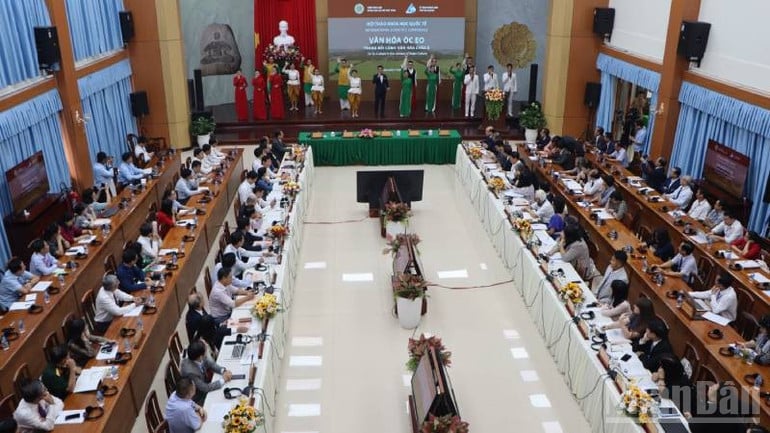
Scientific conferences have assessed the Oc Eo culture as having very important value.
Many valuable artifacts unearthed during excavations reveal that the Oc Eo trading port had extremely rich trade, not only within Southeast Asia, but also with West Asia, India, and other regions.
With its historical, cultural, architectural, and artistic values, the Oc Eo-Ba The site was classified as a Special National Monument by the Prime Minister in 2012. In 2013, the People's Committee of An Giang province (formerly) established the Oc Eo Cultural Relic Management Board of the province to continue archaeological excavations, preservation, restoration, and promotion of the value of the Oc Eo cultural relic…
The Prime Minister issued Decision No. 115/QD-TTg dated January 23, 2021, approving the plan for the preservation, restoration, and rehabilitation of the Oc Eo-Ba The National Special Monument in Oc Eo town, Thoai Son district, An Giang province. The Prime Minister assigned the province and relevant ministries and agencies to organize and implement the plan.
According to the Provincial Management Board of Oc Eo Cultural Relics, on January 4, 2022, the UNESCO World Heritage Center inscribed the Oc Eo-Ba The Archaeological Site on the tentative list for inclusion in the World Heritage list.
Currently, phase 1 of the dossier for the site has been completed, and phase 2 is underway, which involves preparing the dossier for submission to UNESCO for recognition as a World Cultural Heritage site.
Following the merger of An Giang and Kien Giang provinces into a new province, the leaders of the new An Giang province continued to inspect and direct the Oc Eo Cultural Relic Management Board to expedite procedures so that the process of building the nomination dossier for the Oc Eo-Ba The Archaeological Site in An Giang province to be submitted to UNESCO for recognition as a World Cultural Heritage site could be completed on schedule.
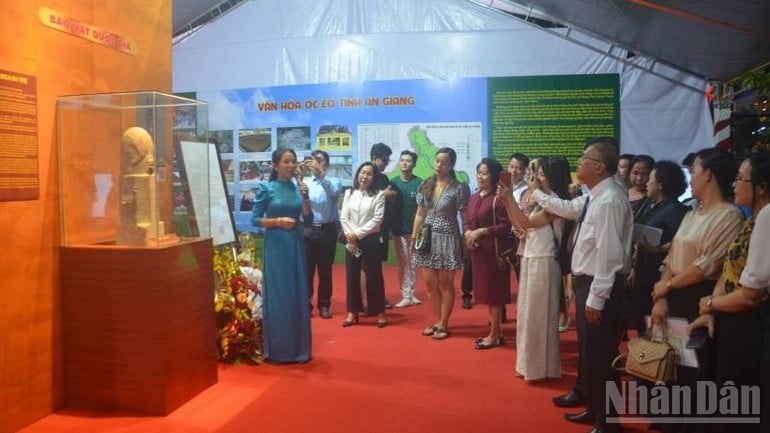
Exhibition of Oc Eo artifacts at An Giang Provincial Museum
When recognized by UNESCO as a World Cultural Heritage site, the site will not only be a source of pride for the province and the country of Vietnam, but also an international recognition of the historical, cultural, and archaeological values of the Southern region, especially An Giang province.
10 national treasures
In recent years, in addition to provincial budget funding, the Oc Eo-Ba The historical site has received investment from central ministries and agencies. The projects implemented here have yielded certain results, with the site being better protected and becoming more and more well-maintained.
Throughout the province, there are 84 Oc Eo cultural relics recognized by the central and provincial governments through inventory and classification. Among them is the Oc Eo-Ba The Special National Relic Complex in Oc Eo commune (formerly part of Thoai Son district, An Giang province) with over 30 relics; there is 1 national-level relic and 4 provincial-level relics.
Thousands of artifacts buried beneath ancient soil have revealed the secrets of an ancient dynasty. Among them, the Giồng Xoài site is a large sand dune located in the northwestern part of the Óc Eo plain within the Óc Eo-Ba Thê archaeological complex.
Here, archaeologists have identified a pre-Oc Eo settlement layer along with traces of religious architectural foundations made of brick and stone... bearing characteristics of various developmental stages from the mid-1st millennium to the early 2nd millennium.
Among the thousands of artifacts of the Oc Eo culture found in An Giang, 10 have been recognized by the Government as national treasures. Currently, the Oc Eo Cultural Relics Management Board of the province preserves 4 of these treasures: the Linh Son Bac Buddha relief, the Nandin Giong Cat ring, the Linh Son Bac Buddha head, and the Go Cay Tram burial jar.
The An Giang Provincial Museum houses six national treasures, including: a statue of the god Brahma, a wooden Buddha statue, a stone Buddha statue, a set of stone Linga-Yoni, the Mukhalinga Ba Thê, and the Linga-Yoni Linh Sơn set.
The An Giang Provincial Museum provided us with information about six national treasures. We were particularly interested in the statue of the god Brahma. The An Giang Provincial Museum stated that the statue of Brahma, discovered in Giong Xoai in 1983, is a unique piece, measuring 37.5 cm in height and 22.9 cm in shoulder width, dating back to the 6th-7th centuries.
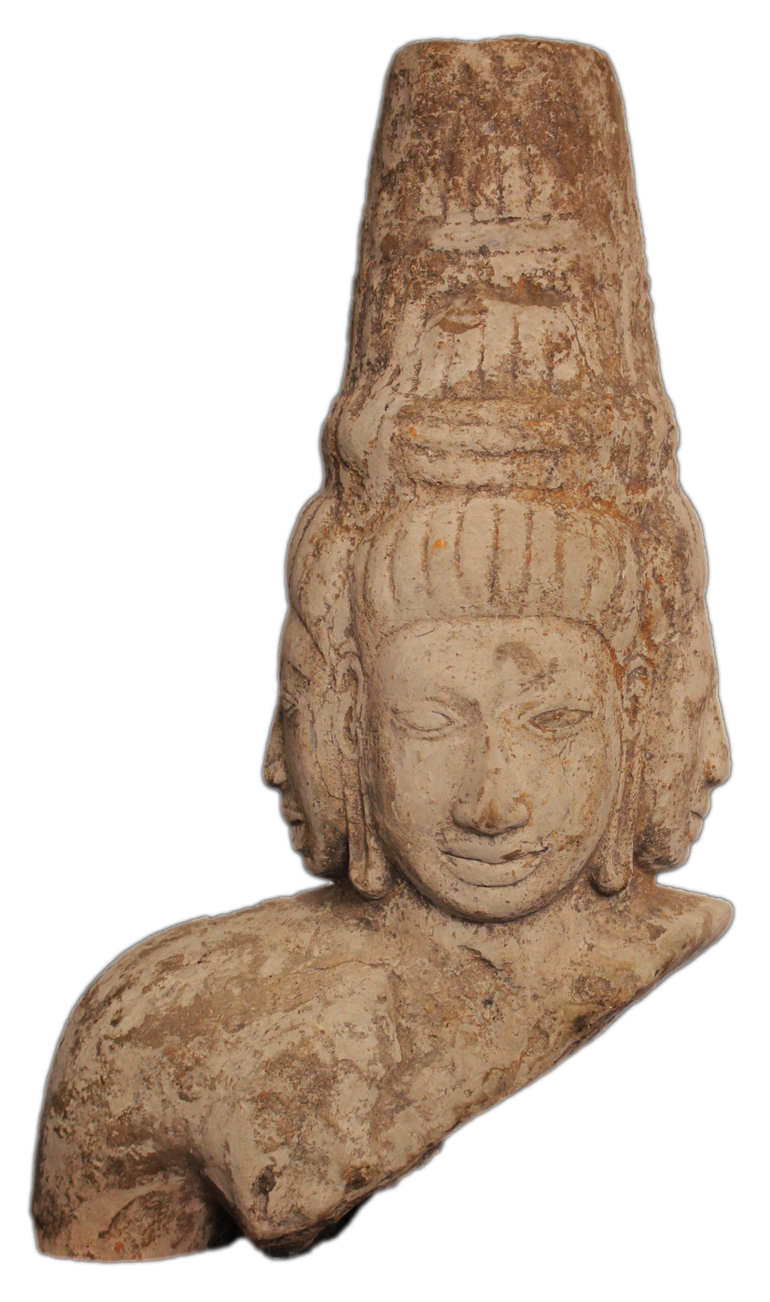
The statue of the god Brahma was recognized as a national treasure in 2018.
The statue of the god Brahma, remaining from the upper part of the chest to the top of the head, is made of fine-grained sandstone, with a thick layer of weathered grayish-white patina on its surface. This is a unique work of art, an important scientific document not only for archaeology but also of great value for research in history, culture, art, religion, and more.
According to the An Giang Provincial Museum, the Brahma statue was only recognized as a national treasure in 2018. Prior to that, in 2014, the Metropolitan Museum (USA) contacted the An Giang Museum, proposing to display the Brahma statue alongside other ancient artifacts.
The museum requested that they appraise the Brahma statue for insurance purposes, and the Metropolitan Museum valued the insurance at $2 million.
Along with the statue of the god Brahma is a wooden Buddha statue made of teak wood, dating back to the 4th-6th centuries. The ancient statue was discovered in 1983. At that time, people digging an irrigation ditch in the Giồng Xoài hill area found the statue, and it was collected and transferred to the museum by officials of the An Giang Provincial Museum in 1984.
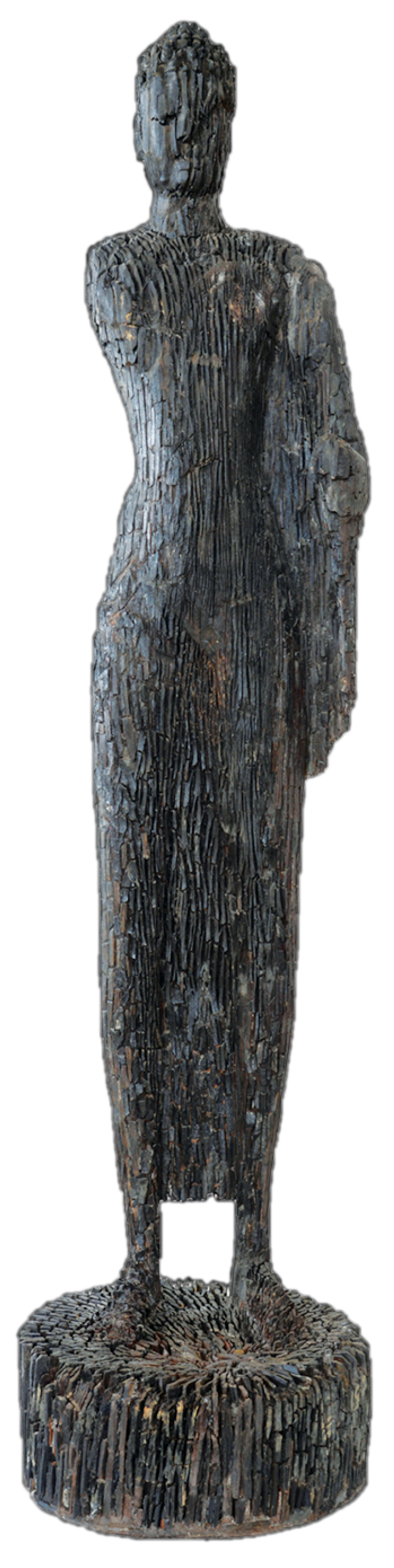
The wooden Buddha statue from Giồng Xoài has been recognized as a national treasure.
This artifact is a representative product, the pinnacle of sculptural art in particular. It is a rare and valuable artifact, an important historical document for understanding and researching the history of art, religion, cultural exchange, and identifying the socio-cultural and religious characteristics of the inhabitants of Oc Eo-Ba The in particular and the Mekong Delta region in general during this period.
The Linh Son Linga-Yoni set, a single piece crafted from fine-grained dark brown sandstone, sits atop a pedestal made from fine-grained dark gray sandstone. The pedestal is intact, with all its components fitting together tightly, and the details are remarkably clear.
The artifact was discovered by local people in 1985 at the foot of the eastern mountain in the Linh Son Pagoda area within the Oc Eo-Ba The historical site complex. The An Giang Provincial Museum collected and transferred it to the museum several times, and it was only in 1986 and 1987 that it was fully assembled.
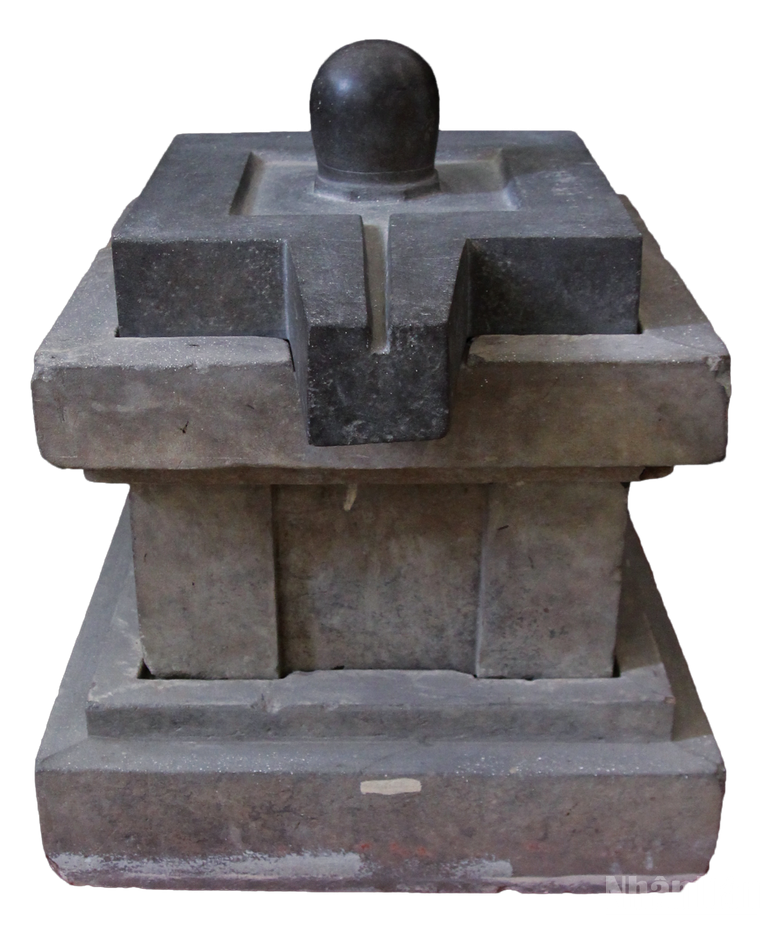
The Linh Son Linga-Yoni set has been recognized as a national treasure.
The Linga-Yoni set from Linh Son, with its multi-tiered base, has been found in several archaeological sites of the Oc Eo culture in southwestern Vietnam, but all that remains are fragments, with incomplete and disjointed components. The Linga-Yoni set found at Linh Son Temple is the only artifact with all its parts intact and properly fitted together, and is also the most complete and well-crafted artifact ever discovered.
The artifacts are the product of significant exchange and interaction between indigenous cultures and foreign cultural elements, serving as important highlights that contribute to a clearer understanding of the Oc Eo-Ba The archaeological site, which is recognized as a thriving center of population, economy, and culture during the Oc Eo culture and the Funan kingdom. These artifacts are valuable resources that allow scientists to approach and study the site from various perspectives...
Here are some images of national treasures of An Giang province:
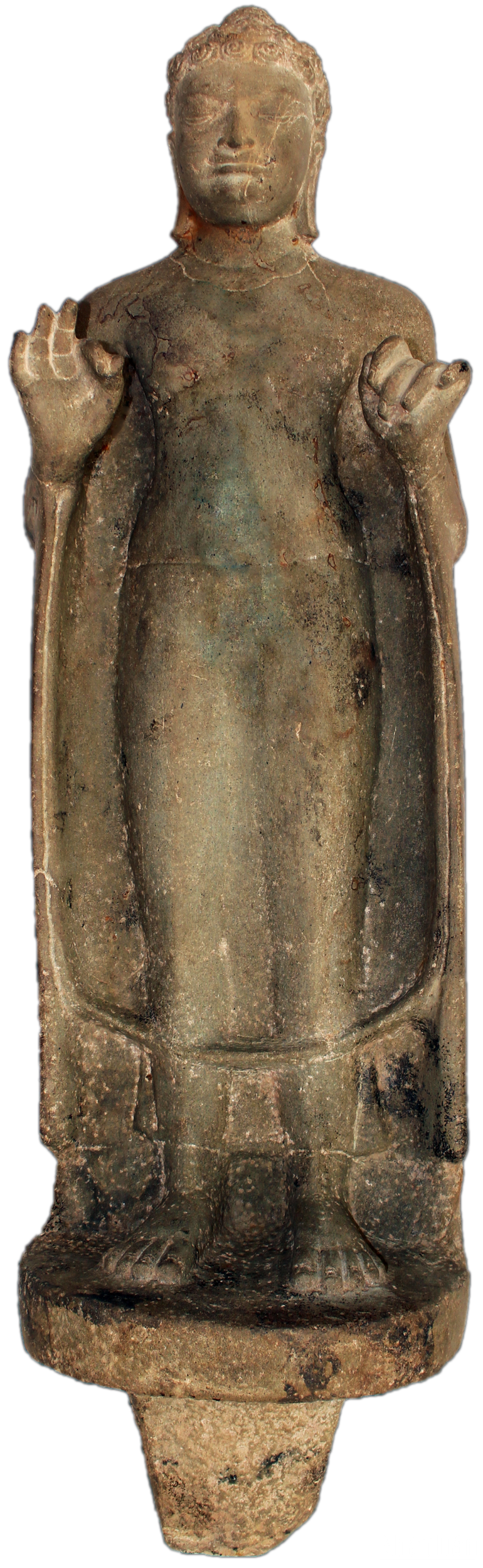
The Khánh Bình stone Buddha statue, unearthed in the former An Phú district (An Giang province), is now preserved at the An Giang Provincial Museum.
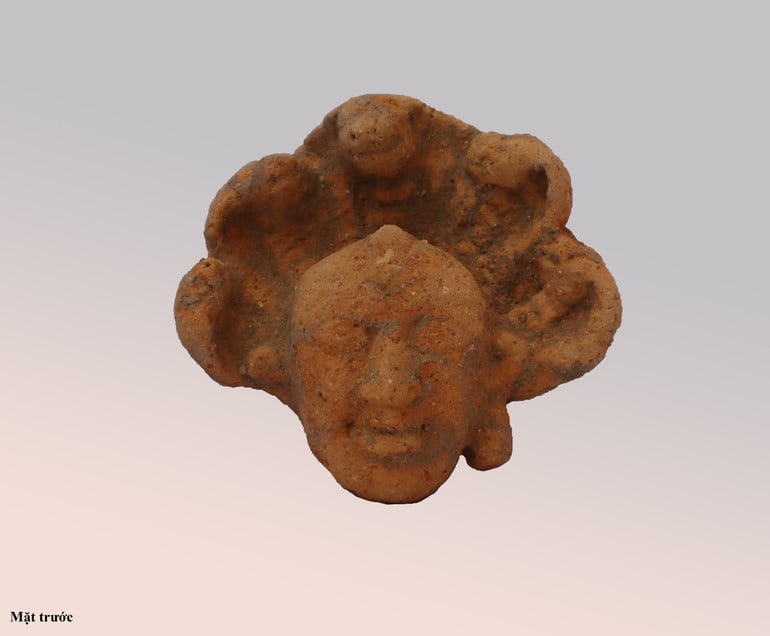
The head of the Linh Son Buddha statue is preserved at the Oc Eo Cultural Relics Management Board of the province.
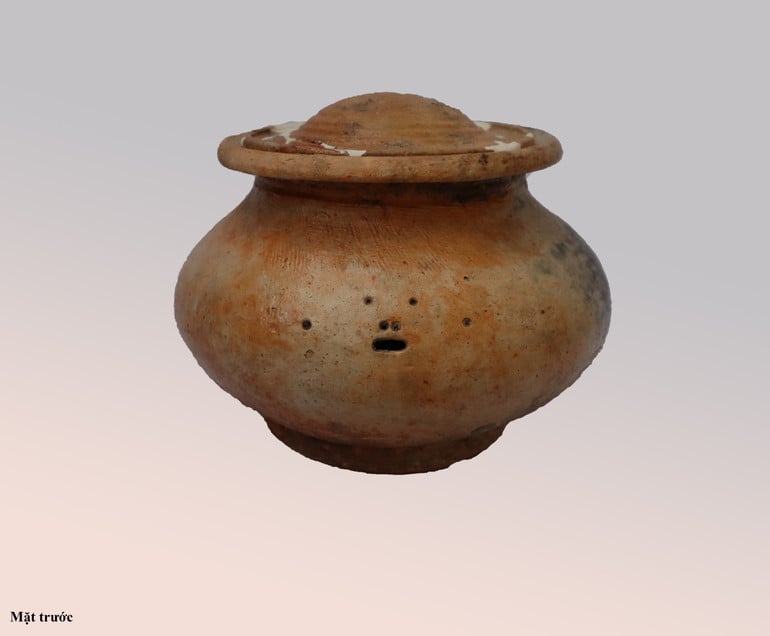
The burial jars from Gò Cây Trâm are preserved at the Oc Eo Cultural Relics Management Board of the province.
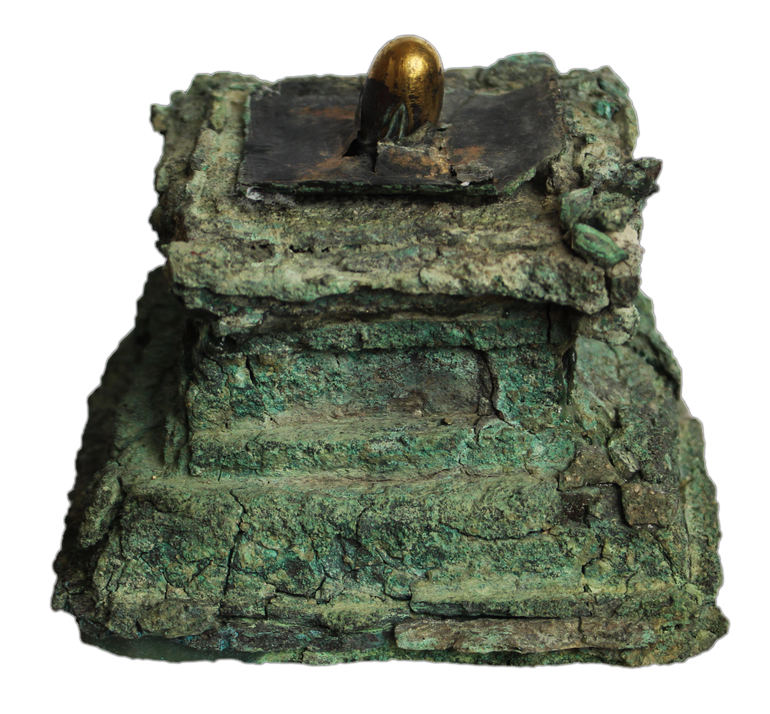
The Linga-Yoni set, including the Linga made of gold metal, is preserved at the An Giang Provincial Museum.
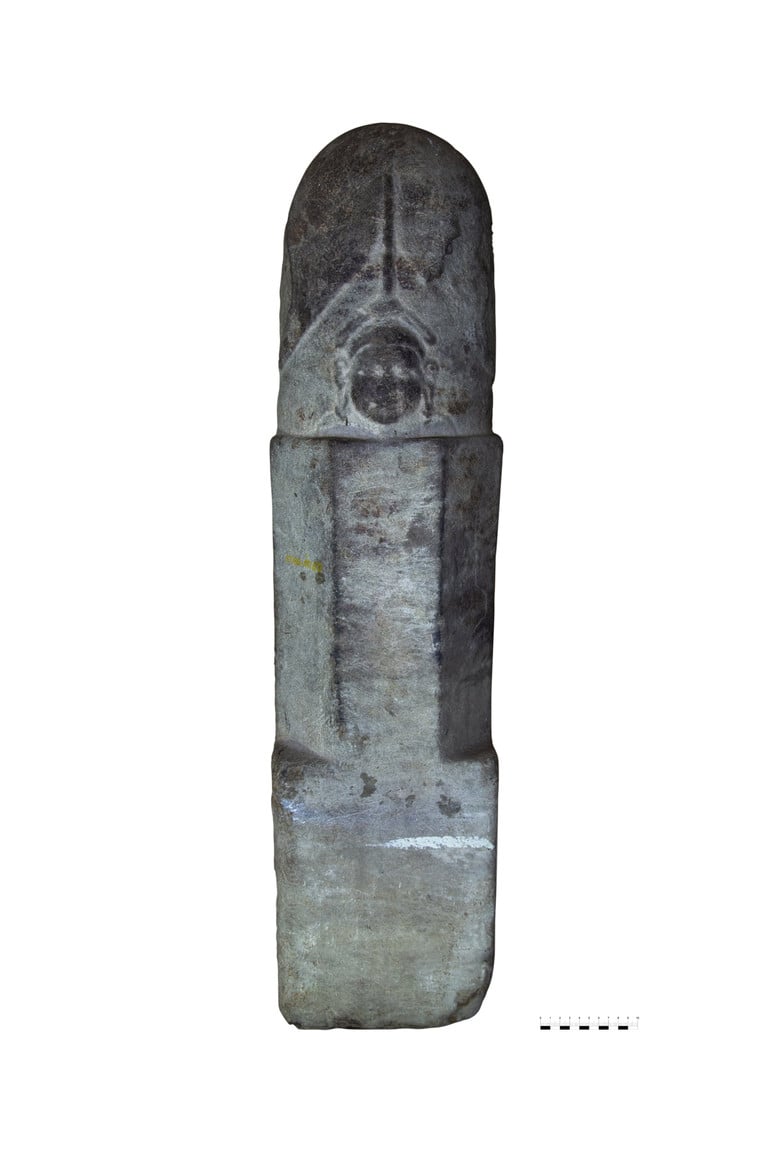
Mukhalinga Ba Thê is preserved at the An Giang Provincial Museum.
THANH DUNG
Source: https://nhandan.vn/chiem-nguong-cac-bao-vat-quoc-gia-oc-eo-ba-the-post894281.html


![[Image] Pleasant weather helps students enter the 10th grade entrance exam with confidence.](https://vphoto.vietnam.vn/thumb/1200x675/vietnam/resource/IMAGE/2026/05/29/1780034401612_ngay-1-thi-lop-10-minh-duy-8-5009-jpg.webp)
![[Photo] Ba Lang An Lighthouse - the "eye of the sea" amidst the "rock museum" of Quang Ngai province.](https://vphoto.vietnam.vn/thumb/1200x675/vietnam/resource/IMAGE/2026/05/29/1780038698840_anh-man-hinh-2026-05-29-luc-14-10-42.png)













![[Photo] Admire the coral "masterpiece" amidst the million-year-old heritage of Dak Lak province.](https://vphoto.vietnam.vn/thumb/402x226/vietnam/resource/IMAGE/2026/05/30/1780107638639_y25-jpg.webp)




![[Photo] Admire the coral "masterpiece" amidst the million-year-old heritage of Dak Lak province.](https://vphoto.vietnam.vn/thumb/1200x675/vietnam/resource/IMAGE/2026/05/30/1780107638639_y25-jpg.webp)




















































Comment (0)