

Lesson 1: Positive Changes
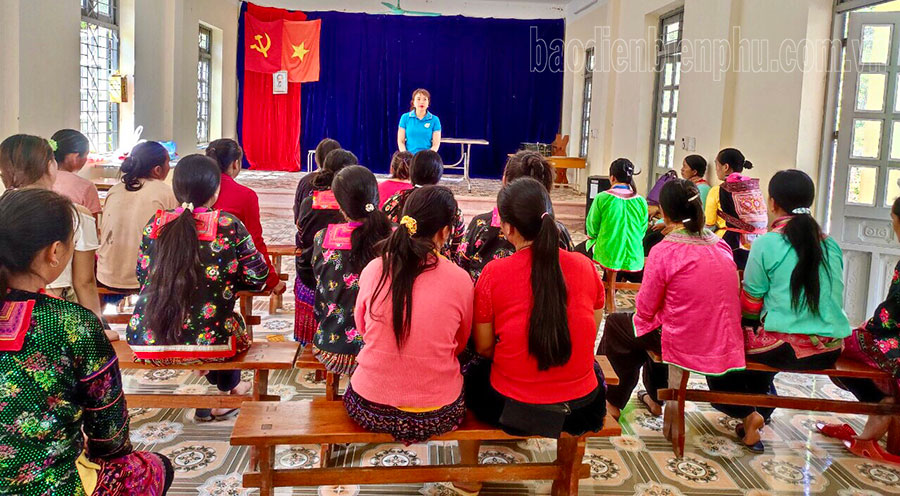
Challenges arising from the region's specific characteristics.
Arriving in Nậm Pồ – a district still facing many difficulties in Điện Biên province, which celebrated its 10th anniversary in June 2023 – we met a female official of the Mong ethnic group. She is Ms. Chớ Thị Mò (born in 1986), the Chairwoman of the Women's Association of Phìn Hồ commune. Ms. Mò is quite busy with her work for the association. She recounted that in previous years, Phìn Hồ was very poor, with some villages having unreliable electricity, unpaved roads, and significant difficulties in transportation and work implementation. Now, electricity, roads, schools, and health stations in Phìn Hồ have been built with government investment, but other difficulties remain, such as: a segment of women having low levels of education and literacy, not being able to understand or speak the common Vietnamese language; some villages still follow a religion; and the phenomenon of having many children still persists... Ms. Chớ Thị Mò and the Women's Association officials have to make strenuous efforts to implement many measures to fulfill their duties. This is also a common situation in many border and highland areas of Dien Bien and other northern mountainous provinces.
For some border districts and remote areas, the work of ethnic minority cadres, especially the placement and utilization of female ethnic minority cadres, is even more difficult. Nam Po District, established in 2013, faces considerable challenges in planning personnel for management positions, particularly for ethnic minority women. Mr. Dieu Binh Duong, Secretary of the Party Committee of Phin Ho Commune (Nam Po District), stated: As of June 2023, Phin Ho Commune had only 6 female civil servants, including 2 ethnic minority women holding the positions of Chairperson of the Women's Association and Secretary of the Youth Union.
In her overall assessment of the work related to female cadres, Ms. Ha Thi Nga, Member of the Central Committee of the Communist Party of Vietnam and President of the Vietnam Women's Union, affirmed: In recent years, the work related to female cadres has always received the attention of the Party, the State, and all levels and sectors. The number and quality of female cadres in Party committees, female leaders, managers, and National Assembly and People's Council representatives at all levels have increased. However, the current percentage of female cadres in our country still falls short of the set target; while there has been growth, the rate is not high enough and lacks sustainability, not commensurate with the potential and great contributions of women from all walks of life, including female cadres from ethnic minorities.
Despite practical demands and assigned political tasks, the work related to female cadres and ethnic minority women in Dien Bien province still faces many difficulties. According to statistics from the Dien Bien Provincial Party Committee's Organization Department, as of the end of 2022, ethnic minority women accounted for approximately 11.6% of the total number of leaders in the province. By level, only about 4.9% of ethnic minority women cadres are at the provincial level; 9.2% at the district level hold positions from deputy head of department and equivalent or higher; and 15.6% at the commune level hold leadership positions in the Party, People's Council, government, and heads of mass organizations. Only 4 out of 37 departments and agencies (10.8%) have ethnic minority women as heads.
It is evident that the role of women in general, and ethnic minority women in particular, in Dien Bien is increasingly being elevated. The proportion of ethnic minority cadres in the overall structure of cadres, civil servants, and public employees of the province is increasing; the number of female National Assembly delegates has met and exceeded the set plan, but the distribution is uneven. In many localities, the proportion of ethnic minority women in management and leadership positions in Party committees and People's Councils has not met the planned targets. In particular, the proportion of female cadres, including ethnic minority women, holding key positions in Party committees, government, sectors, and mass organizations remains low, uneven, and not commensurate with the potential of the female cadre workforce. The majority of female cadres holding leadership and management positions are at the deputy level. Assigning some positions remains challenging. A segment of female cadres from ethnic minority groups have not met job requirements, lacking skills in organization, management, and policy implementation, leading to ineffective implementation of economic, cultural, and social development tasks and targets at the local level. There is also a disparity in the proportion of female cadres among different ethnic groups.
Mr. Nguyen Van Uyen, Deputy Head of the Organization Department of the Muong Nha District Party Committee, said: "Some ethnic groups facing particular difficulties and with small populations, such as the Cong and Si La, still have very limited resources for developing female cadres."
Training and development of female cadres, especially ethnic minority women, at some Party committees and government levels has not received adequate attention. According to statistics, nearly 30% of commune-level cadres, including both male and female ethnic minority cadres, still have only elementary or intermediate-level education; some are not proficient in applying information technology and are not well-suited to the digital transformation process.
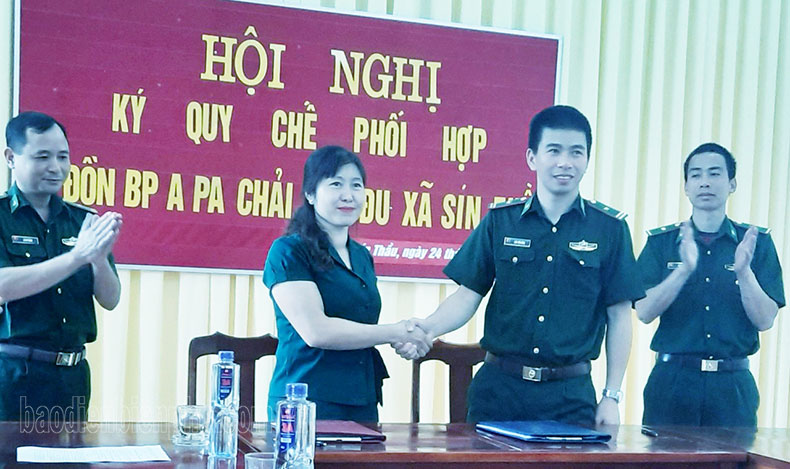
Barriers
Discussing the causes and obstacles creating difficulties in the work of female ethnic minority cadres, Mr. Bui Minh Hai, Secretary of the Muong Nha District Party Committee, affirmed: “As one of the particularly difficult mountainous and remote districts of Dien Bien province, after more than 20 years since its establishment, Muong Nha has made strong progress in many aspects, including the work of cadres, which has achieved certain results. However, due to a low starting point in the economy, a high poverty rate, difficult transportation, uneven levels of education, and the existence of gender stereotypes and outdated customs among a segment of ethnic minorities in remote areas, invisible barriers have been created, limiting opportunities for many ethnic minority women to access education, improve their skills, communicate, and participate in social work, especially among very small ethnic groups such as the Cong and Si La...”.
Mr. Mai Hoang Ha, Deputy Director of the Department of Labor, War Invalids and Social Affairs, said: In the first six months of 2023, the poverty rate in the province decreased, but it is still quite high at 26.6% , of which the poverty rate among ethnic minorities accounts for nearly 40% of the total number of ethnic minority households. The majority of poor households in the province are ethnic minority households.
"There is still a high percentage of ethnic minority female students dropping out of school and marrying early," said teacher Hoang Quoc Huy, Principal of Pu Nhi Ethnic Minority Boarding Junior High School (Pu Nhi commune, Dien Bien Dong district). Equality in access to education, as well as many other aspects of social life in remote villages, is a goal being pursued. The fact that ethnic minority women are entrusted with important responsibilities in local communities sometimes does not receive an equal footing.
Ms. Pờ Mỳ Lế, Secretary of the Party Committee of Sín Thầu commune, Mường Nhé district, shared: When she was assigned to be the Secretary of the Party Committee of Sín Thầu commune, many people were skeptical and disapproved. They thought that if men could handle that task, it would be difficult, and a woman couldn't do it well. Indeed, in this border area where "a rooster's crow can be heard in three countries," there are many difficulties and complexities, and a woman shouldering the responsibility of leading the Party committee is a great challenge. Working in a difficult commune, besides professional skills, political theory, and management ability, without good health, courage, determination, and dedication, it would be difficult to successfully carry out the assigned tasks.
Although attention has been paid to the planning and appointment of female ethnic minority cadres at some grassroots Party committees, the targets have not been met due to a shortage of qualified personnel. From a subjective perspective, some female ethnic minority cadres, civil servants, and public employees still harbor feelings of inferiority and complacency, lacking the initiative to overcome difficulties and pursue further education to improve their professional skills, expertise, and management capabilities.
Clearly identifying the causes affecting the quality of work of female ethnic minority cadres is key to finding solutions to remove barriers to this work, especially in the disadvantaged ethnic minority areas of Dien Bien.
Lesson 3: Solutions for developing female cadres
Source


![[Image] "Journey of Hope" promotes the organ and tissue donation movement in Vietnam.](https://vphoto.vietnam.vn/thumb/1200x675/vietnam/resource/IMAGE/2026/05/20/1779294400833_1-8910-jpg.webp)
![[Photo] National Assembly Chairman Tran Thanh Man working with the Standing Committee of the National Assembly's Ethnic Council](https://vphoto.vietnam.vn/thumb/1200x675/vietnam/resource/IMAGE/2026/05/21/1779337435930_ndo_br_1-jpg.webp)

































































Comment (0)