

The paradox is that truth struggles to keep up with rumors.
Conversely, falsehoods are packaged with extreme sophistication. Cybercriminals and hostile forces don't write lengthy essays. They exploit the fear of missing out, preying on people's lack of emotional control, mob mentality, and very real anxieties about making ends meet to set traps. When falsehoods use sensationalism and curiosity to manipulate psychology, while truths are expressed only in cold, bureaucratic language, the failure of official information is not a failure of truth, but a failure of the method of transmission.
One winter evening, by the crackling fire in the highlands of Dien Bien , a grassroots propaganda official, with a husky voice weathered by the elements, thoughtfully told me: "The most difficult thing isn't the lack of official directives, but the people's mindset. When policies change, people have many questions. If we delay speaking out even a day, social media will speak for us."
That simple statement directly addresses the Achilles' heel of the old-fashioned approach to ideological work. The crux of the matter doesn't lie in the technique of removing posts or administrative penalties. The crux lies in the ability to capture attention and establish trust. People's trust never sprouts from empty slogans; it sprouts from doing what is right, doing what is genuine, and the ability to speak directly to the deepest concerns in their hearts.

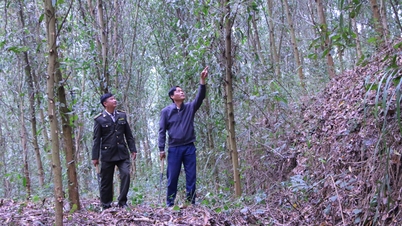
Illustrative image.
Rediscover your inner strength to reposition the battle lines.
The history of humanity's ideological struggle has proven an ironclad law. Lenin once warned that, on the ideological front, any concession or neutrality is tantamount to digging one's own grave. Before that, Marx had clearly demonstrated the immense power of theory: the weapon of criticism cannot replace the criticism of weapons, but theory itself will become an unparalleled material force once it penetrates the masses.
How can truth penetrate the masses amidst a sea of confusing information? More than half a century ago, President Ho Chi Minh gave us a universal key when he affirmed: "Culture must illuminate the path for the nation to follow."
Continuing that great tradition, entering the era of progress, our Party has issued decisive policies. To break through passivity, Regulation 19-QD/TW requires Party organizations at all levels to: "Continuously improve the leadership and guidance capacity of Party committees in political and ideological work, especially in the increasingly complex impact of social networks and digital platforms"[1]. Along with that, the promulgation of Resolution 80-NQ/TW (January 2026) has comprehensively redefined the stature of culture. Our Party does not consider culture as merely entertainment activities or superficial "flags and drums". This Resolution establishes a true value: "Vietnamese culture is the crystallization of the good values of the nation in the process of thousands of years of nation-building and national defense; it is an important endogenous resource that fosters the intellect, soul, spirit and character of the Vietnamese people"[2].
Placing these two documents on the table and examining them in the context of cyberspace reveals a bright future. We cannot "green the digital battlefield" simply with commands, blocking filters, or dry rebuttals. A political commentary or a media campaign only truly has the power to lead when it is immersed in the flow of culture. Truth, in itself, must triumph in the fierce competition for attention through the soft power of humanism, brotherhood, and good moral standards. Lies can be deceived by technology, but only the sincerity of culture is strong enough to anchor trust.
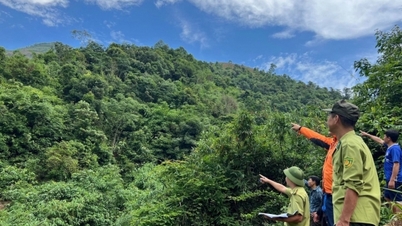
But culture is not a decorative veneer, nor is it a collection of ephemeral words. The power of culture must be transformed into concrete actions, into concrete individuals who venture into the most brutal hotspots. The answer to this leading power doesn't lie in cold, sterile reports. It lies in the bloody and tearful journey in the highlands of the Nậm Pồ border region, where the light of culture and genuine human compassion pulled misguided individuals out of the delusion of evil cults.
The light of culture dispels the darkness of heresy in the border region.
Back in July 2018, Nam Po was not just a remote, rugged area of Dien Bien province. It was once a deeply troubling region in terms of ideology. At that time, there were 80 households with over 450 people in the district who had fallen prey to the Jesuit cult. Scattered across the communes of Nam Nhu and Nam Tin, the ghosts of Ba Co Do had infiltrated homes, luring dozens of people into their clutches.
The nature of these organizations is not simply a difference in faith. They hide behind religion, exploiting the gullibility of the people to sow superstition and spread anti-cultural ideas that are completely contrary to traditional customs and values. More dangerously, the seeds of heresy have divided families, shattered clan bonds, and severely eroded people's trust in local authorities.
The truth is, we cannot eradicate blind faith simply with administrative decisions or rigid prohibitions. A belief, however misguided, can only be replaced by a stronger, more genuine one. Nậm Pồ did not choose a one-sided approach. To win back the people's trust, the entire political system, from the Party committee and government to the armed forces, rolled up their sleeves and entered the battle.
But the sharpest spearhead piercing through the ice of heresy comes from the "soft pillars" within the community. These are the village elders, community leaders, respected individuals, and genuine religious figures. They go into every hearth, knock on every door of every stilt house. They use the language, customs, and kinship of their fellow countrymen to awaken the truth. The power of truth only takes root in life when it carries the warmth of kinship. Sitting beside a pot of bitter tea, a propaganda official in the highlands of Dien Bien once summarized a heart-wrenching truth for me: "If officials don't go down to the grassroots, social media will speak to the people for them. People believe what is close to them. Trust is not based on eloquent words, but on doing what is right and genuine." Indeed, heresy is only pushed back not by rigid prohibitions, but by electricity reaching the villages, clean water reaching the hamlets, and the compassionate voices of respected individuals. That is when the soft power of culture transforms into an impenetrable defensive force.
And along that journey, there are the tireless footsteps of revolutionary journalists. The five feature articles "Returning to the Light" by the Dien Bien Phu Newspaper's reporting team, which won top prizes, are not only outstanding journalistic works in terms of professional skill. From the perspective of ideological work, they are a vivid testament to the ability to lead. Journalism does not stand outside of life to judge misguided people. Each published article, each true story shared, carries the warmth of human compassion, helping society understand the hardships of the grassroots, thereby creating a powerful wave of public opinion that pulls those who have gone astray back to the light.
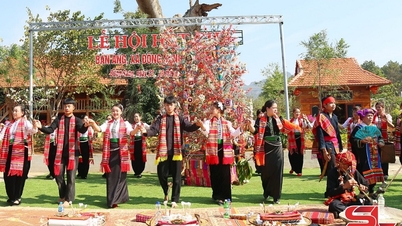
By the end of 2023, Nam Po had officially and successfully eradicated the Je Sua and Ba Co Do cults. The greatest achievement lies not in the reported numbers. The greatest achievement is that the hearths of the people are warm again, the sounds of flutes and pipes resound in traditional festivals, and faith in the Party and the regime is firmly anchored.
Use the breath of life to build resilience for the ideological battlefield.
The practical experience of Nậm Pồ is the most insightful solution to the "greening of cyberspace" problem that we are so eager to solve. A good news article can expose wrongdoing, but a community media campaign imbued with culture is what can truly keep people aligned with what is right. To achieve this, ideological work must absolutely not lag behind practice.
Our Party has distilled this painful lesson and elevated it to a leadership principle. Regulation 19-QD/TW has clearly defined the framework: "Political and ideological work is the most important task in Party building; it must uphold principles and constantly innovate, create, improve effectiveness and efficiency, and ensure the role of leading, pioneering, guiding, and directing practice" [3].
How do we lead? Truth itself is intangible. It needs a physical form to touch people's hearts. That physical form is culture.
Applying the perspective of Resolution 80 to digital media, we realize that the recent decline of positive information stems from our neglect of cultural values. We provide people with soulless growth figures instead of telling them stories of human endeavor. We refute hostile rhetoric with dry, illogical arguments instead of evoking national pride and a spirit of compassion and honesty. Truth only spreads and takes deep root when it transforms into behavioral norms, into a humane way of storytelling, and into the capacity to connect communities.
There are still apprehensive and skeptical viewpoints. They argue that culture is a category that is "too soft, intangible, and difficult to measure"; using culture to counter information warfare and psychological warfare on a high-tech platform is an overly romantic, vague, and impractical idea. While this argument may sound realistic at first, it overlooks the root of a nation's strength. Culture is not merely a decorative layer to beautify reports. It is a weapon that defines the identity of an entire nation.
While deepfake technology can fake any face, and AI can counterfeit any voice, the only thing that cannot be faked is moral values, patriotism, and brotherhood that have flowed in the veins of the Vietnamese people for thousands of years. The power of culture is entirely measurable. It is measured by its ability to create communities, by the willingness of each citizen to defend what is right on social media, and by people's readiness to turn their backs on sensational and harmful content. Cybercriminals may be able to hack devices, but they can never hack a culture that has sprouted from a foundation of humanism.
Transforming truth into physical power.
The fiercest competition in the digital age isn't a race for bandwidth or internet speed. It's a battle for trust. Wrongdoing often wins quickly because it knows how to stir up fear, outrage, and the primal curiosity of the masses. But truth, if nurtured by the guiding currents of culture, will always achieve the ultimate and most lasting victory. Because at the very core of human consciousness, people always gravitate towards the light of truth and humanity.
We have seen through the fierce battle lines; we have also found the universal key: the soft power of culture. But if culture is a green foundation of values, who will plant it? If cyberspace is teeming with weeds, what tools and mechanisms will we use to ensure that this green flourishes, rather than merely existing as a beautiful metaphor on paper?
Even the most beautiful and correct idea remains just an isolated effort if it is not placed within a unified operating system. For truth to truly become a material force guiding the entire society, we must move beyond mere refutation and build a solid, interconnected information network.
-------------
[1] Central Executive Committee, Regulation No. 19-QD/TW dated April 8, 2026 on political and ideological work in the Party, p.6.
[2] Central Executive Committee, Resolution No. 80-NQ/TW dated January 7, 2026 of the Politburo on the development of Vietnamese culture, p.1.
[3] Central Executive Committee, Regulation No. 19-QD/TW dated April 8, 2026 on political and ideological work in the Party, p.2.
Colonel LE XUAN THANH, Deputy Director and Deputy Editor-in-Chief of the People's Army Publishing House
According to the People's Army Newspaper
Source: https://baocantho.com.vn/bai-2-vi-sao-cai-dung-chua-du-manh-de-dan-dat-tu-tuong-cong-chung--a205722.html


![[Photo] Standing Committee member of the Party Central Committee Tran Cam Tu working with the Central Inspection Committee](https://vphoto.vietnam.vn/thumb/1200x675/vietnam/resource/IMAGE/2026/05/28/1779969579668_ndo_br_bnd-2495-jpg.webp)






































































Comment (0)