

- Lesson 1: Deceptive Arguments
- Lesson 2: Unmasking the Conspiracy
Each person's story is unique, but they all share a bitter lesson: "paradise" in a foreign land is just an illusion, while true peace can only be found in one's own homeland.
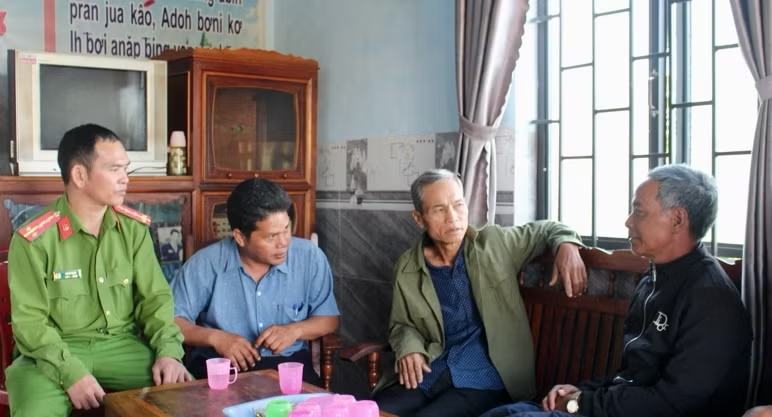
Determined to help our compatriots escape the "refugee dream"
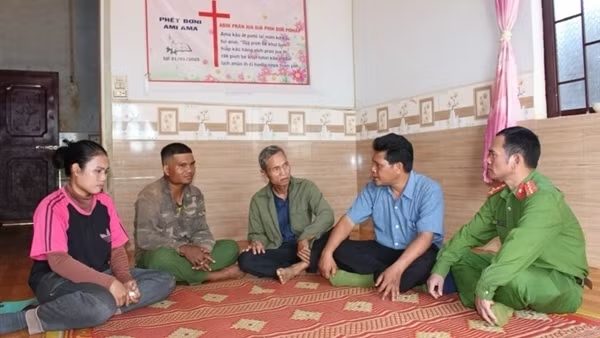
We visited Dang village, Ea Hleo commune, Dak Lak province – where the story of Rơ Âu H Hra and her husband is often recounted in village meetings as a cautionary tale to avoid falling prey to the schemes of reactionary elements and exiled FULRO members who would attempt to cross the border or illegally stay abroad. Believing the deceitful words of these reactionaries, in June 2018, Hra sold her property and farmland, and took her two young daughters across the border to Thailand, hoping to settle in a third country.
Life in a foreign land quickly revealed its harsh realities. Without identification papers, Hra had to work illegally, with an unstable income. Later, she met and married Kpă Xuyên, who had also recently arrived in Thailand under similar circumstances. “I didn’t have any identification papers at the time. If the employer trusted me, I could find work; otherwise, it was very difficult. My whole family had to live crammed into a small rented room, with a rent of about 3,000 baht per month,” Kpă Xuyên recounted.
Since 2023, Mr. Kpă Xuyên has repeatedly urged his wife to return to Vietnam, but Ms. Hra still harbored hopes of going to the United States for a better life. However, the promises of a wealthy future never materialized. Mr. Kpă Xuyên wanted to return home many times, but was powerless: the costs were too high, and he also feared prosecution upon returning. At that opportune moment, a delegation from the Department of Internal Security traveled to Thailand to meet with them, explaining the humane policies of the Party and State, alleviating their concerns, and gradually persuading the family to return.
Later, Hra's family submitted an application for repatriation. After eight years of exile in a foreign land, Kpa Xuyen was deeply moved when he finally set foot in Noi Bai Airport. “I’m so happy. I thank the Party and the State for extending their arms. Now that we have a home, our children can go to school, and my wife and I will work hard to stabilize our lives. To those families who have already crossed the border illegally, don’t stay here any longer, be brave and return home…,” he expressed. With the support of the Dak Lak Provincial Police and local authorities, Hra's family received health insurance, had their personal documents reissued, and were guided on accessing social welfare policies. Recently, they received loans to develop their economy , enabling them to purchase a small tractor to transport agricultural products, gradually stabilizing their livelihood.
To receive care and support to stabilize one's life.
Ms. Hra's family is just one of many cases of repatriation in recent times. The Dak Lak Provincial Police have proactively advised the local Party committee and government to pay attention to and promptly encourage and support these individuals in stabilizing their lives and reintegrating into the community.
From the beginning of 2025 to the present, the Dak Lak Provincial Police have supported the construction and handover of houses to 3 ethnic minority households who illegally crossed the border and returned home, helping them stabilize their lives. Efforts to encourage repatriation have seen very positive changes. In 2025 alone, the Dak Lak Provincial Police, in coordination with various departments, agencies, and local authorities, successfully encouraged 16 citizens to return home. This was the year the Provincial Police brought back the most illegal residents in Thailand, a highlight in the repatriation efforts.
The reality is that after returning, most ethnic minorities lack employment, housing, and land for production, leading to precarious living conditions. Due to the lack of common land in many localities, allocating residential and agricultural land to returning ethnic minorities faces significant difficulties. In response to this situation, the police forces of Dak Lak and Gia Lai provinces have advised the Standing Committee of the Provincial Party Committee and the Provincial People's Committee to implement comprehensive economic development programs, effectively carry out health and education policies, ensure the freedom of belief and religion for ethnic minorities in the area and for those returning, and encourage them not to re-engage in illegal border crossings.
Mr. H. Mẫm, residing in HLâm village, Đak Đoa commune, Gia Lai province, who returned home from Thailand in September 2025, is one such case. Previously, his family had a stable life. But believing the promise of "easy work with high pay" in Thailand, and the possibility of settling in the US, in early 2023, his entire family left their homeland and illegally crossed the border into Thailand.
“Only after arriving there did we realize how wrong we were. We lived in fear every day because we didn't have legal documents, we were afraid of being checked by the Thai police, and we didn't dare go outside. Our children couldn't go to school and had to stay confined to our cramped rented room. When we were sick, we didn't dare go to the hospital for fear of being arrested. Even when my daughter got married in Vietnam, my wife and I couldn't return because we didn't have the freedom to travel,” Mr. H. Mẫm shuddered as he recalled his time in Thailand.
On nights when he missed his hometown, Mr. H. Mẫm often went online to look at pictures and videos of his homeland, seeing how Dak Doa commune was becoming increasingly modernized. The Kơ Dơ fields were bustling with activity during the rice and coffee harvest season, and everyone was joyful. “Many nights, after watching these videos, I would shed tears because I missed home so much and just longed to return. After nearly three years living in hiding in a foreign land, I decided to leave Thailand, go through Cambodia, and return to Vietnam. In September 2025, my whole family arrived back in Vietnam. My family would like to express our gratitude to the Party Committee, the People's Committee, and the Police of Dak Doa commune for their care and assistance during our first days back. My family promises to work honestly, abide by the law, and work together with the people of HLâm village to build a more prosperous and beautiful homeland,” he confided.
Now, Mr. Chuil Kpuih (born in 1968), residing in Betel village, Ia Hru commune, Gia Lai province, can rest assured knowing he has returned to his village. In 2023, lured by the sweet promise of high-paying jobs in Thailand, he and his wife sold all their goats and cows, gathering over 40 million VND to go to Cambodia, and then continued to cross the border into Thailand. Initially, he worked at a horse farm, earning enough to cover living expenses. But not long after, he lost his job and had to collect scrap metal to make a living.
For nearly two years, Mr. and Mrs. Chuil Kpuih lived in a foreign land without stable employment, relying on the money their children regularly sent from Vietnam. Life was extremely difficult; the language barrier and lack of family left them constantly tormented by regret for leaving their homeland. When the Thai authorities tightened control over illegal immigration, his longing to return home intensified, but he lacked the money and was apprehensive about facing legal repercussions. Thanks to the support of his children and the encouragement and assistance of the local authorities, the police, and respected community leaders, Mr. Kpuih finally returned home in July 2025.
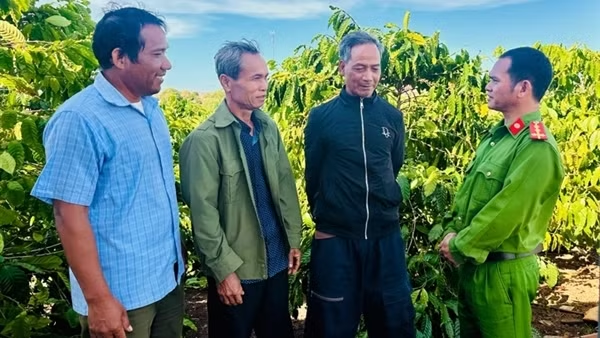
Upon his return, his health deteriorated, and life became difficult. Thanks to government support and assistance in improving his livelihood, he has gradually stabilized his life by raising pigs and chickens and tending his coffee plantation. “I am so fortunate to have returned to my homeland. I can never forget the hardships I endured abroad. I will never leave my familiar Gia Lai land and its vast coffee plantations again. This is my life, my homeland. I often tell my story to my fellow villagers to warn them against being lured into illegal labor in Thailand, which would ruin their lives and cause suffering to their children,” Mr. Kpuih said sincerely.
Bringing people like Mr. Kpuih back to their villages was a long process and required the efforts of the authorities. Provincial police coordinated with various forces, departments, organizations, and local police to help those wishing to return home to their families in a timely manner. Influencing, transforming, and persuading these people to abandon their lives in Thailand, to give up their outward-looking mindset and desire to settle in a third country, and to return home was an extremely difficult and complex task. This required persistent propaganda and education using documents, evidence, information, and concrete actions to show those returning to their localities that they had received care and support from the community, and that the police and government were providing assistance and favorable conditions for rebuilding their lives. This strongly influenced the psychology of those who were hesitant about returning home.
To date, the police force has successfully persuaded and repatriated 72 ethnic minority individuals residing illegally in Thailand (mainly concentrated in Gia Lai and Dak Lak provinces); and continues to work with and assist 61 other individuals who wish to return home.
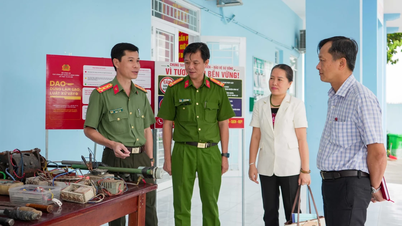
In Dak Lak, after encouraging citizens to return home, the Provincial Police proactively advised local Party committees and authorities to provide timely support and encouragement to help these individuals stabilize their lives and reintegrate into the community, especially in addressing social welfare issues. Specifically, they assigned personnel and vehicles to the airport to pick up returnees; assisted them in re-registering personal documents and purchasing social insurance; and provided them with money, rice, and other necessities to help them stabilize their lives initially. They even provided financial support for Ms. China Mlo to learn beverage making, contacted companies and businesses to create jobs for Ms. Rơ Âu H Hra and her husband; helped ensure children could continue their education in local schools; and supported the construction of housing for extremely disadvantaged households…
In addition, the Party committees and local authorities of the Central Highlands provinces regularly pay attention to and support the stabilization of life for cases of illegal migrants returning home, and for disadvantaged ethnic minority households, thereby helping them stabilize their lives and feel secure in their work and production. Currently, the Party committees and authorities are providing housing support and allocating planned land for housing and production to households lacking land for housing and production, so that these people can quickly stabilize their lives.
The love, care, and tolerance shown by the police and local authorities deeply moved those who had gone astray and the people of the Central Highlands. From there, each citizen became a "pillar of support," contributing to dispelling false illusions and strengthening the people's faith in the Party, the State, and the laws and policies. Returning home is not only the end of a misguided journey, but also the beginning of a new life – sustainable, peaceful, and full of hope – on their homeland.
Speaking with a reporter from the People's Police Newspaper, Mr. Y Lung Eban (born in 1960), a respected figure in Ea Map hamlet and head of the Ea Map hamlet security team in Quang Phu commune, Dak Lak province, said: "Three people from Ea Map hamlet were once lured and enticed to cross the border into Thailand. However, after being in Cambodia for a while, instead of continuing on to Thailand, they realized it was a wrong decision and returned to their village."
Currently, there is only one family in the village still living in Thailand. Now that we have a village-wide Zalo group, it's very convenient to inform and disseminate information about the Party and State's policies and guidelines, especially those directly relevant to the villagers, so that everyone understands and doesn't violate the law. It's gratifying that in 2025, Ea Mấp village will not experience any security or public order incidents. The villagers are complying well with the Party and State's guidelines and policies, working diligently to improve their economic situation. No more villagers will be foolish or blindly following the lure of crossing the border with the dream of finding easy work and high pay.”
 Lesson 1: Deceptive Arguments
  Lesson 2: Unmasking the Conspiracy
 Lesson 1: Deceptive Arguments
  Lesson 2: Unmasking the Conspiracy
Source: https://cand.vn/bai-3-tro-ve-trong-su-dum-boc-cua-que-huong-post796717.html
![[Photo] Ba Lang An Lighthouse - the "eye of the sea" amidst the "rock museum" of Quang Ngai province.](https://vphoto.vietnam.vn/thumb/1200x675/vietnam/resource/IMAGE/2026/05/29/1780038698840_anh-man-hinh-2026-05-29-luc-14-10-42.png)
![[Image] Pleasant weather helps students enter the 10th grade entrance exam with confidence.](https://vphoto.vietnam.vn/thumb/1200x675/vietnam/resource/IMAGE/2026/05/29/1780034401612_ngay-1-thi-lop-10-minh-duy-8-5009-jpg.webp)

















































































Comment (0)