

Large-scale copyright infringement
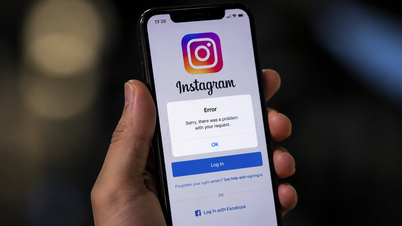
The explosion of social media in recent years has created an unprecedentedly developed media ecosystem. Information that appears on one digital platform can spread to another within minutes. This allows information to reach a wider audience and significantly increases the number of followers on those platforms.
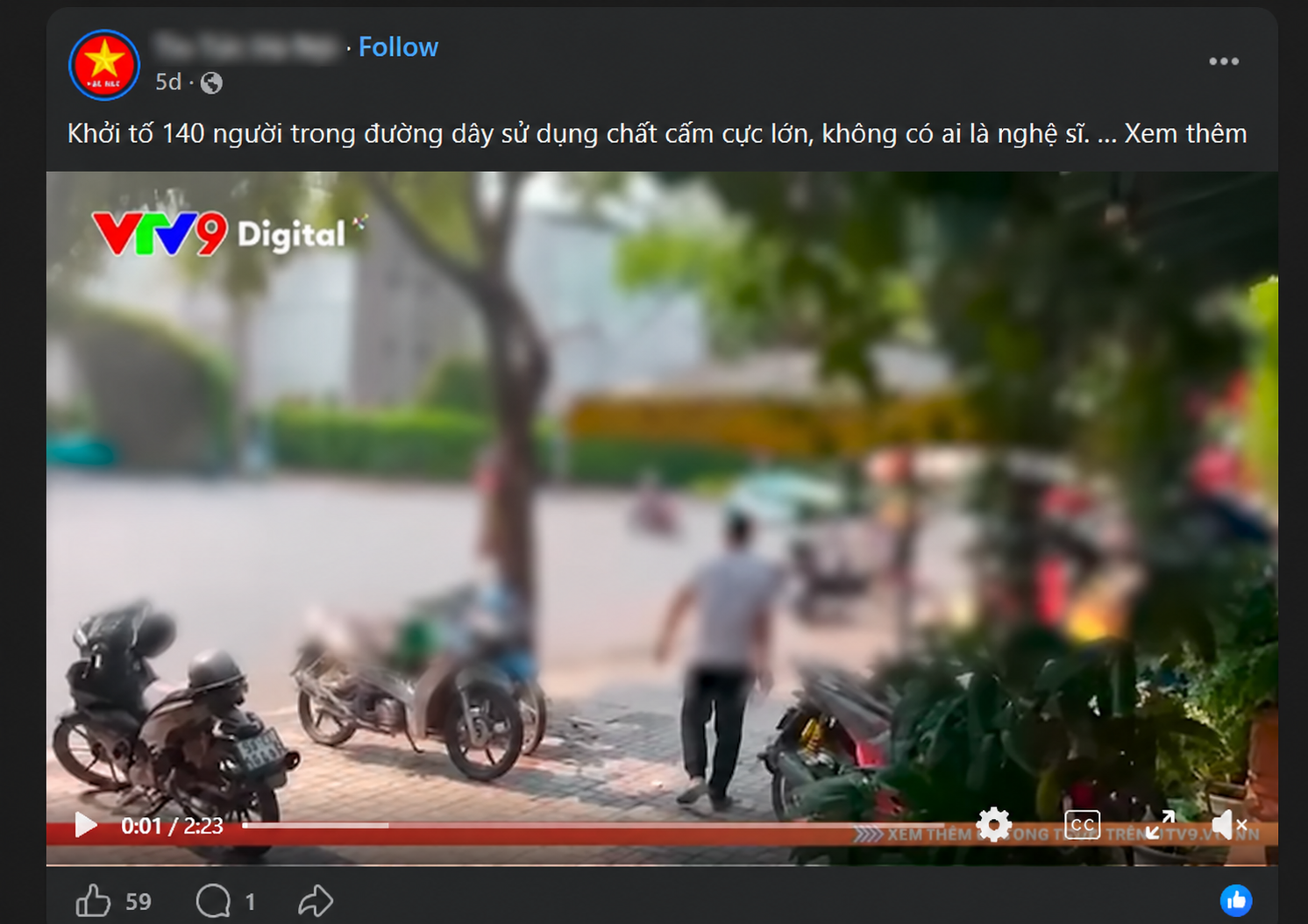
However, for mainstream media outlets around the world , as well as in Vietnam, the issue has taken a much more negative turn than simply spreading misinformation. For a long time now, readers can easily find an article published by a news agency appearing on Facebook, TikTok, and other platforms just minutes later, with the exact same content or even with added inaccurate information to attract interaction.
It's worth noting that these social media platforms don't need to invest in reporters, pay for content production, or verify information like mainstream news organizations, yet they still profit from content they don't produce through views and advertising. Meanwhile, news organizations receive absolutely no benefit from their articles being commercially exploited in this way.
Notably, while copyright infringement like this was previously carried out manually by social media platforms, now, with the help of AI, this content theft occurs on a much larger scale and in increasingly shorter time. In fact, a complete AI toolkit can copy hundreds of articles in less than 5 minutes, automatically edit the content, convert it into videos , and automatically upload them to social media without much human intervention.
Furthermore, to attract more readers, many social media platforms use AI to restructure or rewrite content to avoid copyright infringement and increase the appeal of news. However, with unstable and unsystematic data input, and without verification processes, readers easily access misleading information. This is one of the main reasons for the proliferation of fake news on social media in Vietnam in recent years.
Regarding this situation, the Editor-in-Chief of Nhan Dan Newspaper and Chairman of the Vietnam Journalists Association , Le Quoc Minh, once warned about the "journalistic" nature of social media, stemming from the increasingly serious problem of copying journalistic content. Many platforms and fan pages are reusing journalistic content to make money without sharing revenue with the content producers. If journalism is not protected by copyright, it will be very difficult for it to survive with quality content.
Besides economic losses, indiscriminate copying also leads to the risk of distorting information. Many fan pages intentionally cut and paste content, add subjective comments, or edit titles to create misunderstandings in order to increase interaction. This indirectly causes readers to lose faith in mainstream journalism, analyzed Mr. Le Quoc Minh.
Is legal sanctions alone sufficient?
Currently, the Vietnamese legal system has numerous regulations to address copyright infringement in the press. These include the 2015 Penal Code, with administrative fines up to 3 billion VND and imprisonment for up to 3 years. In addition, there is Decree No. 341/2025/ND-CP in the field of intellectual property, and Decree 15/2020/ND-CP in the field of postal services. Most recently, from July 1st, Decree 174/2026/ND-CP will officially come into effect, imposing fines of up to 30 million VND for publishing information from press agencies without permission. This is seen as a strong move by authorities to strengthen the protection of intellectual property rights in cyberspace.
Although sanctions are constantly increasing in both number and severity, many experts believe that administrative penalties alone are insufficient to completely prevent copyright infringement of journalistic works on social media.
According to Lawyer Pham Tuan ( Hanoi Bar Association), the biggest difficulty in handling copyright infringement in journalism lies not in the penalties themselves, but in identifying the infringing entity. Most social media platforms where copyright infringement is occurring have servers located abroad, making it very difficult to gather evidence and prosecute violations. The entities behind these infringements often remain anonymous, constantly changing domain names and social media accounts, making it extremely challenging to track down the violators.
Therefore, the State's assistance is crucial in clarifying copyright issues for cross-border platforms. We have done very well in blocking most of the distorted news spread by reactionary forces on social media through the cooperation of these platforms. Therefore, the issue of journalistic copyright infringement can be addressed in a similar manner.
Besides focusing on preventing the infringing parties, it is also necessary to address individuals and groups whose interests are linked to this behavior. These include advertising partners, marketing networks, payment intermediaries, technical operation units, etc. Criminal penalties can be applied if the illicit profit exceeds 50 million VND.
Prime Minister 's Directive 38/CD-TTg, issued in early May 2026, on launching a high-intensity campaign against smuggling, trade fraud, counterfeit goods, and intellectual property infringement, should be utilized by media outlets as an opportunity to strengthen efforts to prevent copyright infringement, advises lawyer Pham Tuan.
It is known that, around the world, in addition to legal sanctions for violators, there are also many other regulations applied to cross-border platforms regarding journalistic copyright. In Australia, the government has issued a Media Negotiation Code, requiring large platforms such as Google and Meta to pay news organizations when using news content. This regulation once provoked a strong reaction from Meta, which even temporarily blocked news in Australia for a short period before reaching an agreement.
In France, the AFP news agency, along with many other major news organizations, sued Google over its rights to exploit journalistic content. After numerous legal disputes, Google was forced to sign an agreement to pay French news organizations for using news content on its platform.
It can be affirmed that the fight against copyright infringement in the digital space is not simply about protecting the interests of an article, but also about protecting a professional press, thereby generating revenue for mainstream news organizations and helping the Vietnamese digital environment develop healthily.
Source: https://hanoimoi.vn/ban-quyen-tren-mang-xa-hoi-de-bao-chi-khong-con-la-tai-nguyen-mien-phi-975922.html




![[Photo] The heat at the fireworks display site on the opening night of the Da Nang International Fireworks Festival 2026](https://vphoto.vietnam.vn/thumb/1200x675/vietnam/resource/IMAGE/2026/05/27/1779889741485_ndo_br_z7872039145157-fecaba5112f39e8352544099d7ef4738-5140-jpg.webp)



































































































Comment (0)