

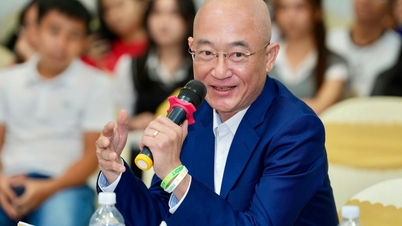
A reporter from HanoiMoi Weekend had a discussion with Associate Professor, Doctor, journalist Nguyen The Ky - former Director General of the Voice of Vietnam Radio , and Vice Chairman of the Central Theoretical Council - to gain a clearer understanding of this issue.
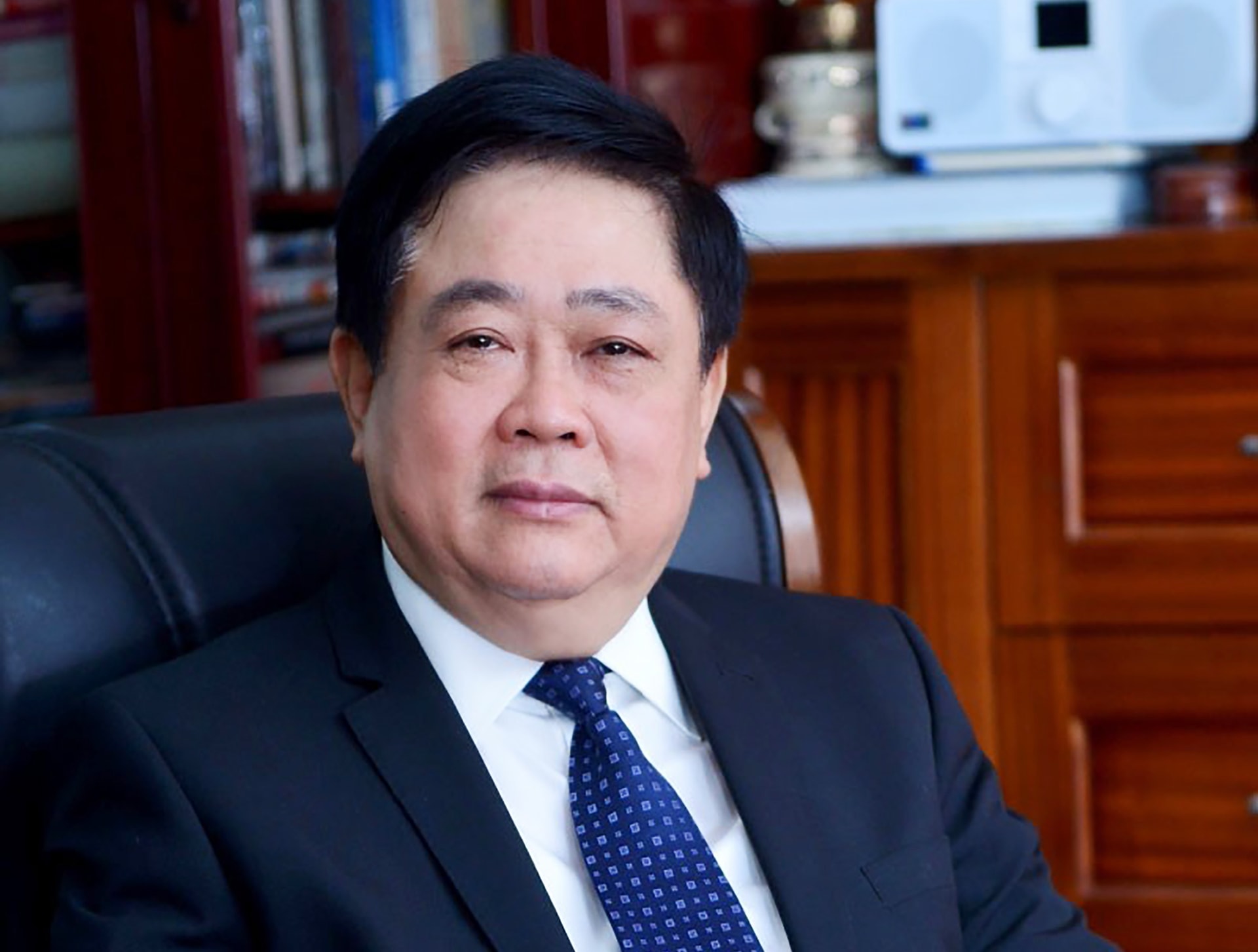
- Professor Nguyen The Ky, as a journalist with a long history of involvement in revolutionary journalism, how do you perceive the role and mission of journalists in the current era?
Revolutionary journalists in today's era face numerous enormous challenges but also have unprecedented opportunities for development. Their role is not only that of information transmitters but also of soldiers on the ideological front, acting as a bridge between the Party, the State, and the people. The mission of revolutionary journalists is not only to truthfully reflect the realities of social life but also to contribute to building and spreading cultural, moral, and national spirit values.
In this era of integration, where information is transmitted quickly and in multiple directions, journalists must maintain their ideological stance, remain steadfast in their commitment to truth and social responsibility. They need to be pioneers in discovering and commending achievements, encouraging efforts to build the country, and at the same time, speaking out against negative phenomena, corruption, and waste. This is how journalism contributes to strengthening public trust and promoting the sustainable development of the country. Furthermore, in the context of modern media with rapidly developing digital platforms, journalists must constantly innovate their thinking and skills to master technology, improve the effectiveness of information transmission, and maintain the identity of revolutionary journalism.
- In the context of the ongoing digital transformation, what do you think revolutionary journalism needs to do to maintain its role in shaping public opinion while keeping pace with modern trends?
- Digital transformation is an inevitable trend, bringing both opportunities and challenges to revolutionary journalism. To maintain its role in shaping public opinion, journalism needs to remain steadfast in its core values: honesty, objectivity, social responsibility, and national cultural identity. At the same time, journalism must leverage the power of digital technology to innovate its journalistic practices. This requires media organizations to invest in technical infrastructure, enhance the IT capabilities of their reporters and editors, and develop engaging and highly interactive multimedia products for readers. Developing digital media platforms, social networks, and mobile applications are indispensable steps to attract and retain readers, especially young people – a generation that receives information in entirely new ways.
However, alongside the application of technology, the press needs to be very vigilant to avoid falling into the "trap" of misinformation and fake news. Journalists need to improve their information verification skills, maintain their political stance and the principles and objectives of revolutionary journalism, and not be swayed by fleeting trends or commercial pressures. Only by harmoniously combining traditional identity and modern technology can the press truly maintain its role in shaping public opinion in the digital age.
- You've often shared your thoughts on "cultural identity" in journalism. Could you elaborate on this concept and explain why preserving cultural identity is particularly important in today's media environment?
- Cultural identity in journalism is the sum total of elements including content, language, style, perspective, and the unique and distinctive way in which a nation reflects social life. It is the soul and voice that prevents journalism from being absorbed into the global flow of information. Preserving cultural identity not only creates a unique mark for the national press but also protects and promotes the traditional values, spirit, and ethics of the nation in the process of integration.
In today's media environment, where cultural exchange is increasingly deep and rapid, maintaining journalistic identity helps clarify ideological direction, avoid information chaos, and protect cultural diversity. This is also a way for journalism to play its role in building character and enhancing the spiritual life of society. If journalism loses its cultural identity, it means losing its voice, gradually losing credibility, and diminishing its influence on the public. Therefore, I always consider preserving and promoting cultural identity as a top priority for journalists, especially in this era of strong integration and digital transformation.
- As someone who has experience in journalism, culture, and politics, how do you assess the relationship between journalism and the preservation and promotion of national cultural values?
- Journalism and culture have always existed in a mutually beneficial and complementary relationship. Journalism is not only a channel of information but also a bridge for transmitting and promoting traditional cultural values to a wide audience, especially in the current context where global culture is increasingly pervasive. Journalism plays a significant role in raising public awareness of the value and importance of preserving and promoting the unique cultural characteristics of the nation, thereby creating a ripple effect and motivating society to work together to protect and develop culture.
Articles, programs, and cultural reports not only reflect the diverse aspects of spiritual life but also contribute to warning about the dangers and challenges facing cultural heritage, such as erosion, excessive commercialization, or the uncontrolled influx of foreign values. From a political perspective, journalism is also a tool to affirm the role and position of culture in the national development strategy, contributing to building Vietnamese people who are knowledgeable, rich in identity, and ethical. I believe that the connection between journalism and cultural work is a key factor in protecting and promoting national identity in the new era.
- Sir, in your journalistic career, you surely won't forget many impressive works and memorable moments during your work?
The journey of journalism is a continuous process of recording, reflecting, and accompanying social life. For me, the most profound impressions are the articles that truthfully reflect the lives of people during the period of reform, the stories of endurance, resilience, and the aspirations for change of the Vietnamese people. There were moments when I directly interacted with and listened to the difficult lives and the examples of unwavering courage who maintained their faith, patriotism, and desire for freedom. I clearly saw that the mission of a journalist is not only to be a storyteller but also to preserve, inspire, and contribute to changing reality. Those articles helped me to better understand the value of truthfulness, humanity, and the social responsibility of journalism. These real-life experiences have given profound meaning to my career, making me constantly ponder and strive to contribute to building an increasingly developed revolutionary press.
- Do you have any advice for young journalists on how to both excel in their profession and maintain a pure heart and a clear mind?
- Modern journalistic life is always full of pressure and fierce competition, but the most important message I want to convey to young journalists is to maintain a "pure heart and a clear mind." A "pure heart" means maintaining honesty and responsibility, not sacrificing professional ethics for personal gain or commercial pressure. A "clear mind" means being alert and perceptive in judgment, constantly innovating to practice the profession with high expertise, avoiding clichés and chasing after clickbait and likes.
Young journalists need to constantly learn and improve their knowledge of politics, culture, society, and new technological skills to adapt to the rapid changes in modern media. At the same time, they must be imbued with the spirit of serving the people, working for the development of the country, for truth and social justice. Only in this way can young journalists build a sustainable career, earn the respect of society, and contribute to ensuring that revolutionary journalism remains a truthful, objective voice with a powerful influence in the new era.
Thank you very much, sir!
Source: https://hanoimoi.vn/bao-chi-gop-phan-lan-toa-nhung-gia-tri-van-hoa-dao-duc-tinh-than-dan-toc-706316.html
![[Photo] Ba Lang An Lighthouse - the "eye of the sea" amidst the "rock museum" of Quang Ngai province.](https://vphoto.vietnam.vn/thumb/1200x675/vietnam/resource/IMAGE/2026/05/29/1780038698840_anh-man-hinh-2026-05-29-luc-14-10-42.png)


![[Image] Pleasant weather helps students enter the 10th grade entrance exam with confidence.](https://vphoto.vietnam.vn/thumb/1200x675/vietnam/resource/IMAGE/2026/05/29/1780034401612_ngay-1-thi-lop-10-minh-duy-8-5009-jpg.webp)





























































Comment (0)