

Following cardiovascular and cerebrovascular interventions, by noon on August 10th, patient LVL (69 years old, from Vinh Long province) had overcome the critical stage and made a miraculous recovery.
The risk of death increases tenfold.
Five days prior, the patient was brought to a local hospital's emergency room by family members in a critical condition with chest tightness behind the sternum, shortness of breath, and recurrent chest pain. The patient was then quickly transferred to a higher-level hospital, Can Tho Central General Hospital, with a diagnosis of acute myocardial infarction , type 2 diabetes, and hypertension.
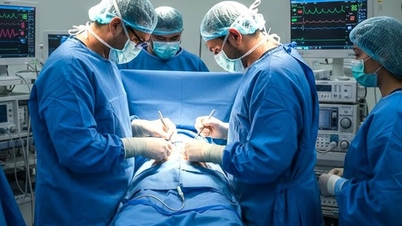
At the Emergency Department of Can Tho Central General Hospital , doctors consulted with the interventional cardiology emergency team and decided to perform emergency coronary intervention on the patient. However, an unusual event occurred: while preparing to insert the coronary intervention catheter, the doctors discovered that patient L. showed signs of a stroke , experiencing complete paralysis of the left side of the body and slurred speech.
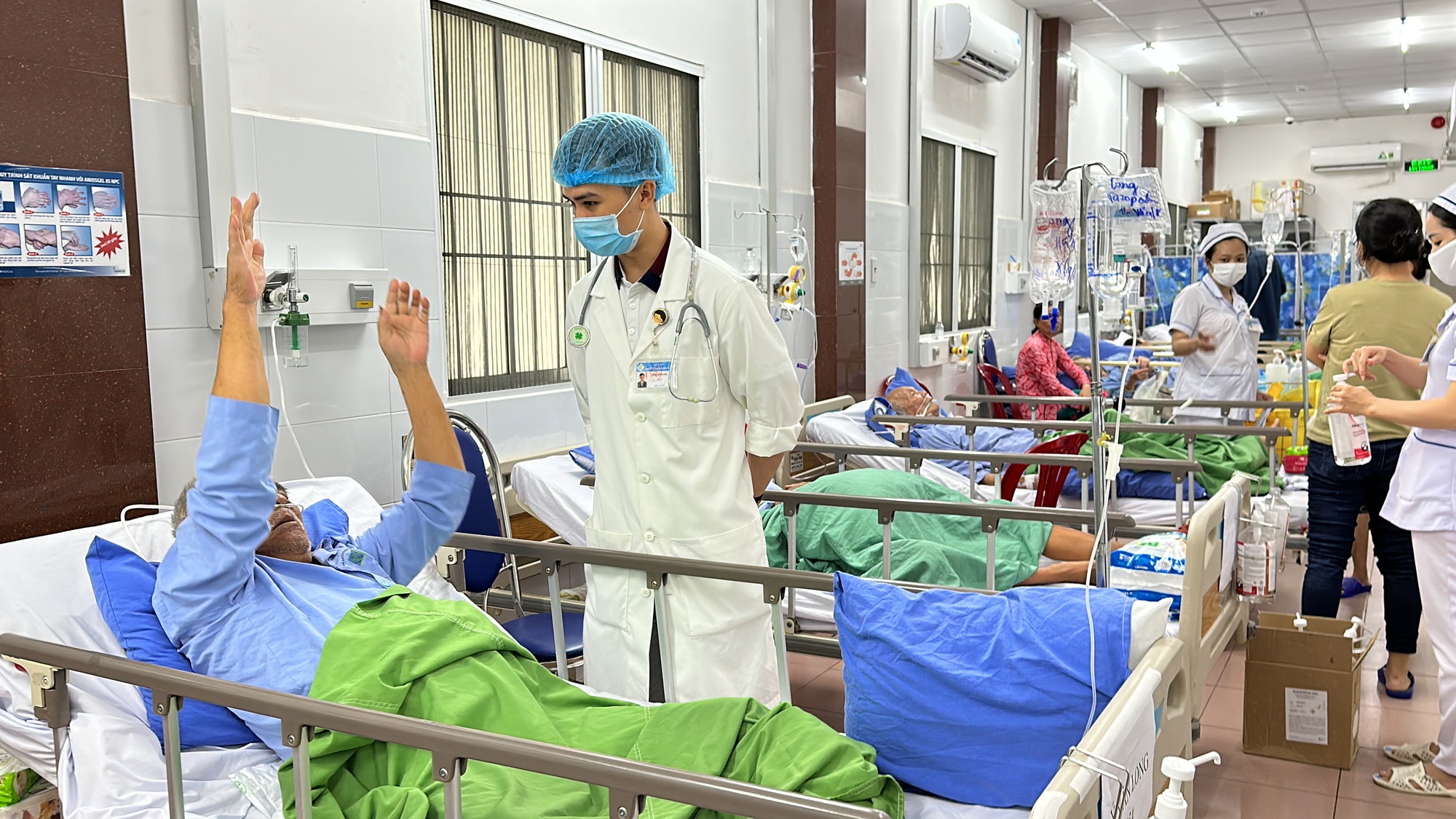
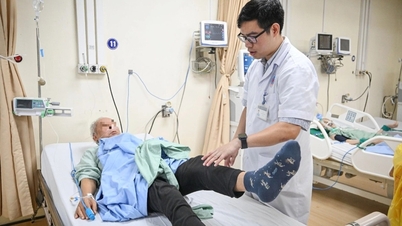
LVL patients are recovering quickly after cardiovascular intervention and ischemic stroke.
Recognizing this as a rare case involving a combination of two critical medical emergencies—acute myocardial infarction and stroke—the cerebrovascular intervention team was immediately alerted to coordinate treatment for the patient.
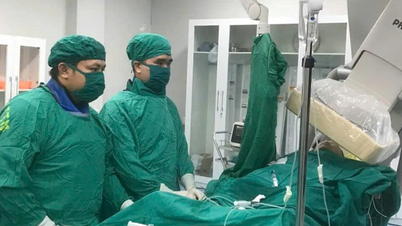
The CT scan of the brain performed in the intervention room was consistent with the diagnosis of coexisting acute ischemic stroke. The first intervention took place, and after 40 minutes, the team completed the angioplasty of the blocked coronary artery and stent placement to restore blood flow to the patient's heart.
Immediately afterward, the cerebrovascular intervention team got to work. In just 20 minutes, the doctors had completed the thrombus removal and reopened the blocked blood vessel in the patient's brain.
The following day, the MRI results showed that the blocked cerebral blood vessel had successfully reopened. Currently, the patient is conscious, vital signs are stable, there is no longer chest pain, no speech disturbances, and only mild weakness on the left side of the body.
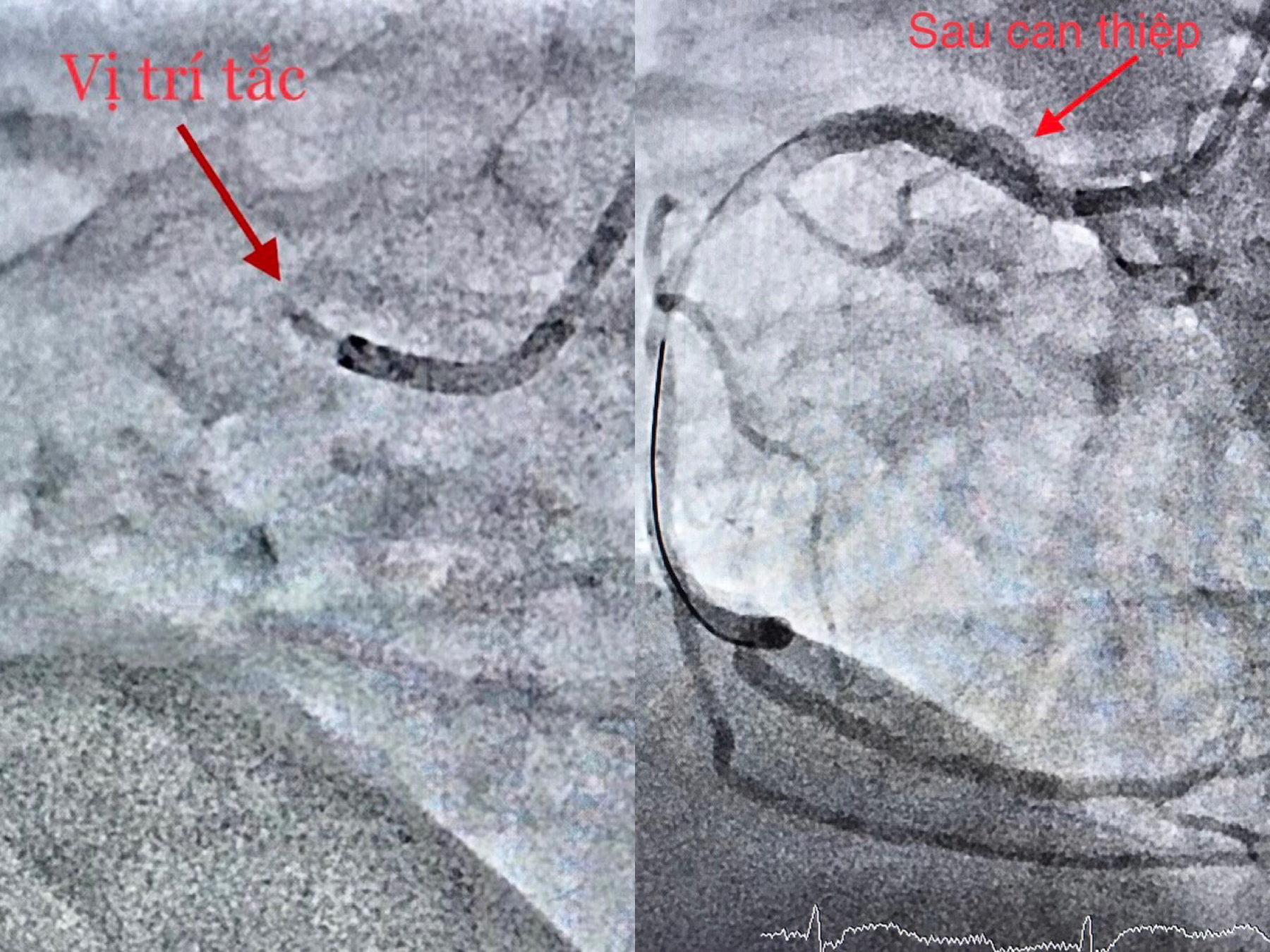
Images of a patient's blocked coronary artery before and after revascularization intervention.
Dr. Ha Tan Duc, Head of the Stroke Department at Can Tho Central General Hospital, said: "Usually, it's due to blood clots forming and blocking coronary and cerebral blood vessels. The danger is that when two conditions are present, as in patient L.'s case, it will mask the characteristic symptoms of each disease, making them difficult to identify. Secondly, when one emergency condition overlaps with another, the risk of death increases tenfold."
Several risk factors for myocardial infarction are associated with stroke.
According to Dr. Duc, the combination of cerebral infarction and myocardial infarction, or vice versa, is very rare. Specifically, the incidence of in-hospital stroke following myocardial infarction is recorded at 1.4-1.5%, but this trend has remained relatively unchanged over the years. However, the mortality rate during hospitalization for this group of patients is as high as 25%. The main causes of death are cardiogenic shock, septic shock, respiratory failure, renal failure, and heart failure.
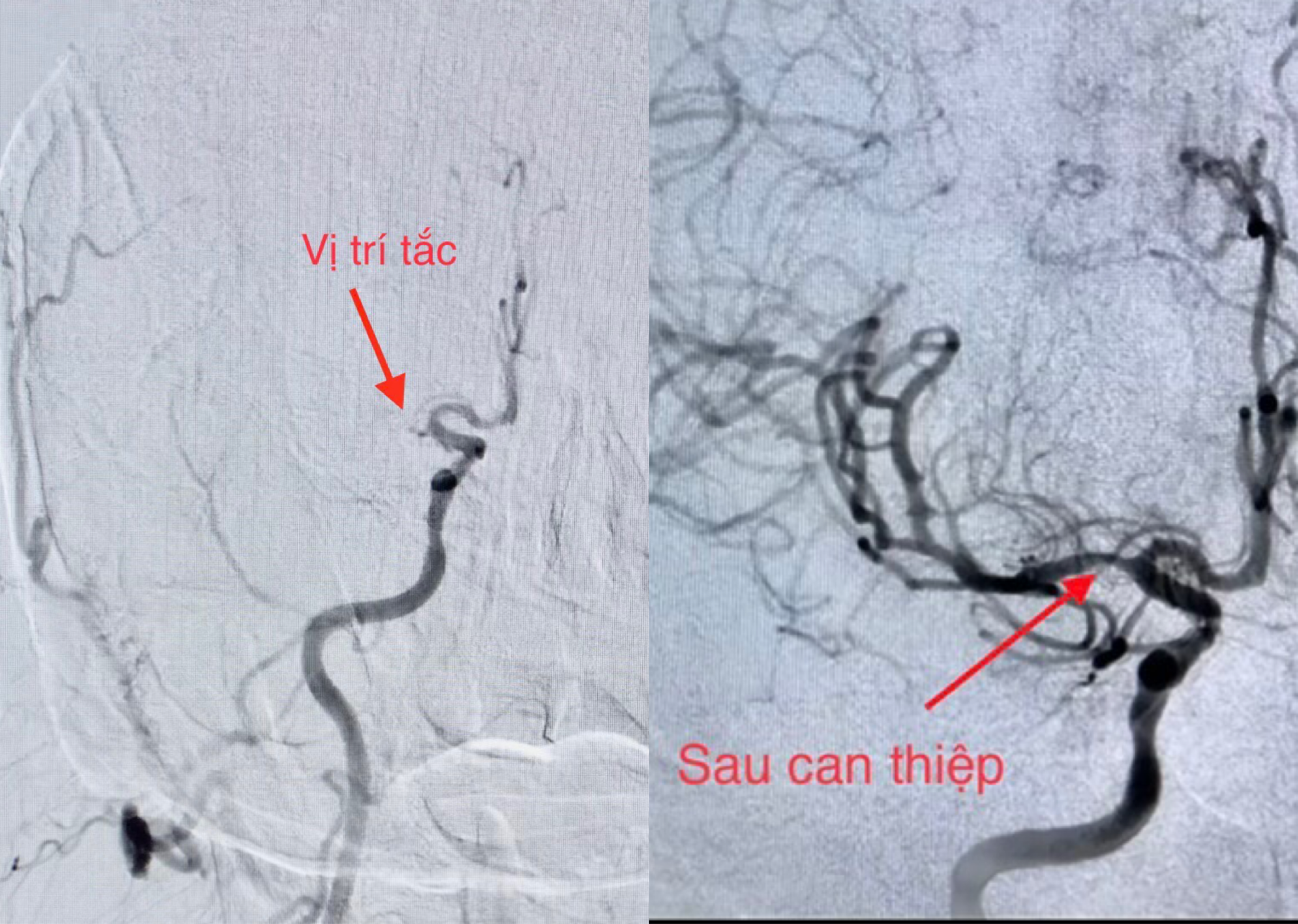
Images of the patient's blocked cerebral blood vessels before and after intervention.
Several risk factors increase the likelihood of stroke in patients with myocardial infarction, including: advanced age, female gender, atrial fibrillation, heart failure, diabetes, chronic kidney disease, and atherosclerosis. Both of these conditions require intervention as soon as possible to reduce the risk of death. However, when a patient suffers from both myocardial infarction and stroke, simultaneous intervention is not possible. "First, we need to assess which condition poses the greatest threat to the patient's life and prioritize its treatment. At the same time, depending on the specific context, we need to coordinate the two cardiovascular intervention teams as smoothly as possible. When the two teams work together seamlessly, the patient will not have to wait, and the effectiveness of emergency treatment will be better," said Dr. Duc.
Dr. Ha Tan Duc also provided recommendations on 11 signs and situations considered medical emergencies, including myocardial infarction and ischemic stroke, requiring patients to be taken to the hospital immediately:
- Severe chest pain or shortness of breath: Chest pain can be a sign of a serious cardiovascular problem such as a heart attack or myocardial infarction. Severe shortness of breath can also be related to respiratory or cardiovascular problems.
- Cardiac arrest or respiratory arrest: If a patient suddenly experiences cardiac arrest or respiratory arrest, immediate RCP (cardiopulmonary resuscitation) should be performed, and the patient should be transported to the hospital.
- Airway obstruction: If a patient exhibits symptoms of airway obstruction, such as hoarseness or difficulty breathing, immediate examination and intervention are necessary to ensure a clear airway.
- Severe bleeding: If bleeding is heavy, persistent, or uncontrollable, especially in the head, neck, or abdomen, the patient should be taken to the hospital.
- Serious injuries: Deep wounds, open fractures, severe burns, or serious head injuries all require examination and treatment at a hospital.
- Sudden deterioration in health: If a patient experiences symptoms such as dizziness, lightheadedness, or loss of consciousness, it may be related to blood pressure, blood sugar, or other endocrine problems.
- Stroke: If a patient experiences symptoms such as loss of sensation, paralysis on one side of the body, or difficulty speaking, they should be taken to the hospital immediately as it could be a stroke.
- Respiratory problems: If the patient has difficulty breathing, breathing very fast or very slow, it may be related to a serious respiratory problem.
- Severe allergic reaction: If a patient experiences a severe allergic reaction after exposure to an allergen, prompt examination and treatment are necessary.
- Severe heart failure: Symptoms such as shortness of breath and swollen legs can be signs of serious heart failure.
- Acute abdominal pain: Although not always a medical emergency, some conditions such as appendicitis, acute pancreatitis, gastrointestinal perforation, ruptured ectopic pregnancy, etc., are among the medical emergencies requiring urgent intervention.
Source link


![[Image] Central Party Office summarizes work in 2025](/_next/image?url=https%3A%2F%2Fvphoto.vietnam.vn%2Fthumb%2F1200x675%2Fvietnam%2Fresource%2FIMAGE%2F2025%2F12%2F18%2F1766065572073_vptw-hoi-nghi-tong-ket-89-1204-jpg.webp&w=3840&q=75)



















































































Comment (0)