

Why does the risk of stroke increase towards the end of the year?
Speaking to Dan Tri newspaper , Dr. Bui Pham Minh Man, from the University of Medicine and Pharmacy Hospital in Ho Chi Minh City (facility 3), said that the end of the year often coincides with a period of cold weather or strong temperature fluctuations. Many medical studies have noted that when the temperature drops, peripheral blood vessels tend to constrict to retain heat, leading to increased vascular resistance and higher blood pressure.

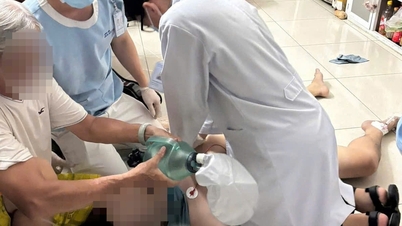
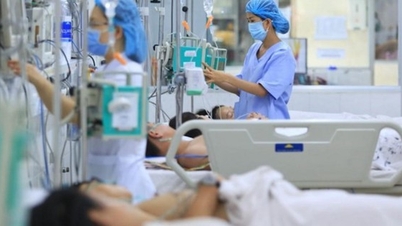
A patient is hospitalized after suffering a stroke in Hanoi (Photo: Manh Quan).
In individuals who already have hypertension, dyslipidemia, or cardiovascular disease, this change can disrupt hemodynamic balance and increase the risk of stroke.
Besides weather conditions, end-of-year lifestyle habits also play a significant role.
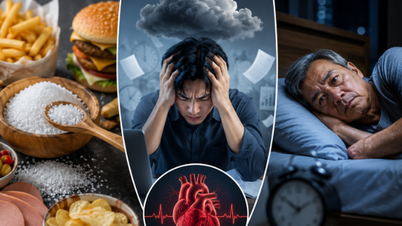
"This is a time when many people are under stress, not getting enough sleep, eating irregularly, consuming more alcohol, and reducing physical activity. These changes contribute to difficulty controlling blood pressure, increase metabolic disorders, and promote the formation of blood clots," the doctor explained.
Another often overlooked factor is treatment interruption. Many patients with hypertension, diabetes, or dyslipidemia arbitrarily stop taking their medication, forget to take it, or postpone follow-up appointments due to end-of-year busy schedules. This causes health indicators to spiral out of control precisely during periods of heightened risk.
The foundation of stroke prevention
According to Dr. Man, among all risk factors, hypertension is considered the most important factor related to stroke. Notably, hypertension often develops silently and does not cause clear symptoms. Many people only discover the disease after a cardiovascular event or stroke has occurred.
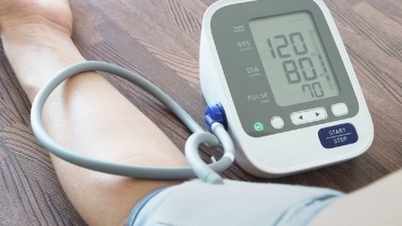
Regularly measuring blood pressure using the correct technique and monitoring its changes over time is a simple yet highly valuable measure. Adults, especially those 40 years and older or with underlying health conditions, should maintain a habit of regularly measuring their blood pressure, particularly during cold weather.
When experiencing persistently high or fluctuating blood pressure, patients should consult with healthcare professionals for advice on lifestyle adjustments or appropriate treatment, rather than self-treating.
For individuals who have been diagnosed with hypertension, diabetes, dyslipidemia, or a history of stroke, adherence to treatment is crucial.
The end of the year should not be a time to interrupt medication or skip follow-up appointments. Patients need to proactively prepare enough medication, take medication as prescribed, and discuss any unusual health changes with their doctor.
Maintain a healthy lifestyle during this sensitive period.
Dr. Manh advises that stroke prevention does not require extreme changes, but rather reasonable adjustments and consistent maintenance.
The diet should focus on reducing salt intake, limiting processed foods and salty foods, and increasing green vegetables, fruits, fish, and healthy protein sources. Reducing salt intake has a direct impact on blood pressure control.
Physical activity should be maintained at a level appropriate to one's physical condition. Brisk walking, light exercise at home, or other moderate forms of exercise can improve circulation and help control blood pressure, blood sugar, and blood lipids. In cold weather, it is necessary to warm up thoroughly and keep the body warm before exercising.
Limiting alcohol consumption and not smoking are important measures to protect blood vessels. Excessive alcohol use can increase blood pressure and cause heart rhythm disorders, while tobacco damages blood vessel walls and promotes atherosclerosis.
Sleep and mental health also need attention. Lack of sleep and prolonged stress can cause blood pressure to fluctuate and reduce the effectiveness of managing underlying conditions. Maintaining a reasonable sleep schedule, avoiding staying up late, and organizing work scientifically will help the body recover better.
Even with preventative measures, the risk of stroke can still occur. Therefore, early recognition of signs and getting the patient to a medical facility capable of treating stroke as soon as possible is a crucial factor in determining the prognosis.
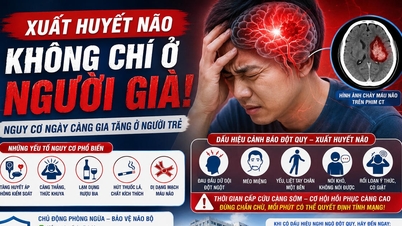
Common warning signs include a drooping mouth, weakness or numbness in one side of the body, sudden difficulty or slurred speech, blurred vision, dizziness, loss of balance, or severe headaches of unknown origin.
When these symptoms appear, call emergency services or take the patient to the hospital immediately; do not wait and do not apply any home remedies.
Source: https://dantri.com.vn/suc-khoe/bac-si-chi-ra-ly-do-dot-quy-thuong-tang-vao-cuoi-nam-20251215172139632.htm
























![[Photo] Reception to welcome General Secretary and President To Lam and his wife on their State visit to the Philippines](https://vphoto.vietnam.vn/thumb/1200x675/vietnam/resource/IMAGE/2026/06/01/1780295488620_vna-potal-chieu-dai-chao-mung-tong-bi-thu-chu-tich-nuoc-to-lam-va-phu-nhan-tham-cap-nha-nuoc-toi-philippines-8798060-7855-jpg.webp)























































Comment (0)