

 |
Tourists wearing traditional clothing pose for photos by the gate of the Forbidden City, now the Palace Museum, on October 2, 2025. Photo: Xinhua . |
Visitors to the Forbidden City in Beijing are often drawn to its majestic red gates, but behind that striking exterior lie centuries of feudal rules and traditional Chinese beliefs.
The neatly arranged rows of yellow door nails were not just for decoration; they were once symbols of power reserved exclusively for the royal family and could not be found haphazardly in ancient Chinese society, according to SCMP .
During the Ming Dynasty (1368-1644) and the Qing Dynasty (1644-1912), door nails symbolized social status and were subject to strict regulations. According to traditional Chinese beliefs, odd numbers represent yang (light), while even numbers represent yin (darkness). Therefore, the number of door nails had to be odd. The number 9, the largest odd number below 10, was considered a symbol of supreme power and divine mandate, and was therefore only used by the emperor.
At the Forbidden City, the main gates are painted red – a color symbolizing solemnity and prosperity. Each gate has 81 golden nails arranged in a 9x9 pattern. However, the East Flower Gate has only 72 nails, making it a rare exception within the palace complex.
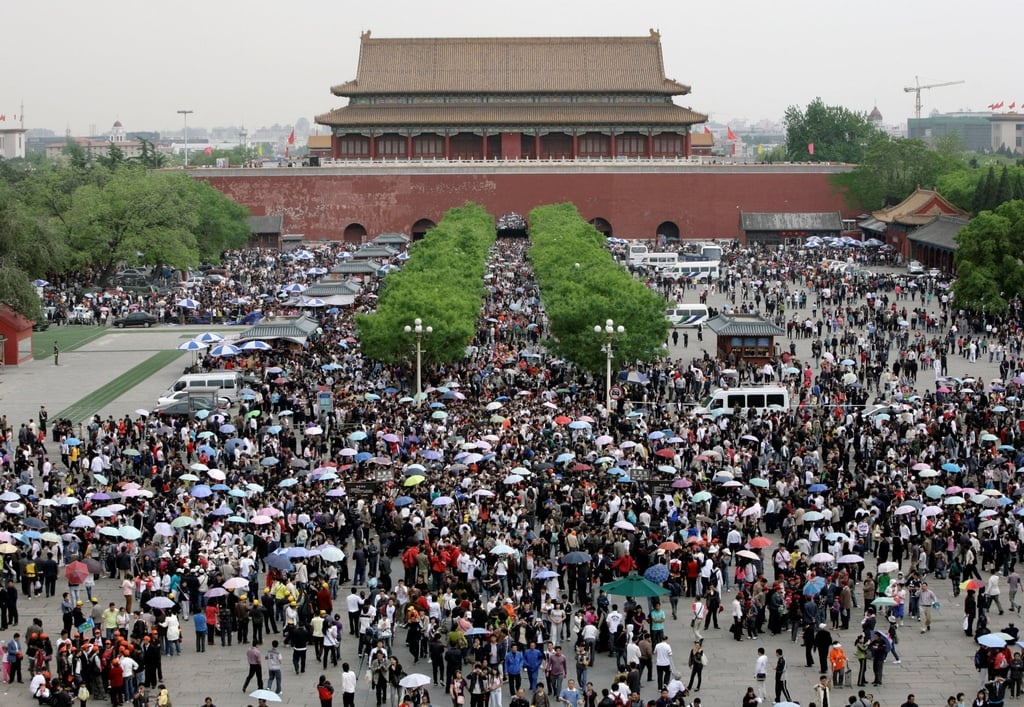 |
Tourists visit the Forbidden City during the International Labor Day holiday. Photo: Reuters. |
One theory suggests this is the "gate of ghosts," where the coffins of Qing dynasty emperors such as Shunzhi, Jiaqing, and Daoguang were taken out of the Forbidden City. The use of even numbers is meant to distinguish between the living and the deceased.
Another theory relates to Chongzhen, the last emperor of the Ming dynasty, who is said to have fled through the Donghua Gate before hanging himself when the dynasty collapsed. After the Qing dynasty came to power and rebuilt the gate, they removed a row of nails as a way of "punishing" the gate for failing to protect the previous dynasty.
Another explanation relates to feng shui. In the five elements, the East direction belongs to the Wood element, and Wood overcomes Earth. Ancient people believed that making the number of door nails an even number would weaken the energy of the Wood element.
In feudal China, only the emperor was allowed to use 81 door nails. During the Qing dynasty, the residences of princes used 63 nails, while their sons used 45. Dukes and marquises used 49 and 25 nails respectively. They were also only allowed to use iron door nails; commoners were not permitted to use them.
The color of the gate also reflected social status. During the Qing dynasty, red gates were reserved only for the imperial family and officials. The wealthy could paint their gates black, while commoners were not allowed to.
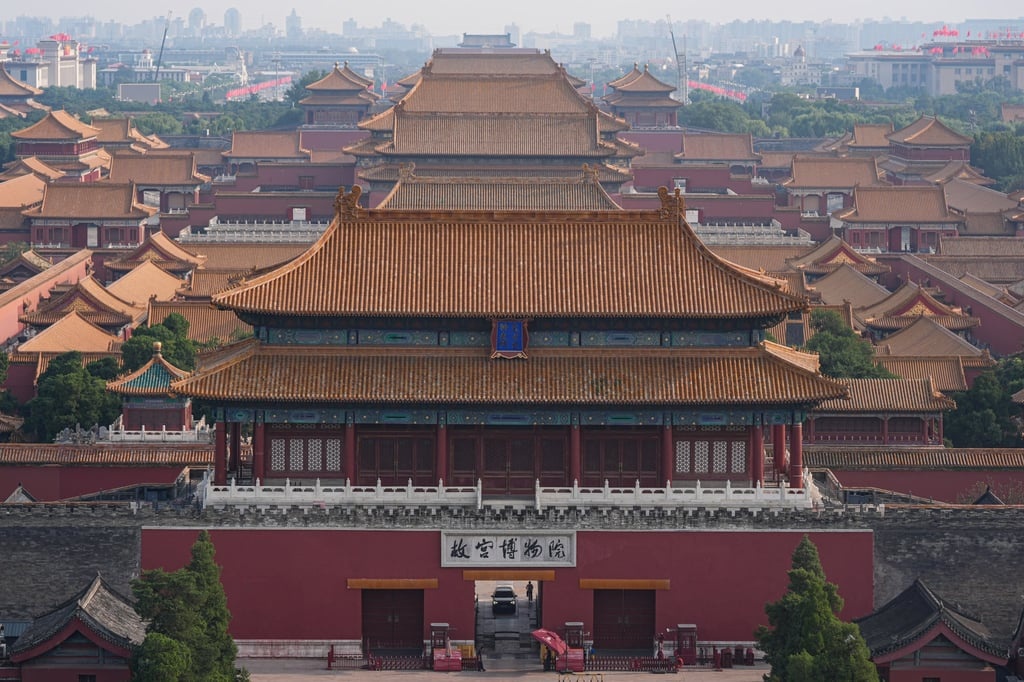 |
A panoramic view of the Forbidden City perfectly captures the splendor of this famous landmark. Photo: Eugene Lee. |
Besides their decorative function, door nails also served a reinforcing purpose, as palace gates were often very large and constructed from many planks of wood. They were made in a raised circular shape to enhance their aesthetic appeal. Because they were hollow inside, during the Song Dynasty (960-1279), they were nicknamed "floating bubbles".
The custom of tourists touching door nails today also has historical roots. During the Ming Dynasty, women had the custom of closing their eyes and touching door nails when going out on the night of the 16th day of the first lunar month, one of the few occasions when women in ancient times were allowed to go out at night. The ancients called this activity "walking to ward off illness." They believed that touching the door nails would bring good luck.
Some people even believe that touching a door nail will help them have a son because the word for "door nail" in Chinese is "men ding," which sounds similar to the phrase meaning "son in the family." According to folklore, the higher the nail touched, the greater the luck.
Source: https://znews.vn/bi-mat-phia-sau-81-chiec-dinh-vang-tren-cong-tu-cam-thanh-post1653800.html
![[Image] Hanoi's urban life under the challenge of a "scorching hot" environment](https://vphoto.vietnam.vn/thumb/1200x675/vietnam/resource/IMAGE/2026/05/25/1779706979265_nang-nong-t5-2026-minh-duy-7-4636-jpg.webp)






















































































Comment (0)