

 |
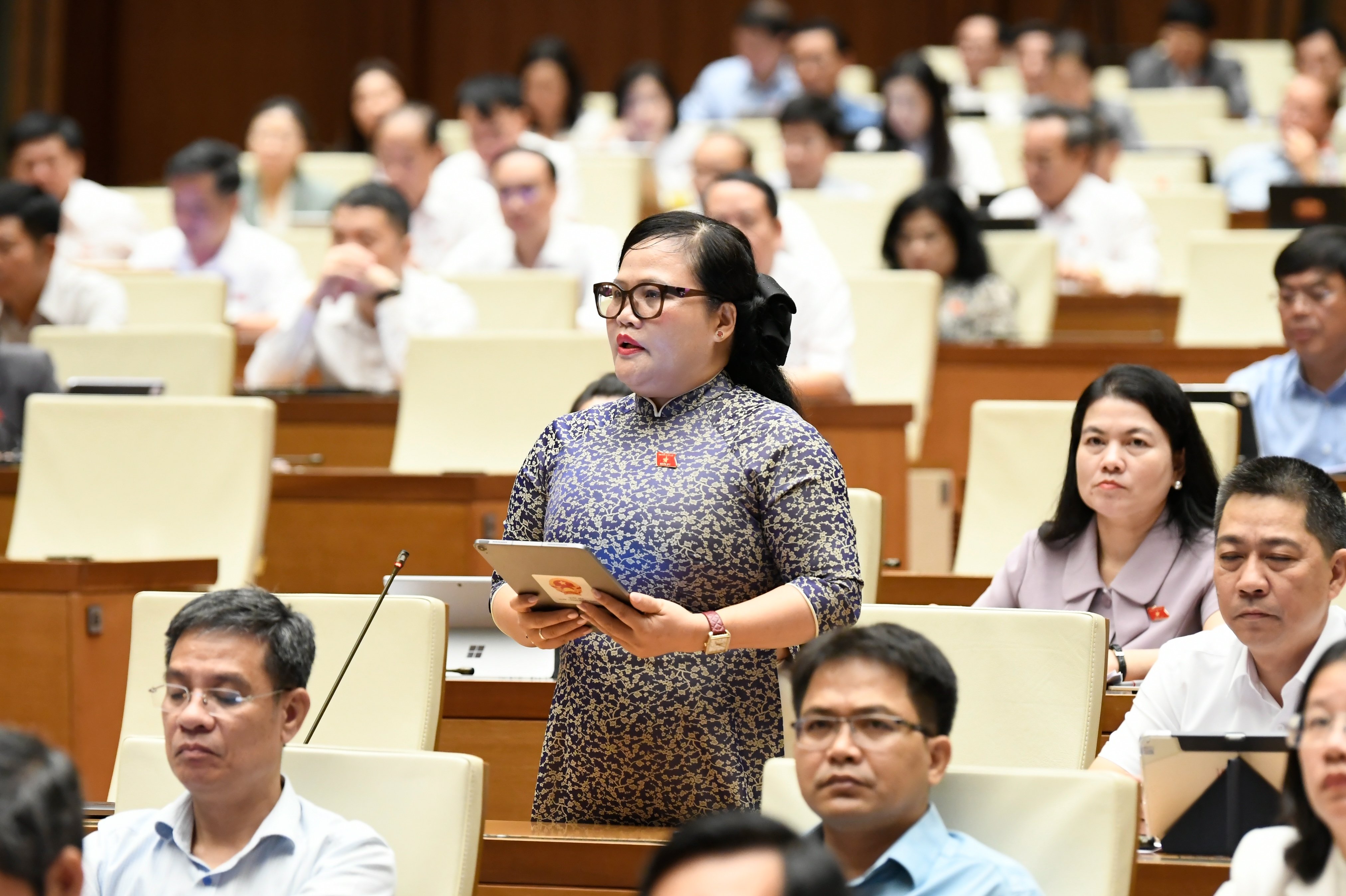
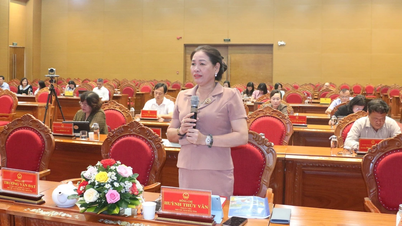
| Deputy Head of the Hue City National Assembly Delegation, Nguyen Thi Suu, participates in the discussion in the assembly hall. Photo: Provided by the Hue City National Assembly Delegation. |
Participating in the discussion, Deputy Head of the Hue City National Assembly Delegation, Nguyen Thi Suu, emphasized that Vietnamese culture, distilled over thousands of years of history, is the spiritual foundation of society and a particularly important endogenous resource for national development. Citing President Ho Chi Minh 's view that "Culture illuminates the path for the nation," the delegate argued that, in the spirit of Resolution 80, culture should not only be a foundation but also become a driving force for development, a soft power of the nation.
In practice, cultural potential has not been effectively transformed into economic value; the identity in many products remains weak, while the policy system has not kept pace with the demands of the digital age. Therefore, delegates focused their contributions on two major areas: developing the cultural industry and preserving the culture of ethnic minorities.
Regarding the development of creative industrial clusters and cultural creative complexes (Article 4), delegate Nguyen Thi Suu assessed that the draft has shown an important shift in thinking, from "doing culture" to "developing the cultural industry". However, the current regulations are still directional and not specific enough to form a true cultural economic sector.
In reality, in some localities such as Da Nang, Ho Chi Minh City, Hanoi, and Ninh Binh, pilot models have been established, but the output products lack strong Vietnamese identity, tending towards processing, and relying on foreign technology and capital. Without sufficiently strong policies, the risk of "creative clusters" emerging that fail to create Vietnamese cultural value is real.
From there, delegate Nguyen Thi Suu proposed three groups of solutions. Firstly, it is necessary to clearly define and quantify the criteria for cultural and creative industrial clusters, with specific indicators such as the percentage of creative businesses, the percentage of products incorporating Vietnamese cultural elements, and requirements for research, training, and innovation. Without clear criteria, it could easily lead to the situation of simply labeling commercial areas as "cultural."
Secondly, we need to develop a set of criteria for evaluating cultural identity in creative products. Emphasis on creativity should be accompanied by tools to measure "Vietnamese character," through criteria such as the exploitation of national cultural materials, the ability to transform them into new products, and the extent of their dissemination, contributing to building a national brand.
Thirdly, we need to improve the mechanisms for intellectual property and the economic viability of cultural assets. In the context of the digital economy, the core value lies in intellectual property; without mechanisms for protection, valuation, and commercial exploitation, the cultural industry will struggle to develop sustainably.
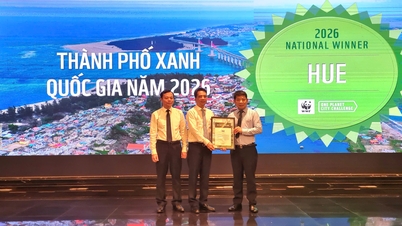
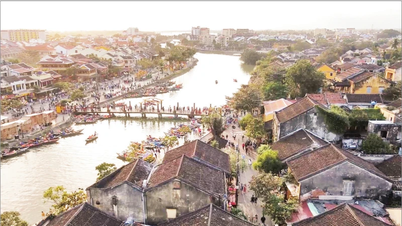
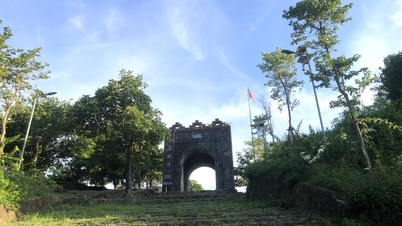
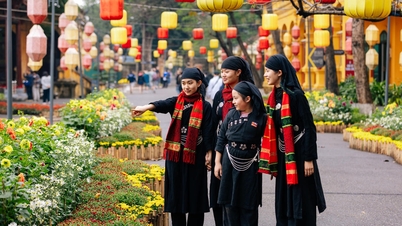
In a practical context, delegate Nguyen Thi Suu stated that after becoming a centrally-governed city in 2025, Hue aims to develop based on its heritage and cultural identity. With its advantages of imperial heritage, traditional cultural spaces, and international brand, Hue is facing the challenge of transforming its heritage into a high-value-added cultural industry.
Meanwhile, Dong Nai, a dynamic industrial locality, has advantages in infrastructure, investment resources, regional connectivity, and markets. With the right mechanisms, Dong Nai can develop a cultural industry linked to technology, markets, and modern value chains.
Based on this comparison, delegate Nguyen Thi Suu argued that it is necessary to design policies that are flexible enough for each locality to leverage its own advantages, while still remaining within a unified national cultural development strategy.
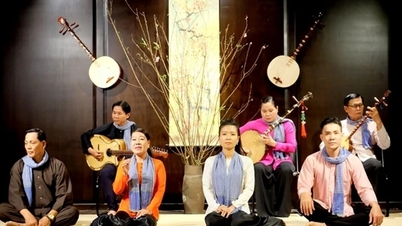
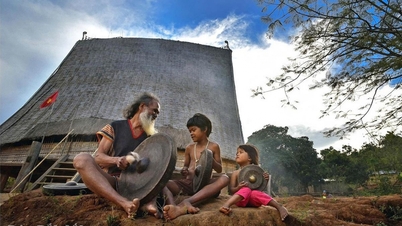
Regarding the content on preserving the culture of ethnic minorities (Article 6), delegate Nguyen Thi Suu proposed further refinement of the draft in the direction of promoting the economic development of heritage, building specific policies for artisans, focusing on training the next generation, and establishing a specific mechanism for evaluating effectiveness. Detailed comments will be submitted in writing.
Source: https://huengaynay.vn/chinh-polit-xa-hoi/theo-dong-thoi-su/bien-van-hoa-thanh-dong-luc-phat-trien-164921.html

































































Comment (0)