

 |
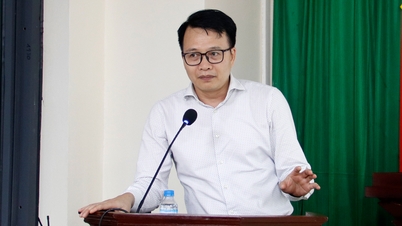
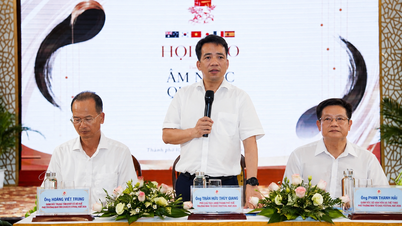
| Delegates shared their views at the workshop. |
Development in harmony with nature
In his opening remarks at the workshop, Tran Huu Thuy Giang, Vice Chairman of the People's Committee of Da Nang City, assessed that Tam Giang - Cau Hai is the largest brackish lagoon system in Southeast Asia, playing a particularly important role in the environment, biodiversity, and as a foundation for sustainable livelihoods for hundreds of thousands of households.
To exploit and promote the value of this area, the Politburo also issued a Resolution on the construction and development of Thua Thien Hue province (now Hue City) until 2030, with a vision to 2045. The Prime Minister also approved the socio-economic development plan for the Tam Giang - Cau Hai lagoon area. This serves as the legal basis and strategic impetus for the city to continue implementing its development goals in the new phase.
“Tam Giang - Cau Hai is not only a strategic economic development area but also a particularly important natural resilience infrastructure for the city. The government is committed to promoting a development model that is in harmony with nature and mobilizing green investment resources to protect and enhance the value of the lagoon ecosystem in the long term,” emphasized Vice Chairman of the City People's Committee Tran Huu Thuy Giang.
At the workshop, delegates focused on discussing the development orientation of the Tam Giang - Cau Hai lagoon area in a way that is harmonious with nature, enhances climate resilience, and mobilizes green investment resources for long-term development. The discussions emphasized the urgent need to shift from a single-sector development model to an integrated approach that combines ecosystem conservation, community livelihoods, and sustainable marine economic development.
 |
| The An Van Duong new urban area is creating momentum for the city's development. Photo: Vo Duc |
With an area of approximately 22,000 hectares and being the largest brackish lagoon system in Southeast Asia, Tam Giang - Cau Hai plays a particularly important role in the economic development of the city. However, this area is facing increasing pressure from climate change, saltwater intrusion, environmental pollution, coastal infrastructure development, and unsustainable resource exploitation. Delegates also agreed that development in harmony with nature and nature-based solutions are no longer just environmental choices, but are becoming a strategic requirement to minimize investment risks, enhance resilience, and open up new opportunities for green growth.
Mr. Le Minh Hoan, former Vice Chairman of the National Assembly and former Minister of Agriculture and Rural Development (now the Ministry of Agriculture and Environment ), affirmed that seeking environmentally friendly solutions for sustainable development is the right direction. Environmental friendliness should become a strategic mindset in management and development. The development of the Tam Giang - Cau Hai lagoon area requires an interdisciplinary approach, integrated coastal zone management, and the integration of environmentally friendly solutions to enhance climate resilience.
Green investment
Within the framework of the workshop, the dialogue on mobilizing green investment for environmentally friendly development in the Tam Giang - Cau Hai lagoon area attracted the participation of representatives from the Ministry of Finance, the Ministry of Agriculture and Environment, international organizations, commercial banks, investment funds, businesses, and development partners.
 |
| Mangrove reforestation creates sustainable livelihoods in the Tam Giang - Cau Hai lagoon area. |
Mr. Robert De Waha, LuxDev Representative, shared that LuxDev has partnered with the city in many stages of development and in various fields, from sustainable tourism, smart agriculture development, vocational training to climate adaptation programs and promoting inclusive finance and green finance. The Tam Giang - Cau Hai lagoon system has all the conditions to become a typical model for nature-friendly development and green investment mobilization in Vietnam. What is needed now is to build a long-term vision, strengthen cooperation between the State, the community, the private sector, and development partners to gradually transform the potential of the lagoon area into real investment opportunities.
Mr. Van Ngoc Thinh, General Director of WWF Vietnam, affirmed that in the context of current climate change, well-planned investments in coastal wetlands will play a key role in enhancing the resilience of ecosystems, while conserving biodiversity and the livelihoods of coastal communities. The WWF Vietnam representative also emphasized the need to integrate ecological priorities into local development planning, while promoting genuine participation from communities, the private sector, and green finance sources.
According to delegates, the current market does not lack capital for green and climate-related projects. However, what is lacking are projects with suitable financial models and the ability to meet international environmental standards and long-term resilience. Tam Giang - Cau Hai has the potential to become a "climate investment space" in the Central region if a clear portfolio of green projects, an effective inter-sectoral coordination mechanism, and a transparent investment data platform can be developed. The workshop aimed to lay the foundation for building a technical support framework and a priority project portfolio to support the city in accessing green financing and sustainable investment in the future.
Vice Chairman of the City People's Committee Tran Huu Thuy Giang stated that the city recognizes that the State budget cannot fully meet the needs for climate adaptation investment. Therefore, mobilizing social resources and long-term green capital is essential. To effectively attract these resources, the city is committed to focusing on improving planning, building an effective inter-sectoral coordination mechanism, and preparing a list of high-quality green projects with a long-term vision to attract investment.
At the conference, WWF Vietnam officially announced and awarded the title of “National Green City 2026” to Hue City within the framework of WWF’s International Green Cities Program. The title of “National Green City 2026” serves as a driving force for Hue to continue pursuing its heritage urban development orientation towards green and sustainable practices. In the coming time, the city will accelerate green transformation, apply science and technology, and enhance its capacity to adapt to climate change, aiming to build Hue into a centrally-governed city with its own unique cultural and ecological identity and improved quality of life for its people.
|

Source: https://huengaynay.vn/kinh-te/dau-tu-xanh-cho-vung-dam-pha-tam-giang-cau-hai-165898.html
![[Image] Close-up view of the interchange connecting the two expressways and Long Thanh Airport.](https://vphoto.vietnam.vn/thumb/1200x675/vietnam/resource/IMAGE/2026/05/25/1779703378210_ndo_br_z7863716673926-224453a31600126cce10622af6290afd-4549-jpg.webp)

![[Image] Hanoi's urban life under the challenge of a "scorching hot" environment](https://vphoto.vietnam.vn/thumb/1200x675/vietnam/resource/IMAGE/2026/05/25/1779706979265_nang-nong-t5-2026-minh-duy-7-4636-jpg.webp)



















































Comment (0)