

 |
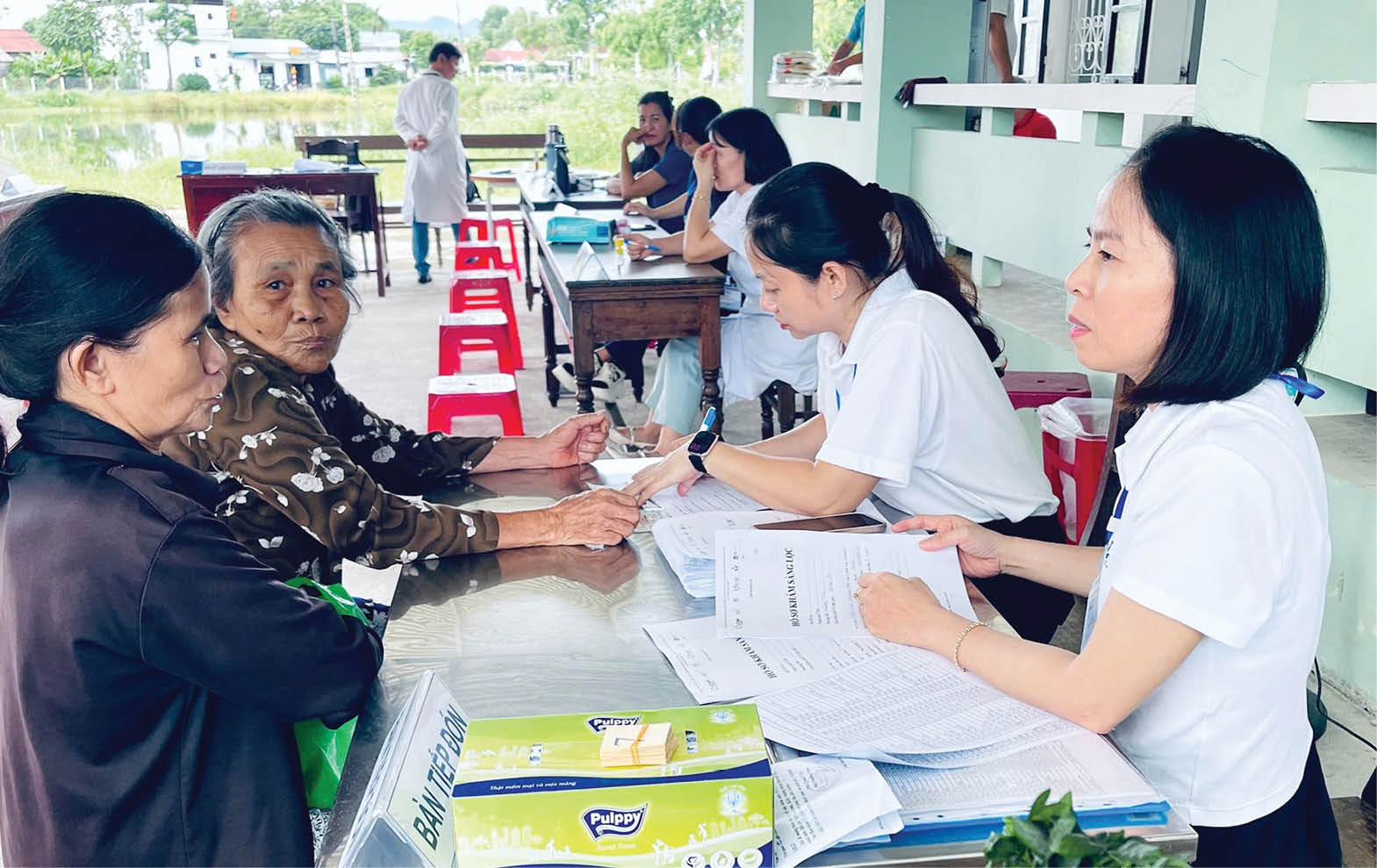
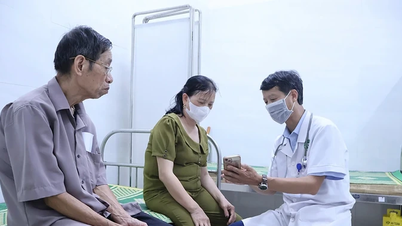
| Health officials in Huong Tra ward welcome residents who come to register for health check-ups. Photo: Vinh Nguyen. |
Building consensus and trust among the people.
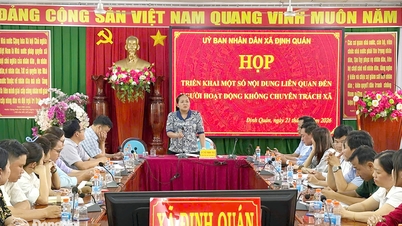
The implementation of a two-tiered local government model following the reorganization of administrative units from July 1, 2025, is creating significant changes in the organizational structure and state management at the grassroots level. Not only does it streamline administrative structures, but the new model also demands improved effectiveness and efficiency in governance, coupled with administrative reform and digital transformation.
In Long Quang commune, after the merger of three communes – Huong Huu, Thuong Long, and Thuong Quang – the local authorities quickly streamlined the organizational structure, assigned tasks, and strengthened ideological work to create consensus within the political system.
"After the merger, the workload increased significantly, but the staff made efforts to adapt, ensuring that the handling of affairs for the people was not interrupted," said Comrade Ho Sy Minh, Secretary of the Party Committee of Long Quang commune.
In Vinh Loc commune, after the reorganization of the administrative apparatus, the operation of the local government has gradually become more organized. The handling of administrative procedures has been maintained smoothly, with no backlog of files during the transition period. "The most important thing is to create consensus among officials and the people so that the new apparatus operates stably," shared Comrade Nguyen Trung Duong, Secretary of the Commune Party Committee.
Meanwhile, in Huong Tra ward, the new model is being implemented in conjunction with administrative reform and digital transformation. Many work processes have been reviewed for streamlining; the application of shared digital platforms has initially proven effective in management and operation.
Despite initial successes, many localities still face difficulties in operating the new model. After the mergers, the workload has increased significantly while staffing levels have not been correspondingly increased; infrastructure in some areas is still inconsistent; and digital infrastructure and equipment for operation do not meet practical requirements.
In Long Quang, the vast area, difficult transportation, and large ethnic minority population have increased administrative pressure. In some coastal and urban areas, the volume of paperwork is high, and many officials have to take on multiple responsibilities during the initial phase of operating the new system.
This practice shows that, after the merger, the requirements are not only to streamline the organization but also to improve governance capacity, coordination, and the quality of service to the people at the grassroots level. Therefore, the effectiveness of the two-tiered local government model is not only measured by the reorganization of the apparatus, but also by its ability to effectively address issues, create consensus, and build trust among the people.
Completing digital infrastructure for 40 commune-level People's Committees.
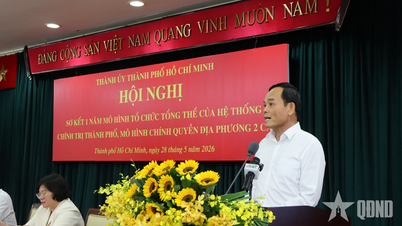
Based on the practical experience of operating the two-tiered local government model, the Standing Committee of the City Party Committee has identified the focus for the coming period as continuing to improve the organizational structure towards a streamlined, efficient, effective, and effective system, while simultaneously enhancing the quality of grassroots officials.
According to the assessment of the Standing Committee of the City Party Committee, administrative reform and digital transformation have seen many positive changes in recent times. The city's administrative procedure processing system has connected with the National Public Service Portal; the rate of online applications has reached over 93%; and digital platforms such as Hue-S and IOCv2 have initially proven effective in management, operation, and handling on-site feedback.
In this new context, the requirements are not only to get work done faster but also to innovate leadership methods and enhance the adaptability of grassroots officials to the demands of modern governance. Commune-level authorities are no longer simply performing administrative tasks but must proactively manage and address many emerging issues at the grassroots level.
The Department of Internal Affairs stated that it will continue to advise the city on reviewing and allocating personnel in accordance with task requirements after receiving the central government's personnel allocation decision; and at the same time, coordinate to finalize regulations on job positions, management decentralization, and organizational structure according to the new model.
The Standing Committee of the City Party Committee also issued Decision No. 365-QD/TU dated March 16, 2026, on the list of job positions for Party agencies, the Fatherland Front, and political and social organizations; and continued to direct the review and guidance for localities to implement synchronously and appropriately with the practical activities at the grassroots level.
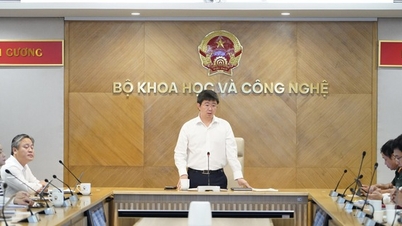
Meanwhile, the Department of Science and Technology is proposing a project to complete the digital infrastructure for 40 commune-level People's Committees in the period 2026-2027 to improve administrative efficiency, serve the building of digital government and the development of smart cities.
In the coming period, the requirements for localities are not only to continue improving the organizational structure but also to enhance the actual operational efficiency of local governments. The focus should be on proactively strengthening the staff to meet new task requirements; promoting administrative reform linked to digital transformation; and improving the quality of service to citizens and businesses.
Furthermore, it is necessary to continue innovating leadership methods, enhancing the accountability of leaders, fostering a spirit of daring to think, daring to act, and daring to take responsibility; and strengthening coordination according to the "6 clear" principle (clear person, clear task, clear time, clear responsibility, clear authority, clear product) to promptly resolve difficulties and improve the efficiency of governance under the two-tiered local government model.
Source: https://huengaynay.vn/chinh-polit-xa-hoi/nang-hieu-qua-van-hanh-chinh-quyen-dia-phuong-2-cap-166015.html
![[Image] Pleasant weather helps students enter the 10th grade entrance exam with confidence.](https://vphoto.vietnam.vn/thumb/1200x675/vietnam/resource/IMAGE/2026/05/29/1780034401612_ngay-1-thi-lop-10-minh-duy-8-5009-jpg.webp)


![[Photo] Ba Lang An Lighthouse - the "eye of the sea" amidst the "rock museum" of Quang Ngai province.](https://vphoto.vietnam.vn/thumb/1200x675/vietnam/resource/IMAGE/2026/05/29/1780038698840_anh-man-hinh-2026-05-29-luc-14-10-42.png)






































































Comment (0)