

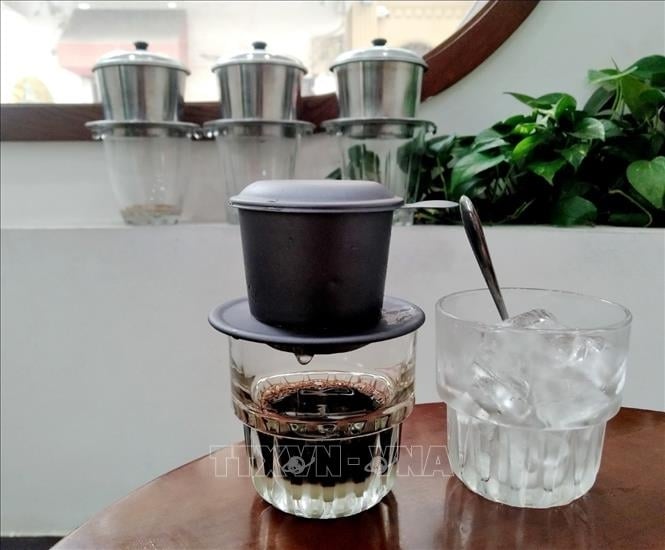
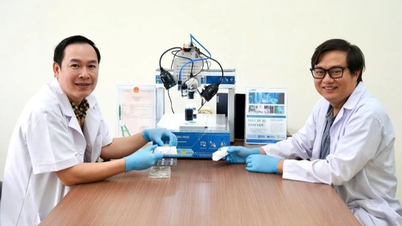
Research conducted by a team of experts at the Laboratory for Cellular Aging and Genetics, published in Microbial Cell, found that caffeine activates a cellular energy sensor called AMPK – an ancient “fuel gauge” that helps cells cope with energy shortages and stress.
Previously, the research team had shown that caffeine affects a growth regulatory switch called TOR (Target of Rapamycin), which controls cell growth based on energy and nutrient levels. This mechanism has existed in the biosphere for over 500 million years.
However, new research suggests that caffeine does not directly affect TOR but instead activates AMPK – a cellular energy control system that has also evolved from yeast to humans.
Dr. Charalampos Rallis, the study's lead author, explained: "When cells lack energy, AMPK activates to help them adapt. And caffeine triggered this mechanism."
AMPK is also a target of the diabetes drug metformin – a drug being studied for its potential to extend lifespan – similar to rapamycin.
Experiments on fission yeast—a single-celled organism with a cellular structure similar to humans—showed that when AMPK is activated by caffeine, the cells better control growth, DNA repair, and stress response—key factors linked to aging and disease.
“This finding helps explain why caffeine may offer health and longevity benefits,” said Dr. John-Patrick Alao, the lead author. “It also serves as a springboard for future research seeking to activate this effect through diet, lifestyle, or new therapies.”
Source: https://baobinhphuoc.com.vn/news/9/174509/ca-phe-buoi-sang-kich-hoat-cong-tac-keo-dai-tuoi-tho
![[Photo] First session of the 14th Congress of the Vietnam Trade Union](https://vphoto.vietnam.vn/thumb/1200x675/vietnam/resource/IMAGE/2026/06/03/1780465947883_ndo_br_img-3852-jpg.webp)
![[Photo] General Secretary and President To Lam presides over a meeting with the Central Organizing Committee.](https://vphoto.vietnam.vn/thumb/1200x675/vietnam/resource/IMAGE/2026/06/03/1780482764658_a1-bnd-4741-3342-jpg.webp)


![[Photo] Secretary of the National Assembly Party Committee, Chairman of the National Assembly presides over the meeting of the Standing Committee and Executive Committee of the National Assembly Party Committee.](https://vphoto.vietnam.vn/thumb/1200x675/vietnam/resource/IMAGE/2026/06/03/1780480353201_ndo_br_bnd-2585-jpg.webp)







![[Photo] The dazzling Lantern Festival at Ho Van Lake - Van Mieu Temple](https://vphoto.vietnam.vn/thumb/402x226/vietnam/resource/IMAGE/2026/05/05/1777997594674_ndo_br_hoa-dang-9-jpg.webp)
































![[Video] Sunset at Lap An Lagoon – Where the sun sets over the fishing nets](https://vphoto.vietnam.vn/thumb/1200x675/vietnam/resource/IMAGE/2026/05/31/1780192137701_beach-landscape-sea-water-nature-grass-745871-pxhere-com.jpeg)

























Comment (0)