

Lesson 1: The Hearts of the People of Southern Vietnam and the Turbulent Current of the Revolution
Eighty years ago, in the autumn days of 1945, the August Revolution (APR) overthrew the colonial, feudal, and fascist regimes, seizing power for the Vietnamese people. It erupted and quickly spread throughout the three regions, then known as the "three regions": Tonkin, Annam, and Cochinchina. Within just one week (August 19th to 25th, 1945), it achieved complete victory across the entire country.
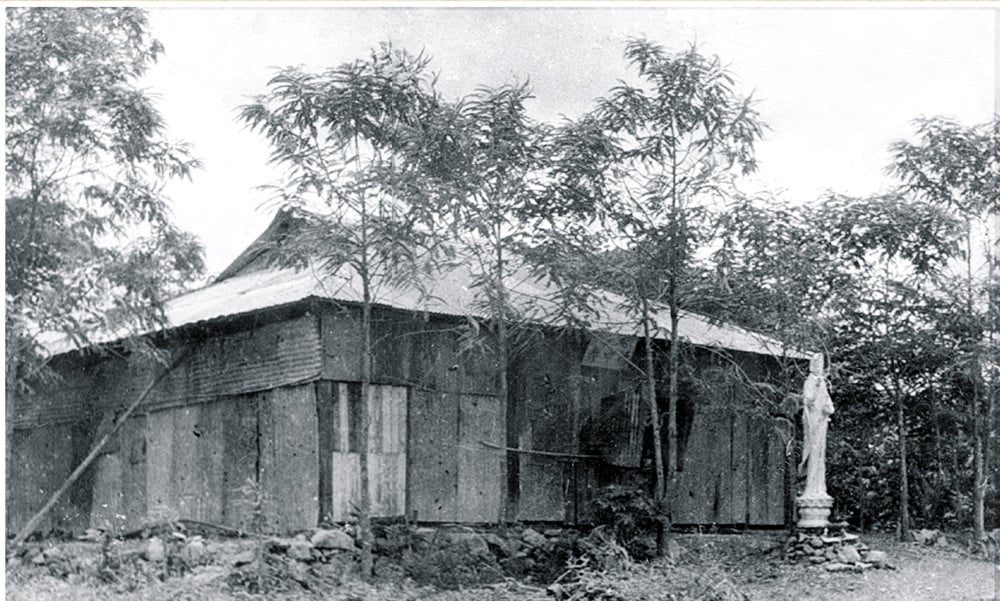
Trung Pagoda, Ba Den Mountain - the location of the Conference of 20 communes to implement the policy of protracted resistance in 1945.
Simultaneous Uprising
Official documents and historical records confirm that, at that time, in the South, uprisings took place in all provinces almost simultaneously with Saigon, where, under the direct leadership and guidance of the Southern Regional Committee of the Communist Party of Vietnam , power was seized and the Provisional Administrative Committee of the South was established, chaired by Professor Tran Van Giau (from Tan An province). The uprisings in the southern provinces shared a common characteristic: the use of violence by a large number of people from all social classes, under the leadership of the Party, to independently seize power. This core force effectively exploited the general situation, especially after the Japanese coup against the French five months earlier, to mobilize and ignite a large and powerful mass movement.
In reality, the uprisings leading up to the August Revolution in Southern Vietnam were initially organized by the Regional Party Committee as pilot projects in Tan An province (later Long An, now Tay Ninh ) to "test" the reaction of the Japanese army before spreading throughout the region. After the 1940 Southern Vietnam Uprising, Tan An, like many other provinces, suffered heavy losses in its revolutionary movement, only recovering and stabilizing by mid-1944. A provisional Provincial Party Committee was established. Before the August Revolution, the Provincial Party Committee had 19 branches. After the Japanese coup against the French on March 9, 1945, the Provincial Party Committee urgently prepared for the uprising to seize power. The provisional Provincial Party Committee firmly controlled the Vanguard Youth organization and, through its open and vigorous activities, rallied various segments of the population.
Chosen by the Provincial Party Committee as a pilot location, Tan An province hastily and meticulously prepared for the uprising. By the afternoon of August 21, 1945, the uprising broke out and quickly achieved victory. Due to effective mobilization efforts, there was no reaction from the enemy government. The Japanese troops stationed there also maintained a neutral stance. On August 23, a demonstration march was organized in the town, with thousands of farmers from various communes joining the people to celebrate the victory of the uprising and demonstrate the revolutionary spirit.
In the former Tay Ninh province, under the leadership and organization of the Provincial Party Committee, the uprising took place and was victorious on August 25th. To this day, after 80 years, none of the witnesses to this historical event of the August Revolution are still alive. However, on the occasions of the 60th and 70th anniversaries of the August Revolution, the authors of this article had the opportunity to contact and collect documents from two pre-revolution cadres who were present at the Tay Ninh Provincial Headquarters on August 25th, 1945. These witnesses are two elderly men surnamed Lam: Lam Phuoc Ton and Lam Quang Vinh. Interestingly, these two men, sharing the same surname, both second in line to the revolution, both pre-revolution cadres, and both present at the Tay Ninh Provincial Headquarters on the first day of the revolution to seize power, are completely unrelated to each other.
Mr. Hai Ton was from Bac Lieu, had a secondary school diploma, and worked for the French in Cambodia; while Mr. Hai Vinh was from Tay Ninh, residing in An Hoa, Trang Bang. Mr. Hai Ton stated that he was enlightened about the revolution by Mr. Tran Van Dau, a Viet Minh leader in Tay Ninh, and brought into the "Quan Com Party Group" in late 1944, when he worked at the French Mimot rubber plantation in Cambodia but frequently traveled to the Binh Linh and Cha La rubber plantations because his wife was there.
National unity
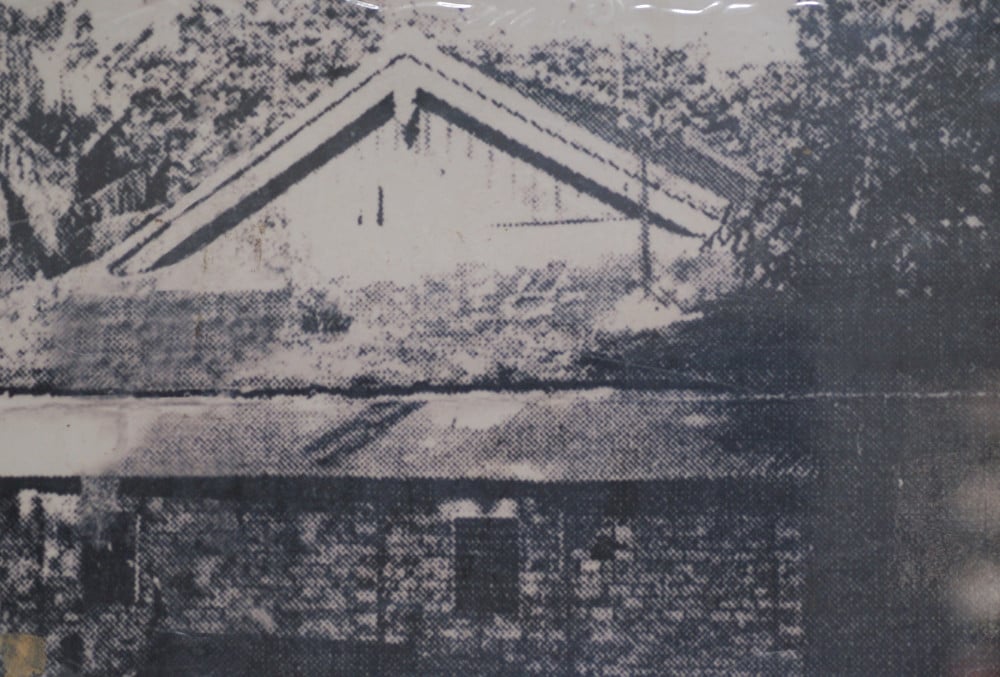
Mr. Tu Dau's house - the venue for the conference to establish the Steering Committee for Seizing Power in Tay Ninh in 1945.
After joining the Viet Minh, Mr. Hai Ton settled permanently at Quan Com, located at the intersection of Binh Minh and Tua Hai streets in what is now Binh Minh ward. This was a revolutionary base of the Provincial Party Committee, founded by Mr. Huynh Van Thanh (Muoi Thanh), a progressive journalist in Saigon who had to temporarily flee to Tay Ninh after the Southern Uprising. He named the newspaper Dan Quyen, the predecessor of Tay Ninh Newspaper, published during the anti-French resistance from 1946, along with Mr. Pham Tung (Nam Tung), Tran Van Manh (Hai Manh), Tran Van Dau, Tran Kim Tan, Nguyen Cong Bang, and others. These individuals were all Party members residing in various places, only occasionally meeting at Quan Com under the guise of "timber traders" seeking to have timber inspected by forestry official Pham Tung. The "permanent residents" of Quan Com included Mr. and Mrs. Hai Khoanh, the owners, and Mr. Hai Ton, Mr. Bay Mi, and Mr. Bay Cua, who worked there as employees.
In late 1944, Mr. Mười Thanh contacted the Southern Regional Party Committee, learned of the Viet Minh's action program, and established the Tay Ninh Viet Minh Front with the aim of uniting the entire population against colonialism and fascism to liberate the nation. Before the August Revolution, they frequently met to coordinate efforts to mobilize workers at the Thanh Dien Sugar Factory, rubber plantation workers, civil servants, and intellectuals in the provincial agencies of the French colonial government. When the Japanese fascists overthrew the French in March 1945, in Tay Ninh, the Japanese only controlled security and military affairs, while the French government apparatus remained unchanged. At that time, the provincial Viet Minh leadership managed to persuade Mr. Lâm Thái Hòa, a very influential figure with the French government and army in Tay Ninh, to connect with the French Republican Guard at "San-da Fortress" (now the Provincial Military Command) and the Vanguard Youth force. On August 23rd, Mr. Mười Thanh chaired a meeting to establish the leadership committee of the uprising at Mr. Tư Đẩu's house in Tây Ninh town, assigning each member the task of organizing and mobilizing mass forces to participate in the rally at Tây Ninh Stadium on August 25th.
Early in the morning of August 25th, forces from all directions around the town poured into the stadium. The groups from the "Five Dragons" area of Ben Cau, who had traveled along the Vam Co Dong River, assembled at Thanh Dien Road Company from the afternoon of August 24th under the command of Mr. Hai Manh. The groups from Vinh and Quan Com hamlets were organized by Mr. Tu Dau; the Truong Hoa group, essentially Binh Linh and Cha La, which at that time were hamlets belonging to Truong Hoa commune, was led by Mr. Lam Phuoc Ton. The Republican Guard - Vanguard Youth group was commanded by Mr. Lam Thai Hoa and Mr. Lam Quang Vinh.
Regarding this rally, the book "The French Colonial Regime in Southern Vietnam" by researcher Nguyen Dinh Tu (Ho Chi Minh City General Publishing House, reprinted in 2018) writes: “In Tay Ninh, before seizing power, the Uprising Committee sent people to contact the Japanese military commanders to persuade them to maintain neutrality and to persuade the police guarding the Governor's residence to side with the revolution. On the 23rd, two cadres were sent to Saigon to seek instructions from the Regional Party Committee; one stayed to attend the rally, and the other immediately returned to convene cadres, party members, and key figures to organize a rally on the morning of the 25th to openly support the Viet Minh Front. The rally received unprecedented support from the masses at the stadium. After listening to the cadres' speeches, the crowd marched through the streets of the town to demonstrate their strength and shout slogans in support of the revolution. At 2 p.m., they marched into the Governor's residence, forcing him to peacefully hand over power to the revolution without resistance.” bloodshed.
(to be continued)
Nguyen Tan Hung - Dong Viet Thang
Lesson 2: “Our position is that Vietnam is completely independent.”
Source: https://baolongan.vn/cach-mang-thang-tam-o-tay-ninh-su-kien-va-nhan-chung-a201470.html
![[Photo] General Secretary and President To Lam presides over a meeting with the Central Organizing Committee.](https://vphoto.vietnam.vn/thumb/1200x675/vietnam/resource/IMAGE/2026/06/03/1780482764658_a1-bnd-4741-3342-jpg.webp)


![[Photo] First session of the 14th Congress of the Vietnam Trade Union](https://vphoto.vietnam.vn/thumb/1200x675/vietnam/resource/IMAGE/2026/06/03/1780465947883_ndo_br_img-3852-jpg.webp)
![[Photo] Secretary of the National Assembly Party Committee, Chairman of the National Assembly presides over the meeting of the Standing Committee and Executive Committee of the National Assembly Party Committee.](https://vphoto.vietnam.vn/thumb/1200x675/vietnam/resource/IMAGE/2026/06/03/1780480353201_ndo_br_bnd-2585-jpg.webp)





![[Podcast] Capital City Law 2026: Increased penalties for violations in the fields of culture and advertising](https://vphoto.vietnam.vn/thumb/402x226/vietnam/resource/IMAGE/2026/06/03/1780487283783_4522222.png)



































![[Video] Sunset at Lap An Lagoon – Where the sun sets over the fishing nets](https://vphoto.vietnam.vn/thumb/1200x675/vietnam/resource/IMAGE/2026/05/31/1780192137701_beach-landscape-sea-water-nature-grass-745871-pxhere-com.jpeg)

























Comment (0)