

Every Lunar New Year and holiday season, price gouging incidents occur. Inspections and penalties are imposed, but things always go back to how they were. How can we put an end to this problem?
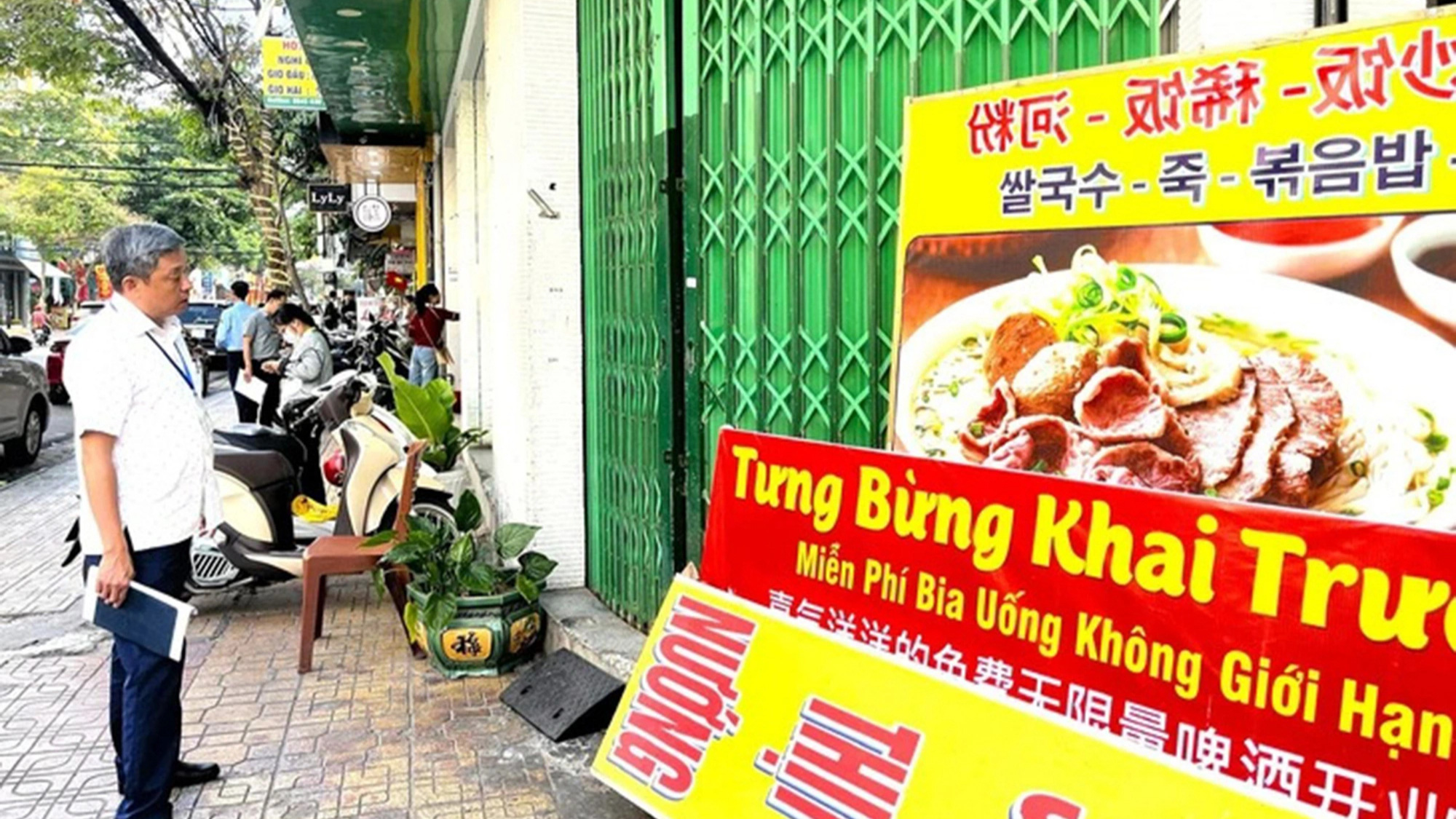
A team inspected Aroma Beach restaurant (Nguyen Thien Thuat Street, Tan Tien Ward, Nha Trang City) after receiving information that the restaurant was overcharging tourists on the afternoon of February 5th - Photo: NGUYEN HOANG
Many people say that those "rip-off" businesses should be left to the market to decide. But allowing the market to determine the face of Vietnamese tourism has already left it in a tarnished state because of this issue.
Simply typing the keyword "price gouging" into the Google search bar will yield millions of results in just a few seconds.
Since the beginning of the Lunar New Year holiday, there has been a continuous stream of news regarding price gouging at food and beverage establishments. From Hanoi to Phu Yen and Khanh Hoa, the image of Vietnam's tourism industry is being tarnished by these incidents.
During the Central and Central Highlands Tourism Development Conference held in Hue in early 2019, readers surely remember the information about "3.74 million news articles related to price gouging." When this statistic was released, what were your feelings about it? Horrifying, right?
This situation has continued ever since that conference. There's no sign of it ending; from one establishment to another, from one province to another city. Inspections, checks, fines, and yet nothing changes. The penalties imposed on one person don't alleviate the problem or deter others.
"Dong Ba Market divides into three parts to pay." This rhyme was once associated with Dong Ba Market in Hue City. It reflects the reality of price gouging at this famous market in Hue. When the authorities took decisive action to eliminate this type of trading, many measures were implemented. These included fines, warnings, written commitments not to repeat the offense, and relying on smart city systems for management.
They even offered a reward of 500,000 VND to anyone who reported price gouging. This was a decisive action to restore the image of Hue tourism and Dong Ba Market. Occasionally, a few vendors who were reported for price gouging were summoned for reprimands and had their cases documented. Although some people still intentionally break the law, this problem has significantly decreased at Dong Ba Market thanks to the decisive actions of the authorities and the market's leader.
The practice of vendors overcharging and raising prices during festivals and Tet (Lunar New Year) is nothing new in cities and provinces. It's like measles or the flu, which break out seasonally. This ruthless price gouging occurs in two situations: with out-of-town visitors and one-time visitors.
Some service providers even think, "Why not overcharge a customer if they only come once? They might not even come back." If you're traveling outside the city and your accent is different from the locals, being overcharged is very likely.
How can we put an end to this situation and improve Vietnam's tourism image? This question isn't new; it's a difficult problem with no clear answer. While price listing is mandated, restaurants do display prices, but they still overcharge whenever they get the chance. And then, when problems arise, they claim it was just "joking," like the owner of the rice noodle soup stall, or, when cornered, blame it on "an employee's fault?!" like the Aroma Beach restaurant in Nha Trang.
These kinds of exploitative business practices not only affect tourists and business owners, but they also tarnish the image of the locality, eventually causing people to avoid it and triggering a long chain of negative consequences.
Inspections and fines are still not severe enough to be a sufficient deterrent. The reports and fines imposed on various establishments do not alleviate the problem of price gouging during each festival season.
When a market is too large and government control cannot cover everything, the approach taken by Dong Ba Market could serve as a lesson for other localities to learn from.
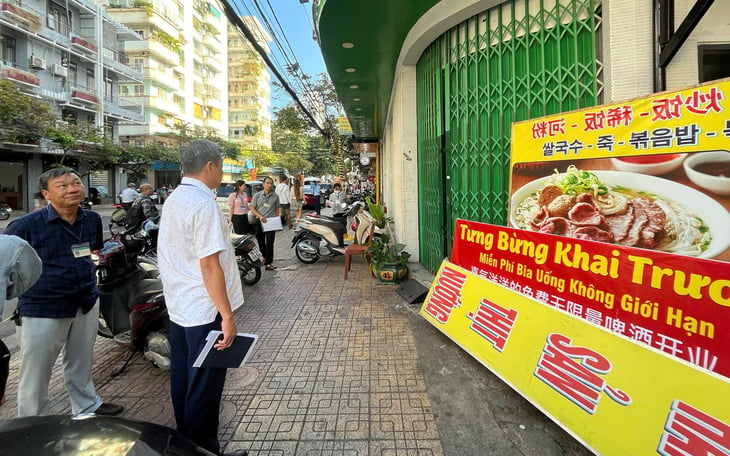 After overcharging customers, they took down the sign and closed the business.
Source: https://tuoitre.vn/cach-nao-to-giac-nguoi-lam-dich-vu-kieu-chat-chem-20250206230730941.htm

![[Photo] General Secretary and President To Lam presides over a meeting on preparations for the review of one year of operation of the three-tiered government system.](https://vphoto.vietnam.vn/thumb/1200x675/vietnam/resource/IMAGE/2026/06/02/1780391821195_a1-bnd-4595-9717-jpg.webp)













































































Comment (0)