

Improper use of car brakes can endanger the safety of those inside the vehicle and have serious consequences for other road users.
Brakes are one of the most important safety systems on a car. However, not everyone knows how to use the brakes correctly and safely. Below are some safe car braking techniques.
Press and release the brakes rhythmically.
If a car is not equipped with an anti-lock braking system (ABS), it is prone to brake lock-up at high speeds, causing wheel slippage and locking, leading to loss of control for the driver.
To avoid losing control, proper braking technique is essential, involving repeatedly and decisively applying and releasing the brakes. This process reduces friction and braking pressure, thereby safely reducing speed, especially during emergency braking at high speeds.
Apply the brakes
Dragging the brakes is a common but discouraged technique for cars. Continuously dragging the brakes creates significant friction, causing the brake fluid to boil, potentially leading to loss of brake pressure or brake pad burning. Therefore, prolonged braking should be avoided, especially in heavy vehicles or when descending steep slopes.
Only when cornering can the driver maintain high speed and begin to apply the brakes with moderate force. At that point, the vehicle can maintain high speed without losing control.
Reduce speed by braking and downshifting.
Instead of applying strong braking force, drivers can brake more safely by combining the brake pedal with shifting to a lower gear. This method is recommended when driving on challenging roads such as mountain passes, or carrying heavy loads.
When shifting to a lower gear, the vehicle is further slowed down by engine braking. This helps reduce pressure, preventing problems such as brake fluid boiling, brake pad burning, loss of brake pressure, or brake failure. This technique is also very helpful in the event of brake failure.
Brakes below maximum threshold
Under-threshold braking means the driver actively applies maximum braking force and maintains it without exceeding the limit that would cause wheel slippage. This braking technique can be applied in normal driving or on a racetrack.
Experienced drivers can feel the vibration of the steering wheel to know if the braking force is close to reaching its limit.
Emergency brake
Emergency braking techniques are used in unexpected situations. In such cases, sudden and forceful braking can cause the brakes to lock up. This can lead to loss of control of the vehicle.
The correct and safe emergency braking technique involves pressing the brake pedal firmly until you feel the wheels begin to skid slightly on the road but the vehicle is still under steering control, then immediately releasing the brake pedal. This is the "braking to the point of skidding" technique. When the vehicle stops skidding, brake again, then release the brake just before skidding again. Repeat these steps until the vehicle comes to a complete stop.
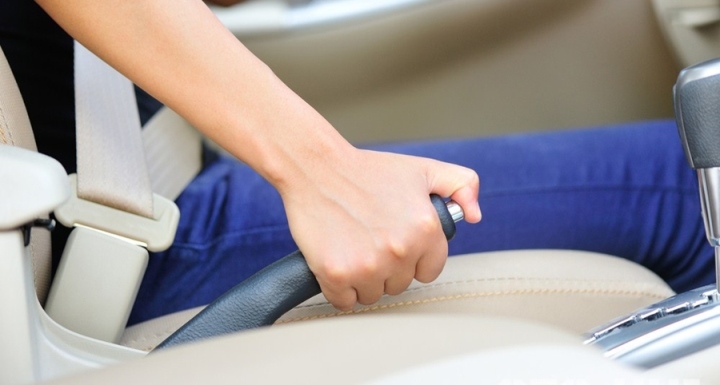
(Illustrative image)
Please note that this braking technique is only suitable for experienced drivers. If you are a new driver, practice regularly to gain more experience and handle real-life situations effectively.
Nowadays, many car models are equipped with safety technologies such as anti-lock braking systems (ABS), brake assist systems (BA), and electronic brake force distribution (EBD)... which help minimize dangerous situations during braking.
However, these features only provide partial assistance; the most important factor is the driver's skill. Therefore, one should not rely entirely on this braking system. In emergency situations, drivers should still apply proper braking techniques to ensure maximum safety in all circumstances.
(According to VTC)
Source link


![[Photo] Prime Minister Pham Minh Chinh attends the Conference on the Implementation of Tasks for 2026 of the Industry and Trade Sector](/_next/image?url=https%3A%2F%2Fvphoto.vietnam.vn%2Fthumb%2F1200x675%2Fvietnam%2Fresource%2FIMAGE%2F2025%2F12%2F19%2F1766159500458_ndo_br_shared31-jpg.webp&w=3840&q=75)



































































































Comment (0)