

New impetus in the global AI race.
The AI cooperation agreements between Canada and India demonstrate a growing trend of increased coordination between middle powers in emerging technologies. Along with energy, strategic minerals, education , and innovation, AI is emerging as a new pillar in the bilateral relationship.
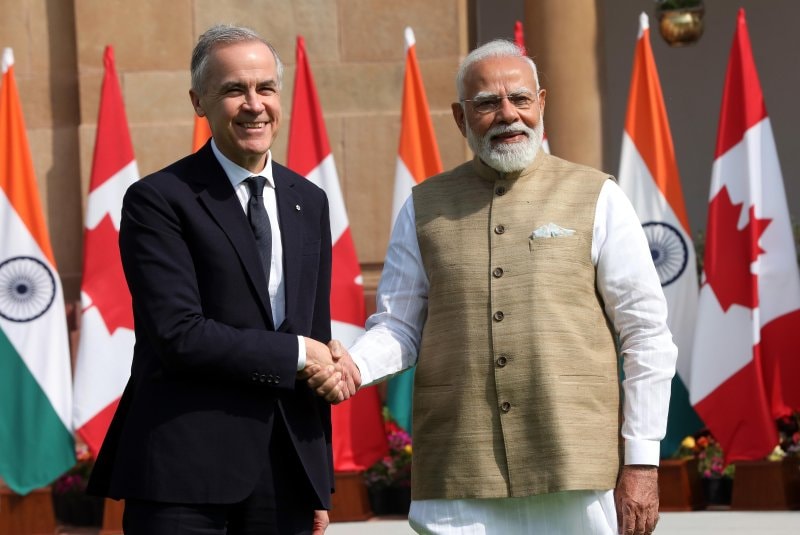
The current international context makes such efforts even more urgent. The US continues to maintain its advantage in advanced AI and computing capabilities, while China is advancing its AI strategy based on state investment, manufacturing capacity, and a large-scale domestic market. As these two superpowers increasingly consolidate their positions, the room for other nations to participate in shaping global AI standards and rules is narrowing significantly.
Beyond technological competition, recent geopolitical uncertainties have also highlighted the vulnerability of supply chains serving the AI industry. Disruptions in strategic transportation routes have raised concerns about the supply of helium, liquefied natural gas (LNG), and other critical inputs for data centers and high-performance computing infrastructure. This makes securing AI supply chains an increasingly important priority in national strategies.
In this context, Canada and India possess distinctly complementary advantages. Canada is one of the world's leading AI research nations, while also possessing abundant and important mineral resources and a stable energy supply. These are all strategically significant factors for the development of AI hardware, from chip manufacturing to the operation of large-scale data centers.
Conversely, India is emerging as a digital workforce powerhouse. Each year, the country trains approximately 2.5 million students in science, technology, engineering, and mathematics (STEM) fields and has built a large-scale digital public infrastructure ecosystem, creating a favorable foundation for the deployment of AI in many sectors.
The 2026 agreements clearly reflect this complementarity through academic exchange programs, joint research between the All India Council for Technical Education (AICTE) and Canada's Mitacs, expanded scholarships under the Indo-Pacific Strategy, and enhanced collaboration within the Australia-Canada-India Technology and Innovation Partnership framework, focusing on AI, semiconductors, high-performance computing, and digital infrastructure.
These advances are taking place alongside efforts to restore and upgrade bilateral relations after a period of diplomatic tension in previous years. Prime Minister Mark Carney's government has identified India as a key partner in Canada's strategy to diversify its trade and supply chains. During a visit to New Delhi in March 2026, both sides reaffirmed their goal of completing the Comprehensive Economic Partnership Agreement (CEPA) by the end of the year, while also pushing for new agreements on energy, uranium, strategic minerals, and AI.
This collaboration also reflects a broader trend in global technology policy. At the AI Impact Summit 2026 hosted by India, many countries supported an approach that emphasizes inclusiveness, equitable access, and international cooperation in AI development. The summit was seen as New Delhi's effort to promote a more balanced approach to AI, while increasing the voice of developing economies in shaping global technology standards.
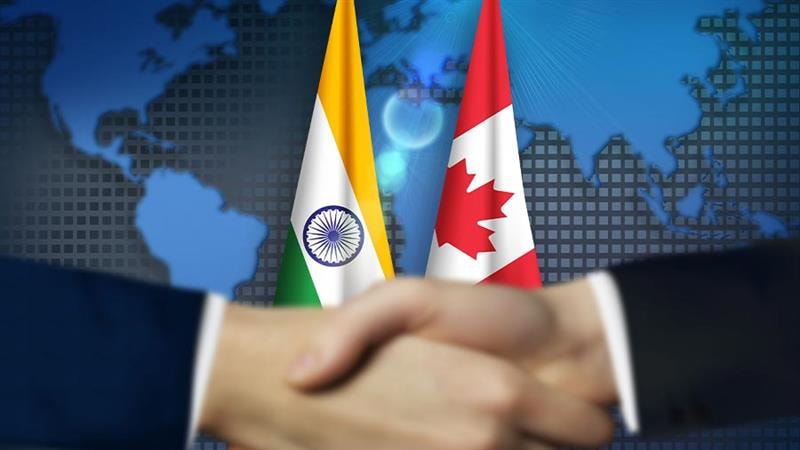
Institutional challenges and the problem of building a common AI governance model.
Despite possessing many complementary advantages, the AI partnership between Canada and India still faces a significant obstacle: differences in the level of maturity of their AI institutional and policy frameworks.
In recent years, India has accelerated the development of a legal framework for its digital economy. The Digital Personal Data Protection Act 2023 and its subsequent enforcement regulations have created a relatively clear legal basis for the management of personal data, including data used in AI systems. The Indian government has also identified AI as a priority area in its economic and technological development strategy.
Meanwhile, Canada is still in the process of finalizing its corresponding legal framework. The Artificial Intelligence and Data Act, which was introduced to Parliament in 2022, has not been passed due to protracted debates and political instability. Although the new government has established a task force dedicated to AI and committed to developing a new national strategy, the process of enacting specific regulations has been slower than expected.
Differences in policy development levels can impact the implementation of long-term technology cooperation and investment programs. In this context, many researchers and policymakers view the development of more transparent and compatible regulations as a crucial factor in enhancing coordination between the two countries.
Some experts suggest that Canada could further refine its AI legal framework to align with risk-based governance models currently in use in the European Union and several developed economies. This could facilitate its participation in international initiatives and negotiations related to AI standards.
For Canada-India relations, enhanced coordination to develop a common set of principles on AI governance is also considered a pressing requirement. The two countries could collaborate on developing a common policy stance at international forums, and incorporate standards on data, access to computing power, cross-border research, and AI sovereignty into the framework of the Comprehensive Economic Partnership Agreement currently under negotiation.
Beyond governance, supply chain cooperation is also considered a crucial pillar. Canada possesses many essential minerals for the AI industry, such as nickel, cobalt, lithium, and rare earth elements. With proper investment in midstream processing and logistics infrastructure, the country could become a strategic supplier for India's rapidly growing technology industry.
From a broader perspective, a successful Canada-India AI cooperation corridor could have implications beyond bilateral relations, creating a model of cooperation among middle powers based on a combination of natural resources, innovation capabilities, and governance; and this model could help countries in the Indo-Pacific region access a more diversified AI supply chain, reducing reliance on a few technology hubs or single suppliers.
To realize their collaborative goals, Canada and India need to foster alignment across the human resources, minerals, energy, research, and AI governance sectors within an overall strategic framework. While initial foundations for cooperation have been established, effective implementation will depend on the ability to coordinate policies, maintain long-term commitment, and bridge institutional differences.
Against the backdrop of rapidly evolving global AI rules and standards, the collaboration between the two countries could contribute to enhancing the role of middle powers in international AI governance and fostering a more diverse technology ecosystem.
Source: https://daibieunhandan.vn/canada-an-do-dang-dinh-hinh-trat-tu-ai-moi-10419202.html
![[Photo] Secretary of the National Assembly Party Committee, Chairman of the National Assembly presides over the meeting of the Standing Committee and Executive Committee of the National Assembly Party Committee.](https://vphoto.vietnam.vn/thumb/1200x675/vietnam/resource/IMAGE/2026/06/03/1780480353201_ndo_br_bnd-2585-jpg.webp)

![[Photo] General Secretary and President To Lam presides over a meeting with the Central Organizing Committee.](https://vphoto.vietnam.vn/thumb/1200x675/vietnam/resource/IMAGE/2026/06/03/1780482764658_a1-bnd-4741-3342-jpg.webp)

























![[Photo] First session of the 14th Congress of the Vietnam Trade Union](https://vphoto.vietnam.vn/thumb/1200x675/vietnam/resource/IMAGE/2026/06/03/1780465947883_ndo_br_img-3852-jpg.webp)





















![[Video] Sunset at Lap An Lagoon – Where the sun sets over the fishing nets](https://vphoto.vietnam.vn/thumb/1200x675/vietnam/resource/IMAGE/2026/05/31/1780192137701_beach-landscape-sea-water-nature-grass-745871-pxhere-com.jpeg)































Comment (0)