

The patient is Mr. PTN (48 years old, from Dong Thap province), came to Hoan My Cuu Long Hospital with symptoms of high fever, cough and headache.
Initially, the patient was diagnosed with bronchitis and treated with conventional antibiotics. However, after 48 hours of treatment, the patient's condition did not improve and he developed additional symptoms of persistent high fever, increased cough and severe respiratory failure.
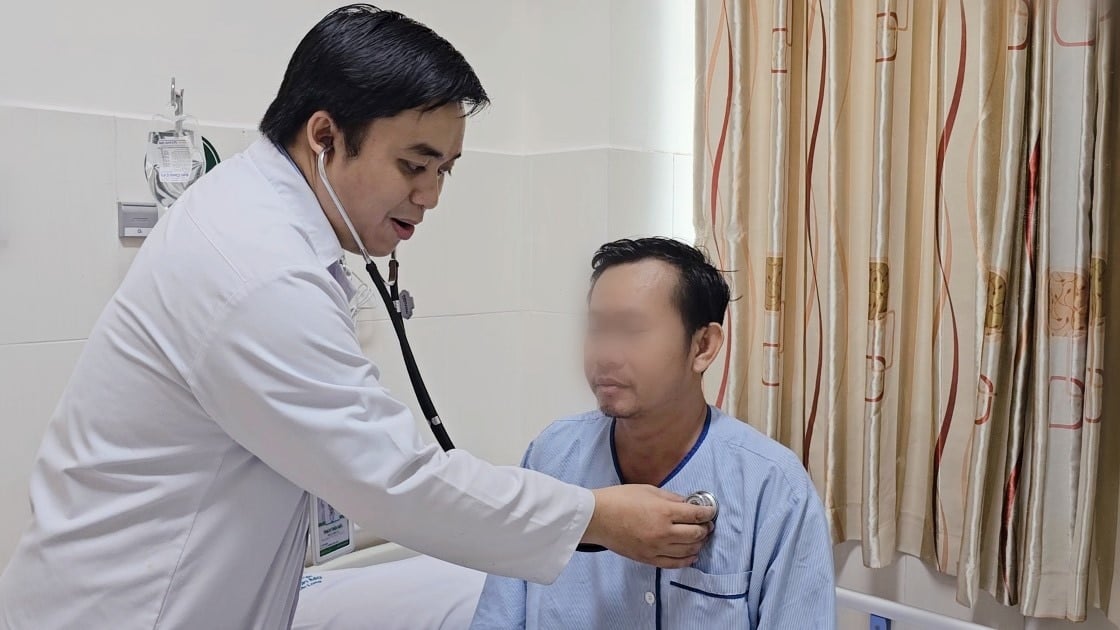
After consultation between specialists, the doctor decided to have the patient perform a chest computed tomography (MSCT) scan and in-depth tests. The results showed ground-glass lesions in the right lung base, along with bilateral pleural effusion.
In particular, during the comprehensive clinical examination, the doctors discovered that the patient had a black, oval ulcer (0.8cm in size) on the back of his right thigh. It is known that about 5 days before being admitted to the hospital, the patient went to Cam Mountain ( An Giang province) to find and collect medicinal leaves to treat the disease. When returning home, the patient discovered pain in his right thigh, which then ulcerated and did not heal.
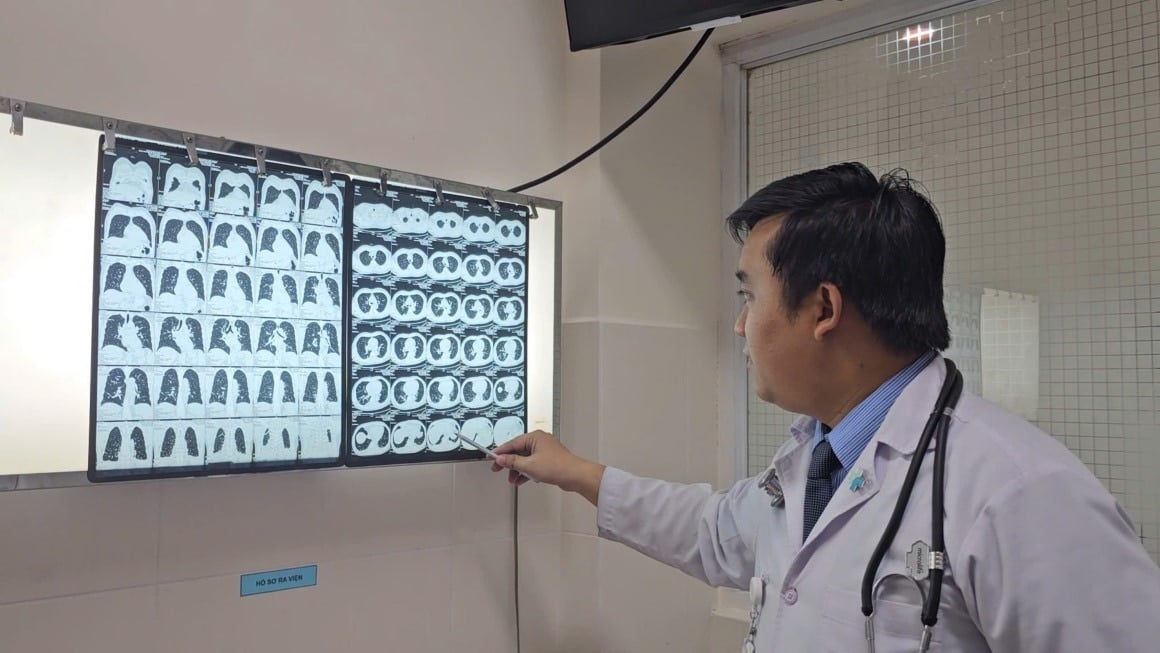

After combining clinical symptoms and paraclinical results, doctors determined that the patient was suffering from tick-borne pneumonia, an infectious disease caused by the bacterium Orientalis tsutsugamushi of the Rickettsia family, transmitted through tick larvae.
The patient was treated with specific antibiotics. After 3 days, the patient showed significant improvement and was discharged from the hospital. Currently, the patient is in good health, no fever, no cough, no difficulty breathing, and the test results assessing the infection have returned to normal.
Doctor Nguyen Thanh Thai - General Department, Hoan My Cuu Long Hospital - said that tick fever is a rare but extremely dangerous disease that can lead to complications such as pneumonia, respiratory failure, meningitis and even septic shock if not detected early and treated promptly.
Doctor Thai advised that people should be vigilant and immediately go to a medical facility when there are suspicious signs such as: prolonged high fever, chills, headache and especially the appearance of black skin ulcers. In addition, people should pay attention to taking care of their living environment, cleaning up bushy areas and spraying insecticide to avoid recurrence of the disease, wearing long-sleeved clothes to reduce skin contact, to prevent tick fever.
Source: https://laodong.vn/cac-loai-benh/canh-giac-voi-benh-viem-phoi-do-sot-ve-mo-1391530.ldo



![[Photo] Urgently help people soon have a place to live and stabilize their lives](/_next/image?url=https%3A%2F%2Fvphoto.vietnam.vn%2Fthumb%2F1200x675%2Fvietnam%2Fresource%2FIMAGE%2F2025%2F12%2F09%2F1765248230297_c-jpg.webp&w=3840&q=75)
























































![[Photo] General Secretary To Lam works with the Standing Committees of the 14th Party Congress Subcommittees](https://vphoto.vietnam.vn/thumb/402x226/vietnam/resource/IMAGE/2025/12/09/1765265023554_image.jpeg)































Comment (0)