

In the Co To Special Economic Zone, grassroots mediation work has been implemented comprehensively and effectively. The People's Committee of the Special Economic Zone has coordinated efforts to improve the quality of grassroots mediators. To date, the entire zone has 13 mediation teams with 78 recognized mediators, including reputable and responsible individuals such as retired officials, veterans, women's associations, youth unions, and neighborhood leaders. In 2025 and the first three months of 2026, the mediation teams in the area received and resolved 8 cases, achieving a success rate of 97%, contributing to the timely resolution of conflicts arising in the community and maintaining local security and order.

In the Van Don Special Economic Zone, grassroots mediation continues to be effectively implemented. Currently, the entire zone has 72 mediation teams with 443 mediators. Mediation teams in villages and residential areas ensure quality resources and effective operation. Regular and timely training in mediation skills and techniques is provided to mediators to update their knowledge of new laws, improve their situational handling skills, and mobilize the public. As a result, the mediation teams have participated in receiving and resolving dozens of cases related to conflicts in daily life and family disputes.
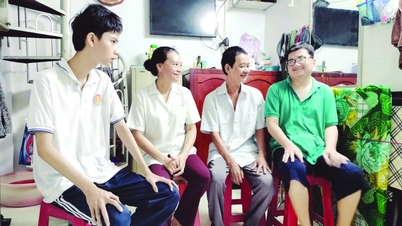
In reality, many land disputes, family conflicts, or disagreements in community life, if not resolved promptly, can easily escalate into hotspots, affecting local security and order. However, through mediation, many cases have been handled fairly and reasonably, helping the parties understand and voluntarily comply, avoiding the need to bring the matter to authorities or courts for resolution.
According to statistics, the province currently has 1,415 mediation teams with 9,264 mediators. In 2025, the province received 730 mediation cases, of which 663 were successfully mediated, achieving a success rate of 90.8% of the total number of cases.
To improve the quality of grassroots mediation, localities regularly organize training courses to enhance the skills and legal knowledge of mediators. The training focuses on the Law on Grassroots Mediation, the Land Law, the Marriage and Family Law, situational handling skills, and public relations and mobilization skills. This helps mediators improve their professional skills and meet practical requirements.

Alongside this, the dissemination and education of legal knowledge have been intensified through various forms, contributing to raising legal awareness and compliance among the people, and proactively resolving conflicts in a spirit of solidarity and constructive cooperation. Local authorities also link mediation efforts with the building of cultural residential areas, cultural families, the nationwide movement to protect national security, and the construction of new rural areas and civilized urban areas. Through this, the self-governance role of the people is promoted, contributing to the creation of a safe and healthy living environment.
Despite the achievements, grassroots mediation work still faces some difficulties, such as the fact that mediators mainly work on a part-time basis, and the support system is limited; some complex cases related to land and family matters drag on, making mediation difficult. Therefore, in the coming time, it is necessary to continue to strengthen and improve mediation teams; enhance the quality of mediators; and strengthen coordination among sectors and organizations in resolving cases at the grassroots level.
It can be affirmed that grassroots mediation not only contributes to resolving conflicts within the community but also spreads the spirit of solidarity and compassion, building a cultural life in residential areas.
Source: https://baoquangninh.vn/cau-noi-giu-gin-doan-ket-cong-dong-3409160.html


![[Photo] Ba Lang An Lighthouse - the "eye of the sea" amidst the "rock museum" of Quang Ngai province.](https://vphoto.vietnam.vn/thumb/1200x675/vietnam/resource/IMAGE/2026/05/29/1780038698840_anh-man-hinh-2026-05-29-luc-14-10-42.png)









































































Comment (0)