

Urticaria is diagnosed through a series of skin tests and blood tests to detect IgE antibodies.
Dr. Vo Thi Tuong Duy, a specialist in Dermatology and Cosmetic Dermatology at Tam Anh General Hospital in Ho Chi Minh City, said that most cases of urticaria are diagnosed through clinical examination. The doctor will ask the patient about their health status, family history, lifestyle, home environment, and work environment. The doctor will also perform basic visual and palpation tests to detect any abnormalities.
Areas such as the eyelids, genitals, and lips are sensitive and prone to developing hives. The red spots can cause significant swelling of the skin (angioedema). If angioedema occurs in the larynx or digestive tract, the patient may experience shortness of breath, abdominal pain, and diarrhea.
In many cases, doctors order several skin and blood tests to determine what substances the patient is allergic to. Additionally, during the review of the patient's medical history, the doctor will determine whether the patient has acute or chronic urticaria in order to order appropriate tests.
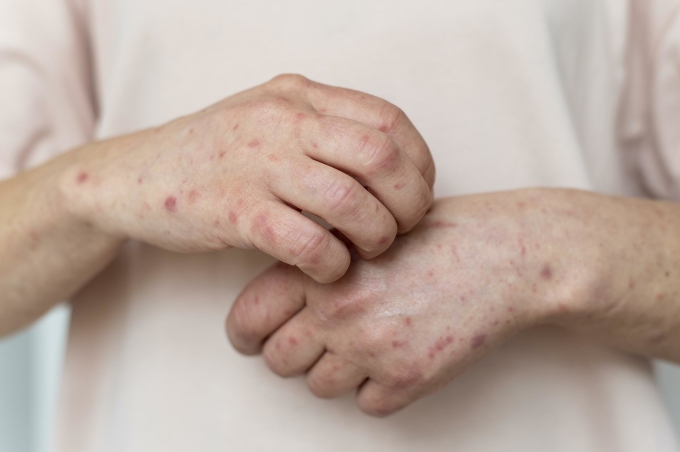
There are many factors that cause hives. Photo: Freepik
Acute urticaria manifests as a rash lasting less than 6 weeks. The condition appears suddenly, with papules that may be concentrated in certain areas of the skin or spread throughout the body. In 10% of acute urticaria cases, angioedema (deep swelling of the skin's mucous membranes causing redness and swelling) occurs, causing itching and pain. With proper treatment, angioedema usually improves within 72 hours.
Chronic urticaria, a skin condition lasting longer than 6 weeks, is characterized by itchy, pink, red, or pale white rashes on the skin. Patients experience itching, burning, and discomfort. Besides causing skin damage, chronic urticaria seriously affects health, mental well-being, and quality of life. The persistent and recurring nature of chronic urticaria can alter skin color (pigmented urticaria), impacting daily activities, sleep, and appearance, leading to self-consciousness and social interactions.
Most cases of chronic urticaria are caused by common factors such as autonomic reactions, infections, and intolerances. The 60-allergen test uses 60 samples of available allergens to identify the cause of urticaria. This method helps doctors determine the correct course of treatment and allows patients to know which allergens they are allergic to.

Red rashes on the skin. Photo: Freepik
To treat acute urticaria, doctors simply need to identify and instruct the patient to eliminate the causative agent. For chronic urticaria, patients are treated with antihistamines or a combination of medications. If antihistamines do not relieve the pain and itching, the doctor may prescribe oral or injectable steroids. If these medications are ineffective, biological drugs may be used to control the urticaria. The use of medication requires the supervision of a specialist and strict adherence to the treatment protocol of the Ministry of Health .
In cases of severe rash, patients may need epinephrine, cortisone, or immunosuppressant injections. If a patient develops hives and symptoms such as dizziness, wheezing, shortness of breath, chest tightness, swelling of the tongue, face, or lips, they should go to a hospital with a dermatology specialist for prompt treatment, as these could be the initial symptoms of anaphylactic shock.
Chronic urticaria often responds poorly to treatment. While not immediately life-threatening, improper care and treatment can easily lead to complications such as eczema, hyperpigmentation (darkening of the skin), and an increased risk of developing other allergic diseases.
While waiting for the hives and swelling to subside, patients should apply cool compresses or wet towels to the affected areas, stay in cool, clean, and well-ventilated environments, and wear loose clothing to reduce discomfort and irritation.
Dawn
Source link

![[Photo] Speaker of the National Assembly meets with the Vietnamese community in Türkiye](https://vphoto.vietnam.vn/thumb/1200x675/vietnam/resource/IMAGE/2026/04/18/1776483346102_1-8136-jpg.webp)

![[Photo] General Secretary and President visit the China-ASEAN AI Application Cooperation Center](https://vphoto.vietnam.vn/thumb/1200x675/vietnam/resource/IMAGE/2026/04/17/1776404277677_vna-potal-tong-bi-thu-chu-tich-nuoc-tham-trung-tam-hop-tac-ung-dung-ai-trung-quoc-asean-8706616-2286-jpg.webp)


























































































Comment (0)