

The policy of payment for forest environmental services (PES) is considered one of the breakthrough policies in forest protection and development because it shifts the approach from relying entirely on the budget to mobilizing non-budgetary capital and social resources for sustainable forest management, protection, and development, contributing to increased income and improved living standards for forest planters, managers, and protectors. Therefore, the province always pays attention to effectively implementing this policy.

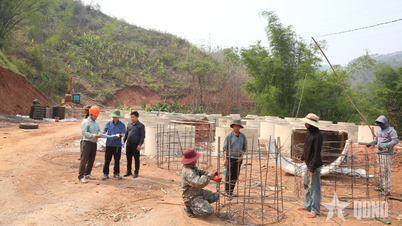
Thanks to the Payment for Ecosystem Services (PES) policy, Mr. Trieu Van Xuan's family in Kim Thuong commune, Tan Son district, has more opportunities to participate in forest protection and development.
Currently, the province has nearly 180,000 hectares of forest and land planned for forest development. Before the implementation of the Payment for Ecosystem Services (PES) policy, the annual funding provided by the State to the province's forestry sector was limited, thus making forest protection and development difficult. Since the implementation of the PES policy, its effectiveness has been clearly evident.
With intensified propaganda, awareness and responsibility in forest protection and development among local Party committees, authorities, and people in the province have been raised, resulting in better protected forest areas. The management and expenditure of forest environmental service funds have been seriously implemented by the community, ensuring democracy, openness, and transparency.
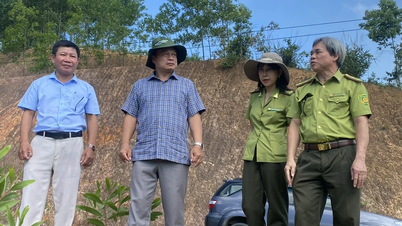
Upon arriving in Kim Thuong commune, Tan Son district, we were amazed to witness the lush green of the forests. The commune currently has over 7,600 hectares of forest land, including more than 1,100 hectares of protective forest, nearly 4,000 hectares of special-use forest, and the remainder being production forest. In recent years, the awareness and responsibility of the people in the commune to protect the forest have improved, with all households actively participating in forest conservation.
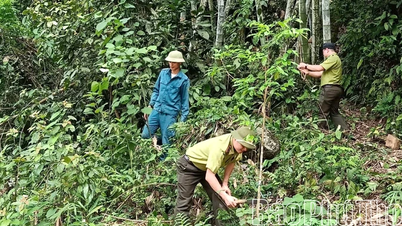
Leading us on a tour of the forests, Mr. Nguyen Dinh Hoang, Head of the Xuan Dai Forest Ranger Station, said that thanks to the participation of the local people in protecting the forests, the forests in Kim Thuong and Xuan Dai communes under the station's management are increasingly thriving. Previously, forest protection and fire prevention in Kim Thuong commune faced many difficulties. This was due to the limited awareness of the local people, and illegal logging still occurred in the commune. When the Payment for Ecosystem Services (PES) policy came into effect, it became a driving force for people to actively care for, protect, and prevent forest fires. Thanks to their effective protection efforts, the commune's forests are growing increasingly lush and green.
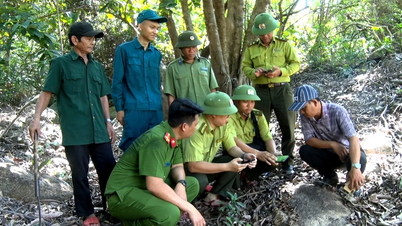
The Payment for Ecosystem Services (PES) policy has attracted a large workforce from the community, especially in remote, mountainous, and particularly disadvantaged areas, to directly participate in forest protection. Annually, in the province, 28 households and groups of households contracted to work in Xuan Son National Park, Kim Thuong commune, Tan Son district; Dong Cuu commune, Thanh Son district; and Dai Pham commune, Ha Hoa district, benefit from PES and other forest-related advantages.
To maximize the effectiveness of the Payment for Ecosystem Services (PES) fund, the Provincial Forest Protection Department annually advises and implements programs and activity plans of the Fund. It carries out the acceptance and settlement of PES payments to PES providers in the province; coordinates with relevant units to review the area of forest providing PES as a basis for payment. At the same time, it develops programs and projects for reforestation, supports the planting of production forests, scattered trees, and landscape forests... It also organizes training courses on decrees, circulars, and guiding documents for implementing the PES policy in the province.
In addition, the Provincial Forest Protection and Development Fund annually strengthens its inspection, supervision, and urging of contracted households to intensify patrols and protect the forest areas providing ecosystem services in the province. Through inspections, forest management units have effectively carried out the acceptance, disbursement, and payment of ecosystem service fees to the correct recipients, paying the full amount to contracted households for forest protection according to the approved plan. The total amount paid for ecosystem services annually, according to decisions approved by the Provincial People's Committee, is approximately 200 million VND.
The implementation of the Payment for Ecosystem Services (PES) policy throughout the province contributes to improving the effectiveness of forest protection, raising people's awareness of forest management and protection, creating more jobs, developing socio -economic conditions, achieving sustainable poverty reduction, and gradually improving the lives of people in conjunction with building new rural areas, especially for ethnic minorities in remote, mountainous, and particularly disadvantaged areas.
Hoang Huong
Source: https://baophutho.vn/chi-tra-dich-vu-moi-truong-rung-217153.htm

![[Photo] Delegation attending the 14th Congress of the Vietnam Trade Union visits the Mausoleum of President Ho Chi Minh.](https://vphoto.vietnam.vn/thumb/1200x675/vietnam/resource/IMAGE/2026/06/03/1780451842301_ndo_br_img-3824-jpg.webp)





















































































Comment (0)