

Nestled amidst the rolling mountains of the Lung Van highlands, there is a small market that still regularly convenes every week, as it has for generations.
Unlike the bustling tourist markets in the northern mountainous regions, Lung Van market retains a rustic, pristine appearance and is rich in the cultural identity of the Muong people.
For people in the highlands, the market is not simply a place for buying and selling. It is also a place for meeting and socializing, a place that preserves the rhythm of community life and cultural values that have existed for many generations.
A market in the "roof of the Muong land"
Located in Van Son commune, Phu Tho province, Lung Van is known as the "roof of the Muong land" with an altitude of approximately 1,200m above sea level.
Lung Van is one of the four famous ancient Muong cultural cradles, including Muong Bi, Muong Vang, Muong Thang, and Muong Dong. Among them, the Muong Bi region – where Lung Van is located – is considered the area that most vividly preserves the traditional cultural values of the Muong people.
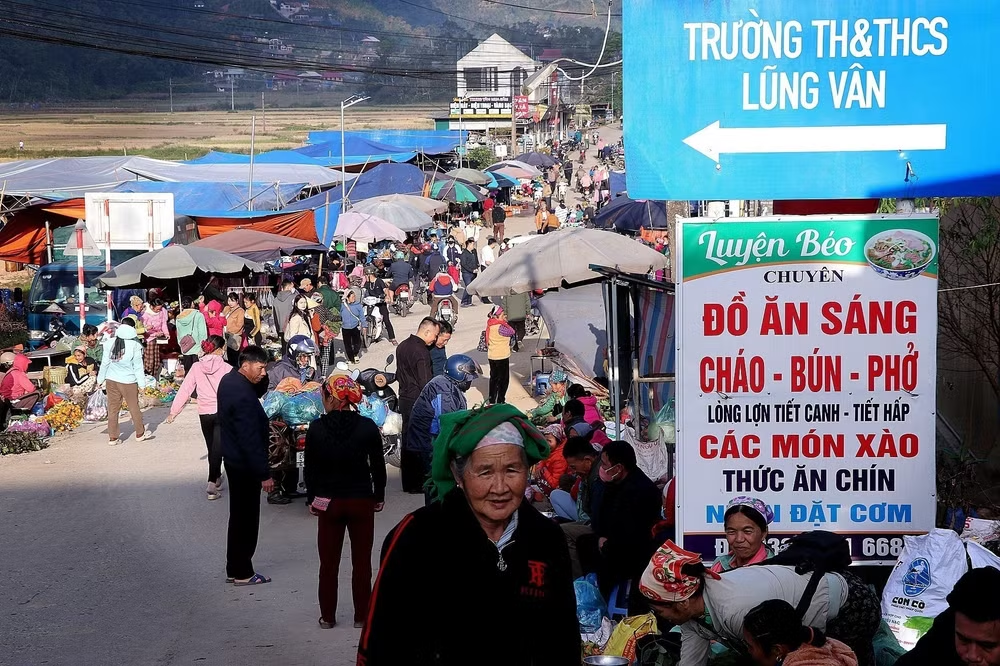
Amidst the mountainous landscape, the Lung Van market exists as an indispensable part of the lives of the highland people. The market is held early Tuesday mornings, from about 6 am to 10 am, when the mountain mist still lingers over the stilt houses.
From dawn, people from remote villages carry their goods down to the market. Some walk for hours along the mountain slopes, while others navigate winding roads on old motorbikes. They bring with them produce they have grown themselves: bunches of wild vegetables, bundles of bamboo shoots, a few pumpkins, a free-range chicken, or a bottle of fragrant rice wine.
What makes Lung Van market special is the unique, genuine nature of the highland people.
Here, goods aren't sold in a commercialized manner like in many other tourist destinations. The locals sell whatever they have, mainly local agricultural products and seasonal mountain produce.
Summer brings chayote, mustard greens, sticky corn, and wild bananas. Autumn brings the ancient Nam Son oranges and tangerines. The end of the year is filled with dried bamboo shoots, smoked meat, dong leaves, and various traditional Muong cakes.
The market space also clearly reflects the communal lifestyle of the highland residents. Sellers don't pester customers, and buyers rarely haggle. Many people come to the market not necessarily to buy or sell, but to meet and catch up with each other after days working in the fields.
Perhaps that's why the market here feels so intimate and unhurried, a stark contrast to the fast-paced life in the lowlands.
Market fairs and the cultural identity of the Muong people.
Visiting Lung Van market is also an opportunity to get a clearer view of the cultural life of the Muong people.
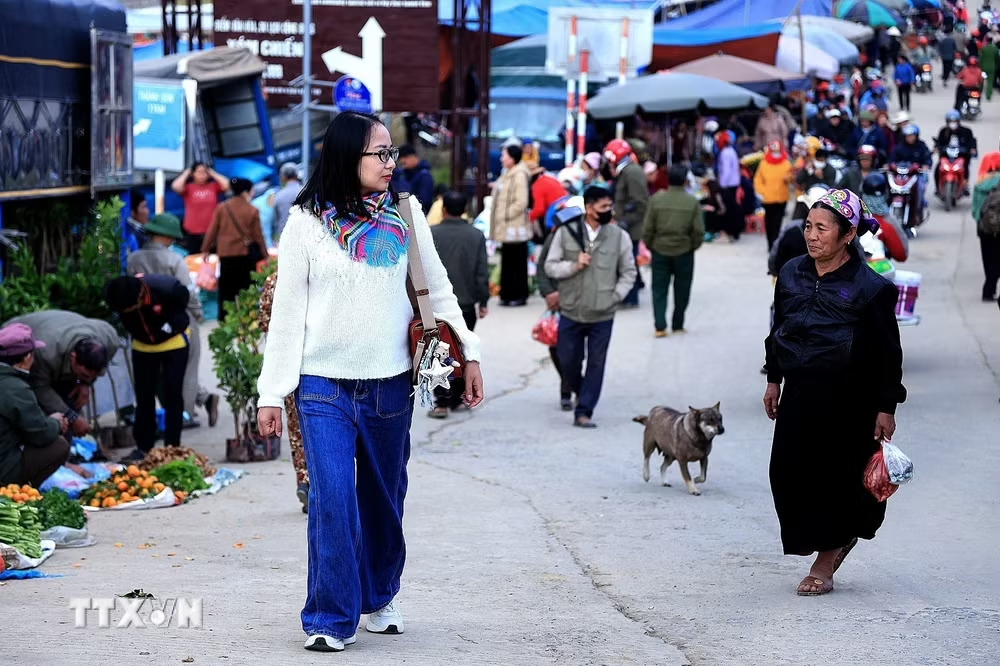
In the early morning mist, glimpses of Muong women in traditional black skirts, green sashes, white headscarves, and carrying baskets on their backs can be seen descending to the market. These costumes, with their exquisite brocade patterns, are still preserved by many as an integral part of their ethnic identity.
The sounds of laughter, the Muong language mixed with the Kinh language, create the distinctive atmosphere of a highland market. This place is not only home to the Muong people but also serves as a trading hub for many communities from neighboring regions.
Cuisine is also an integral part of the market's soul. Visitors can find dishes typical of the mountainous region, such as sticky rice grilled in bamboo tubes, pickled pork, buffalo meat with wild herbs, wild vegetables, and rice wine.
Muong people's rice wine is brewed from glutinous rice combined with traditional leaf yeast, giving it a very unique flavor of the Northwest mountains and forests.
Beyond being a place for exchanging goods, the market also contributed to maintaining community relationships, an element that was very important in the lives of the ancient Muong people.
In recent years, Lung Van has gradually become a favorite destination for tourists who love exploring local culture.
Unlike many places that have become heavily commercialized, Lung Van still retains its pristine beauty with stilt houses nestled on the mountainside, terraced rice fields, and winding roads amidst a sea of clouds.
The market thus becomes a special "cultural touchpoint" for tourists. Many people come here to experience the authentic rhythm of life in the highlands, enjoy local food, and chat with the local people.
Source: https://www.vietnamplus.vn/cho-phien-vung-cao-lung-van-noi-xu-muong-phu-tho-post1109787.vnp
![[Image] Pleasant weather helps students enter the 10th grade entrance exam with confidence.](https://vphoto.vietnam.vn/thumb/1200x675/vietnam/resource/IMAGE/2026/05/29/1780034401612_ngay-1-thi-lop-10-minh-duy-8-5009-jpg.webp)

![[Photo] Ba Lang An Lighthouse - the "eye of the sea" amidst the "rock museum" of Quang Ngai province.](https://vphoto.vietnam.vn/thumb/1200x675/vietnam/resource/IMAGE/2026/05/29/1780038698840_anh-man-hinh-2026-05-29-luc-14-10-42.png)







































































Comment (0)