
Farmers in Tien Hai district are replanting spring rice seedlings.
Mr. Do Quy Phuong, Deputy Director of the Department of Agriculture and Environment, stated: For the 2025 spring crop, production conditions are considered favorable. However, according to the National Center for Meteorological and Hydrological Forecasting, the weather in the coming period will remain complex, with drizzle and high humidity creating favorable conditions for the emergence and development of pests and diseases. Salinity intrusion in some localities may affect crop growth and development. Specifically, approximately 4,000 hectares of early-season spring rice are in the tillering stage, while the main rice crop is rooting and turning green to tillering. Rice blast disease is beginning to develop and cause damage to susceptible rice varieties; some areas of early-planted rice are showing concentrated outbreaks of two-spotted stem borer in stages 3 and 4. It is predicted that a large number of larvae will hatch between March 25th and April 10th, causing high-density damage to early-season and main-season rice in areas with high pest populations.
To proactively prevent and control pests and diseases, especially rice blast and two-spotted stem borer, the Department of Agriculture and Environment requests the People's Committees of districts and cities, the district and city agricultural and environmental departments, and units within the sector to strengthen management and direct localities to maintain a shallow water level of 3-5cm on the rice fields to facilitate concentrated tillering of rice plants. Implement rice crop classification to apply appropriate care and fertilization measures, completing topdressing before March 15, 2025. Regarding leaf blast, farmers are advised to actively inspect their fields, paying particular attention to fields planted with susceptible varieties such as BC15, TBR225, and various glutinous rice varieties. Actively clear weeds and plant residues from field edges to limit the spread of the disease. In fields currently affected by rice blast, absolutely no single nitrogen fertilizer should be applied; water should be regulated appropriately, preventing the fields from drying out. When the percentage of diseased leaves reaches 3-5% or more, use specific pesticides for prevention and control.
Mr. Pham Vu Khiem, Deputy Head of the Agriculture and Environment Department of Dong Hung District, said: Currently, 100% of the district's spring rice crop is in the tillering and vigorous tillering stages. Some pests and diseases have begun to appear, such as rice blast and two-spotted stem borer. In areas with high levels of two-spotted stem borer on early-season rice in some communes such as Ha Giang, Minh Phu, Dong Dong, Dong Cac, Dong Vinh, Dong Xuan, Dong Hoang, the Department has directed cooperatives to proactively coordinate with officials from the District's Crop and Livestock Station to demarcate and closely monitor the source of young larvae in the fields to accurately predict the time of outbreaks and propose measures to control two-spotted stem borer for the next crop; strengthen inspection and monitoring work, and proactively secure sources of pesticides to control two-spotted stem borer most effectively.
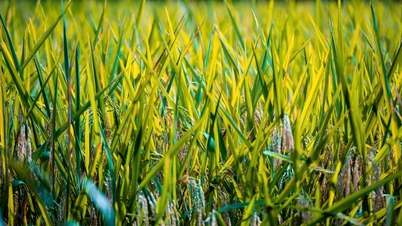
Ms. Nguyen Thi Tron, from Minh Phu commune (Dong Hung district), said: "Currently, the rice is developing well. These days, I regularly visit the fields to monitor the growth of the rice plants so that I can take timely care measures, especially providing enough irrigation water for the fields and applying fertilizer to encourage good tillering."
To date, 100% of the spring rice crop in Tien Hai district is in the rooting, tillering, and flowering stages. Mr. Pham Van Vang, Vice Chairman of the District People's Committee, stated: Due to weather conditions, there has been very little rain since October 2024, and the dry, arid winter season has increased the risk of soil acidification and salinization, especially in coastal communes, directly impacting the 2025 spring rice crop. Field inspections have revealed that some areas in coastal communes are experiencing bubbling and acidification, with surface water salinity reaching over 5‰. This has affected the rice after transplanting, causing the rice plants to dry out at the tips of the leaves and branches, and resulting in poorly developed root systems. In some cases, significant rice crop failure has required replanting. To help the spring rice crop grow and develop well, and to minimize acidity and salinity toxicity, the District People's Committee requests that localities continue to maintain a shallow water level of 3-5cm for newly transplanted rice fields with the motto "Spring rice uses water as a protective layer," helping the rice quickly take root and turn green, limiting weed growth that competes with the rice plants for nutrients, and effectively suppressing acidity and salinity, limiting the leaching of acidity and salinity from groundwater into the cultivated soil. For direct-seeded rice, maintain sufficient moisture on the field surface until the rice plants have 1.5-2 true leaves before flooding the field with water. Especially for coastal communes and low-lying acidic areas, maintain a shallow water level in the fields to limit acidity and salinity toxicity, especially during sunny periods and low humidity. Regularly check the salinity of the field surface water to take timely corrective measures, especially in areas near river and sea estuaries with a high risk of saltwater intrusion.
Mr. Dao Xuan Hieu, Head of the Department of Crop Production and Livestock, said: When the weather is favorable, all rice crops should be fertilized early. Farmers should choose NPK fertilizers specifically for this purpose to increase root development, promote early tillering, and achieve high effective tillers. Following the principle of "heavy at the beginning, light at the end," farmers should increase the use of organic fertilizers, microbial organic fertilizers, bio-organic fertilizers, and compost made from agricultural by-products to reduce the amount of chemical fertilizers and lower production costs. The current favorable weather conditions for spring rice growth and development also create favorable conditions for the development and spread of many pests and diseases. Therefore, farmers need to regularly inspect their fields, monitor, and control pests and diseases promptly. When detecting pests and diseases affecting rice, farmers should follow the "four correct principles" to reduce production costs and protect the ecological environment.
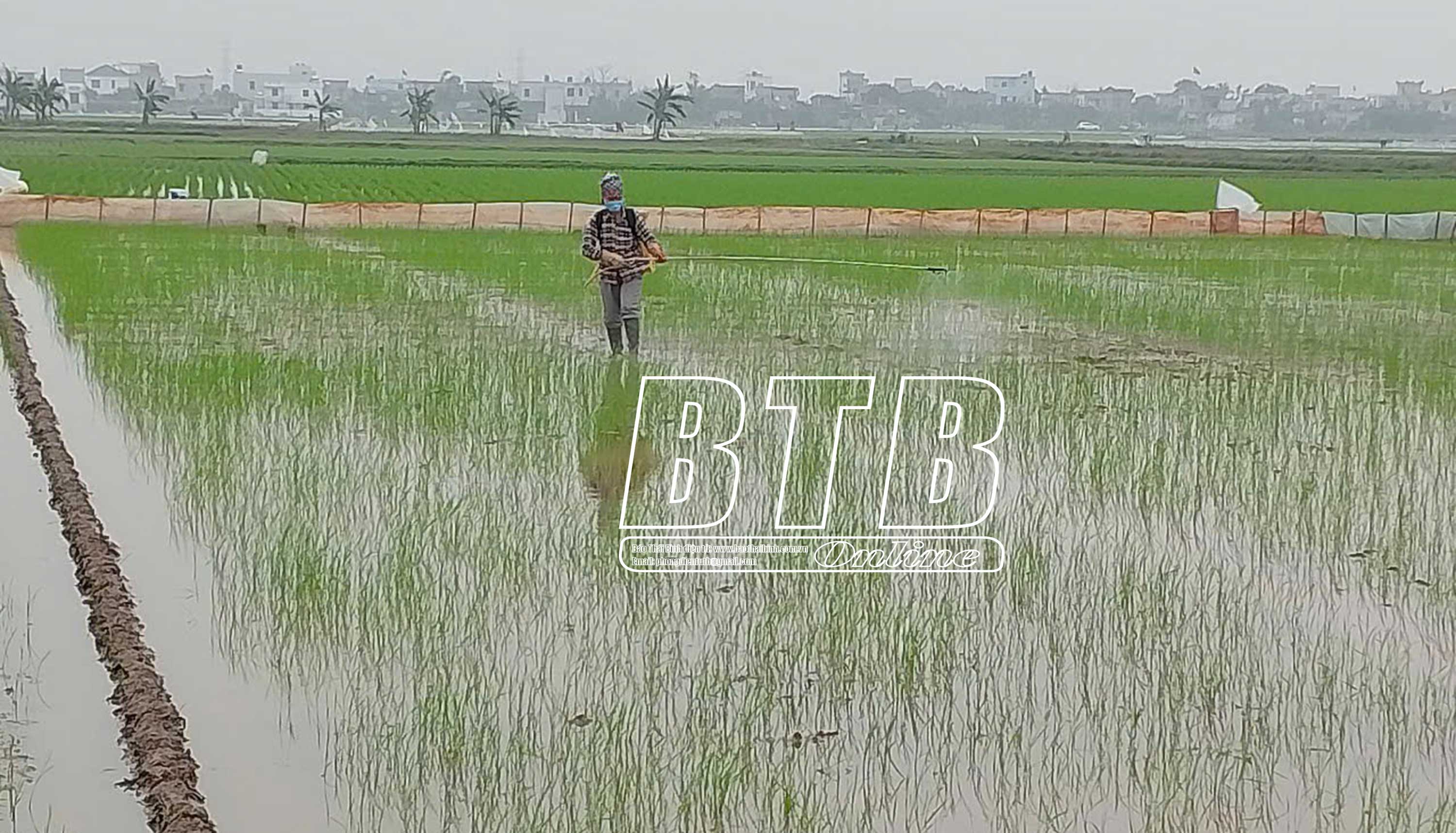
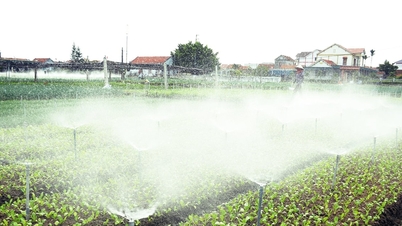
Farmers in Kien Xuong district spray pesticides to prevent thrips infestation.
Duc Dung
Source: https://baothaibinh.com.vn/tin-tuc/4/219839/chuyen-trong-tam-cham-soc-bao-ve-lua-xuan

























































































Comment (0)