

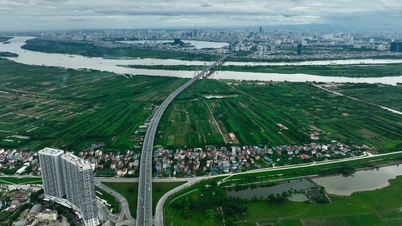
Experts believe that developing low-level spaces is a crucial strategic requirement to usher in a new chapter for the development of the capital city.
Lessons from Singapore
In the context of urbanization and increasingly limited surface land, underground space management has become a crucial component of modern urban planning, and Singapore is one of the leading models in institutionalizing ownership and planning of underground space in three dimensions.
Notably, regarding the depth limit of land ownership, Singapore has amended its Land Act to establish the principle that private land ownership is only recognized up to a certain depth below the surface (typically around 30 meters). The space below 30 meters is considered a public resource, serving the national interest. This allows the government to plan and build metro systems, inter-regional infrastructure; develop strategic projects such as underground warehouses, data centers, and defense infrastructure; and optimize land use. Establishing a clear boundary between landowner's rights and state rights significantly reduces compensation costs and accelerates the progress of key infrastructure projects. Regarding the mechanism for protecting surface landowners' rights, Singapore stipulates that underground structures must not affect the structure, safety, and legal operation of surface structures. In case of impact, the state must provide compensation based on actual damages...
Regarding 3D underground space planning, Singapore not only adjusted the legal framework but also implemented underground space planning based on a three-dimensional concept: integrating the surface, shallow underground space, and deep underground space.
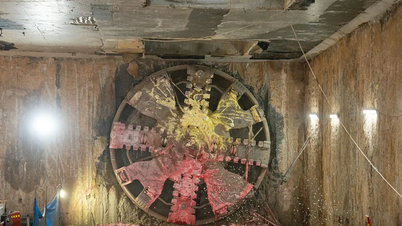
The experience of Singapore offers several directions for Hanoi . These include: establishing a legal mechanism to define the depth limits of land use rights, clearly delineating underground space under state management; developing a comprehensive underground space plan using a 3D model, integrated with public transport planning, commercial centers, and technical infrastructure; establishing a mechanism to protect the rights of surface land users, avoiding disputes and lawsuits; and building a digitized database of underground space as a foundation for licensing and management.
Low-level economic development
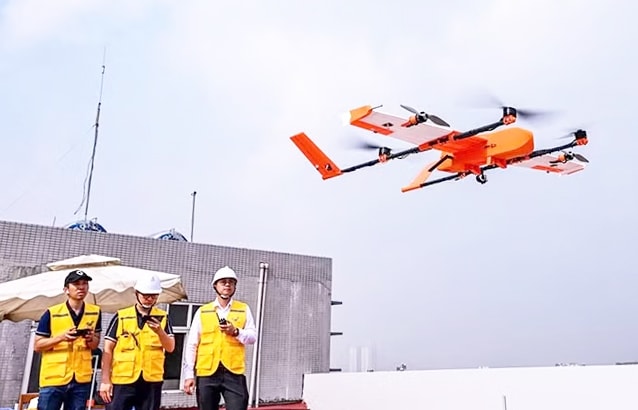
Lawyer Nguyen Hung Quang, Head of NHQuang & Associates Law Office and President of the Vietnam International Commercial Mediation Center, believes that the low-altitude economy (associated with low-altitude space) is being actively adopted by many countries. The low-altitude economy refers to economic activities that utilize low-altitude airspace (below 1,000m), including: urban air transport using electric aircraft, logistics using UAVs, rescue and medical services, helicopter tourism, smart surveying and measurement, and supporting technology ecosystems (digital infrastructure, intelligent air traffic management, unmanned aerial vehicle manufacturing).
According to the 2026 Capital City Law, low-level and high-level spaces are the areas above the land and water surfaces within the administrative boundaries of the city, with scope, boundaries, and height determined according to planning, used for management, exploitation, and utilization in socio-economic development, science, technology, transportation, and urban management activities, while ensuring national defense, security, order, and social safety.
Clause 3, Article 11 of the 2026 Law on the Capital City stipulates that the City People's Council shall regulate the preparation, appraisal, approval, and adjustment of underground space, low-level space, and high-level space planning after obtaining the unanimous opinions of the Ministry of National Defense, the Ministry of Public Security, the Ministry of Construction, and consulting with other relevant ministries and ministerial-level agencies; the limit on the depth underground that land users in the city are allowed to use in accordance with the planning and without having to pay for the use of underground space... The City People's Committee shall regulate measures for managing, exploiting, and using underground space, low-level space, and high-level space; and manage infrastructure, technology, and means of operation in underground space, low-level space, and high-level space.
A new feature of the 2026 Law on the Capital City is the addition of regulations to include low-level spaces. This provision is built upon the principles of managing and utilizing underground space already stipulated in Clause 1, Article 19 of the 2024 Law on the Capital City, while expanding the scope to encompass both low-level and high-level spaces to meet the requirements of modern urban management and development in the Capital City during this new phase.
Establishing the concept of low-level space in the 2026 Capital City Law is of significant importance. Firstly, it creates a unified legal basis for the planning, management, exploitation, and use of low-level space within the capital city. Defining low-level space serves as a prerequisite for developing specific mechanisms and policies, piloting models for managing and developing the low-level economy, and smart cities. Furthermore, the regulation of low-level space ensures risk control, maintains national defense, security, order, and social safety during the development of new technologies and economic models.
Source: https://hanoimoi.vn/co-che-quan-ly-khong-gian-ngam-khong-gian-tam-thap-972267.html


![[Photo] Standing Committee member of the Party Central Committee Tran Cam Tu working with the Central Inspection Committee](https://vphoto.vietnam.vn/thumb/1200x675/vietnam/resource/IMAGE/2026/05/28/1779969579668_ndo_br_bnd-2495-jpg.webp)















































































Comment (0)