

Molecular engineers from the University of Arizona, the University of Bonn, and the University of Michigan (USA) have successfully developed an extremely small machine, similar to a molecular robot, that can move and operate synchronously. The research results were published on October 19, 2023, in the scientific journal Nature Nanotechnology.
The research team developed a DNA-structured nanomachine, measuring 70nm x 70nm x 12nm, that uses chemical energy to perform controlled movements.
This breakthrough demonstrates the potential for creating precise nanoscale devices that could be applied in a wide range of fields such as high technology , medicine, and materials science.
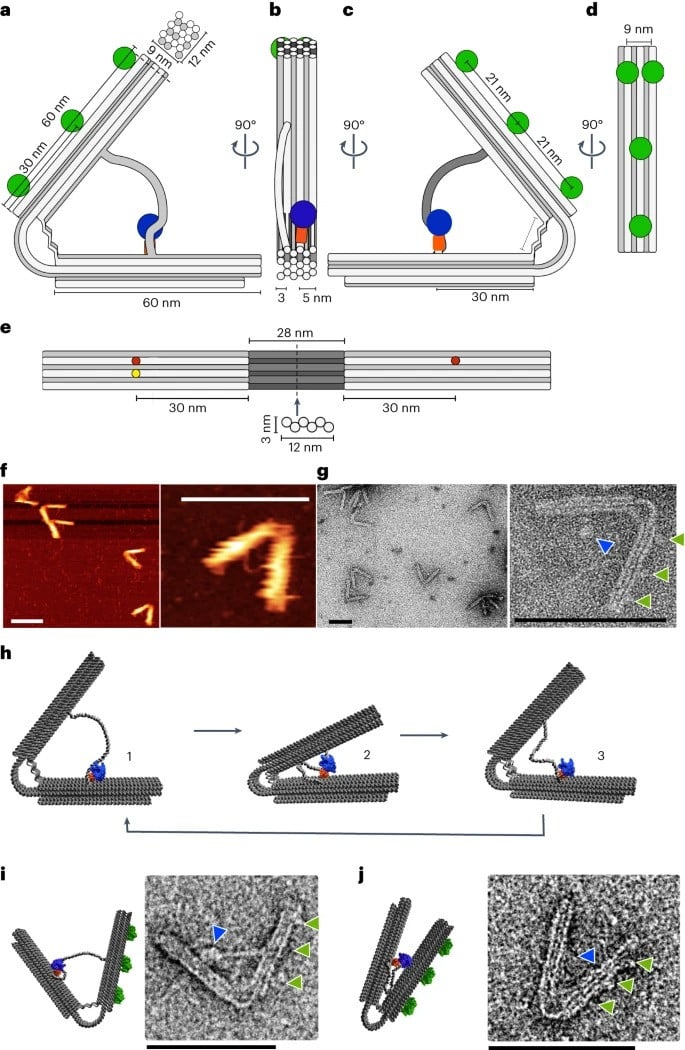
The structure of this nanomachine consists of nearly 14,000 nucleotides – the basic building blocks of DNA. Peter Schulz, head of the research team at the University of Arizona, emphasized that without the oxDNA computer model his team used, it would have been impossible to simulate the movement of such a nanostructure. He said, “This is the first time we have successfully created a machine powered by chemical energy based on DNA structure. We look forward to creating even more complex nano-devices in the future.”
The machine's operating mechanism is similar to a grasping system, but millions of times smaller. It consists of two handles connected by a V-shaped spring. Peter Schulz believes this breakthrough holds great promise for applications in fields such as diagnostics, therapy, molecular robotics, and the creation of new materials.
(according to Nature)
Source

![[Image] Central Party Office summarizes work in 2025](/_next/image?url=https%3A%2F%2Fvphoto.vietnam.vn%2Fthumb%2F1200x675%2Fvietnam%2Fresource%2FIMAGE%2F2025%2F12%2F18%2F1766065572073_vptw-hoi-nghi-tong-ket-89-1204-jpg.webp&w=3840&q=75)































































































Comment (0)