

The policy is sound, but it needs a suitable roadmap.
Currently, rice export activities are governed by Government Decree 107/2018, which includes numerous regulations that make it difficult for small and medium-sized enterprises (SMEs) to comply. Therefore, abolishing the licensing requirement is expected to reduce the cost of entering the export market for many businesses.
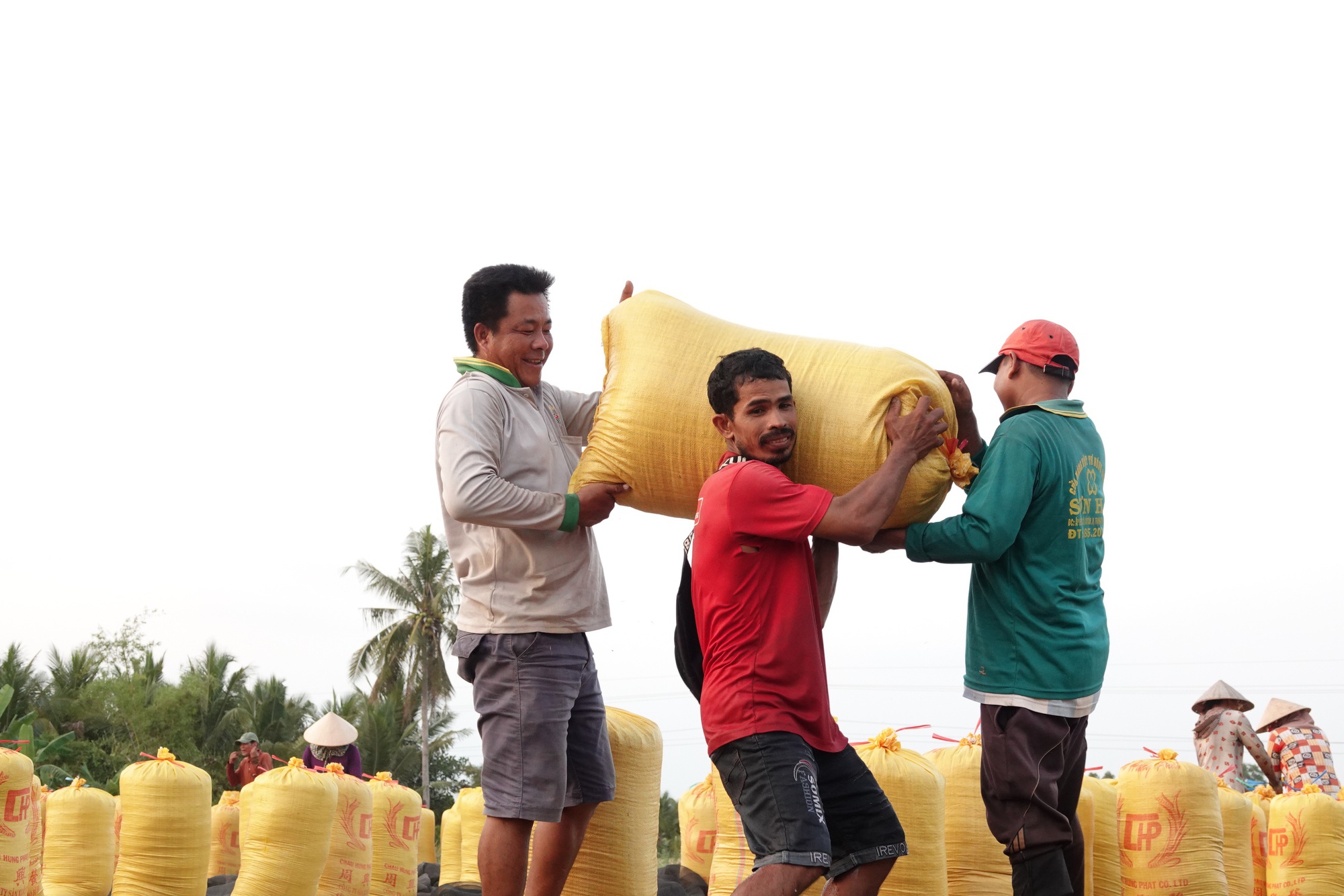
"Unleashing" rice exports must aim to improve the income of rice farmers.
PHOTO: DUY TAN
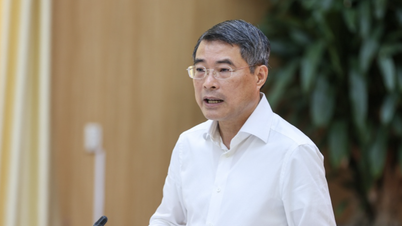
Dr. Tran Huu Hiep (FPT University) commented: The proposal to abolish rice export business licenses is a step in the right direction in institutional reform and enhancing the competitiveness of the rice industry. Firstly, it reduces barriers to market entry and unlocks business resources. The long-standing licensing mechanism has inadvertently created a "bottleneck," and abolishing licenses will expand the "playing field," promoting healthy competition. Secondly, when more entities participate, it forces businesses to invest in deep processing, traceability, and brand building. This helps shift from "selling rice in quantity" to "selling rice in quality," increasing the export value and the position of Vietnamese rice in the international market. Thirdly, it aligns with the trend of integration and reform. Free trade agreements require a transparent and open business environment. Maintaining administrative licenses is no longer appropriate, while the State can switch to more modern management tools such as standards, market data, and post-inspection mechanisms.
However, Dr. Hiep noted that, whether we like it or not, rice remains a unique and core commodity, and the story of rice exports must aim to improve the income and living standards of rice farmers. To achieve this, an action plan is needed, including: building a smart storage and regulation system with early warning thresholds, flexible intervention mechanisms when the market fluctuates, and avoiding domestic supply-demand shocks. Simultaneously, establishing mandatory quality standards and supply chain linkages is crucial. Export businesses must have contracts linking with raw material areas, transparent purchase prices, and profit sharing with farmers to avoid "buy-and-sell" practices that disadvantage rice farmers. In this context, abolishing rice export licenses must have a roadmap and accompanying conditions. In the short term, this involves shifting from pre-inspection to post-inspection, publishing a set of technical standards, and mandating traceability. In the medium term, it involves perfecting the market database, storage system, and regulatory tools. In the long term, there should be policies to encourage businesses to invest in raw material areas, cooperatives, and substantive, legally binding contracts for the purchase of raw materials.
Will removing the conditions cause market disruption?
Mr. Dinh Minh Tam, a rice industry expert who previously managed a large enterprise in Dong Thap , commented that the policy of reducing and simplifying administrative procedures, especially in the business sector, is very good and should be supported. However, rice is a unique sector, so opening up new rice-related businesses requires careful discussion and consideration. "For example, the rice company I previously managed had an export price of up to $1,200 USD/ton for ST25 rice, while the highest market price at that time was only $700-$800 USD/ton. The difference was that we organized production from the fields according to international standards, so the rice achieved a high degree of purity, which is a very important factor in the industry. But if anyone could export rice without any conditions, who would participate in supporting farmers to develop raw material areas? If no one owns the raw material areas, there will be free mixing and price competition. At that point, it will be even more difficult for Vietnamese rice to enter high-end markets," Mr. Tam worried.
Having been involved in the rice industry for half a century, Mr. Pham Hoang Lam, Chairman of the Board of Directors of Lam Rice Group JSC (An Giang), analyzed: Vietnam is the world's second-to-third largest rice exporter, but for decades, Vietnamese rice has only had a large quantity but low value and lacked a brand. The business conditions for the rice industry are set to address this weakness. Currently, Vietnam has several fairly large enterprises with well-invested processing facilities and raw material areas; if all licenses are removed now, these enterprises will have to compete with units whose only contracts are for export. Therefore, without a suitable management mechanism, the market could develop in a direction of low prices, inconsistent quality, and high risks.
"Exporting in large quantities is necessary, but exporting valuable and reputable products is the long-term goal. A major industry cannot develop sustainably without market discipline. And a national brand cannot be formed if quality is not controlled," Mr. Lam noted.
A leader of the Vietnam Food Association (VFA) said they are still monitoring and gathering opinions and recommendations from businesses on this issue. Because, whether we like it or not, the rice industry still plays a crucial role in national food security, not simply in trade. Reforming administrative procedures in the rice industry needs to be carried out according to a suitable roadmap. "First, to create a more favorable environment, some conditions could be removed, such as requirements for milling factories or export permits per shipment. If these requirements are removed, Vietnam's business conditions would be nearly on par with countries like India or Thailand," this leader said.
What farmers most desire is for the government to organize and implement large-scale production models under the Project for 1 million hectares of high-quality, low-emission rice. This would connect farmers with large, reputable businesses to stabilize output and prices. Only then will farmers feel secure in their production. Previously, when rice prices were high, traders and businesses competed to buy it; when prices fell, they resorted to driving prices down.
Mr. Duong Van Sieu, Deputy Director of Thuan Thang Cooperative (Can Tho City)
Source: https://thanhnien.vn/coi-troi-xuat-khau-gao-can-lo-trinh-185260504225619947.htm

































































Comment (0)