

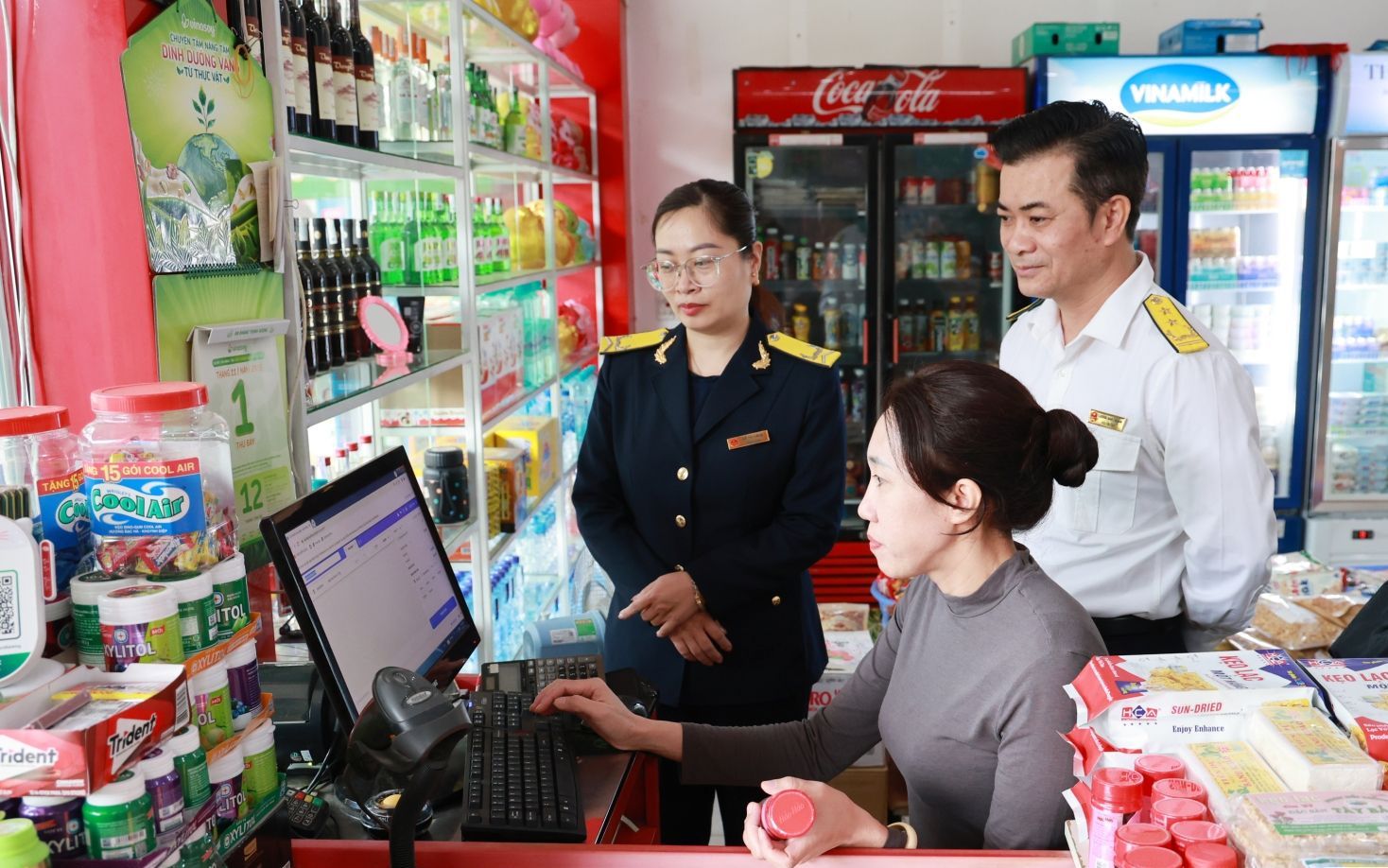
Abolish lump-sum taxes to promote digitalization and raise the internal capacity of the private sector .
Compliance costs – a strategic investment for the future.
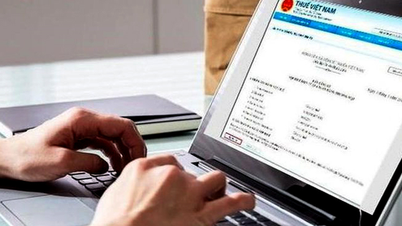
In reality, during the initial stages of the reform, many voices from the market expressed concerns about financial pressure. New expenses emerged in the monthly operating costs of household businesses, ranging from the purchase and maintenance of electronic invoicing software, digital signatures, and data transmission equipment, to tax agent service fees. Many worried that these expenses were directly eroding the already limited profit margins of household businesses in a fiercely competitive market. However, economic experts argued that this mindset inadvertently turned accounting into a formality to appease regulatory authorities, rather than a tool to support development.
The household economic sector – a business sector that, though small in scale in terms of individual businesses, accounts for a huge proportion in terms of numbers and creates millions of jobs – has long been confined within the space of a "manual, book-based" mindset, operating based on subjective estimates and supported by a lump-sum tax mechanism. Closing the book on an old historical period, January 1, 2026, marks the official abolition of lump-sum taxes, replaced by a self-declaration and self-payment mechanism for household businesses.
In reality, studies on business management show that maintaining a business model lacking a standardized accounting system is the biggest limitation causing significant losses. Without accurate tools to control cash flow, manage accounts receivable, and closely monitor inventory, hidden losses due to waste, errors, or lax management will continuously occur. As a result, even with good revenue, sole proprietorships are hampered in their ability to optimize operating costs and cannot grow into formal enterprises.

Therefore, the shift to the new declaration mechanism is not a burden, but an opportunity for business households to revolutionize their internal management. "When digitized processes are established and operating stably, the pressure of processing manual documents will be significantly reduced thanks to automation tools, freeing up labor so that business owners can focus on core activities, which are market development and customer acquisition. Every major reform always comes with initial transition costs, and proactively facing these costs is the filter that selects economic entities with the real capacity to enter the big playing field," analyzed Dr. Mac Quoc Anh, Vice President and General Secretary of the Hanoi Small and Medium Enterprises Association.
Establishing a level playing field
From a national financial management perspective, abolishing the lump-sum tax is a fundamental solution to establish a level playing field for businesses. In reality, the previous lump-sum tax mechanism inadvertently created several legal loopholes, where some businesses with very large revenues, approaching or even exceeding medium-sized enterprises, deliberately operated under the guise of household businesses to exploit the policy. This not only resulted in significant revenue losses for the state budget but also distorted the environment for fair competition, creating an illegal advantage over legitimate businesses that diligently fulfill their tax declaration obligations.
When all large businesses are required to implement self-declaration mechanisms and adopt transparent accounting practices, equality will be established. Every business entity will be subject to supervision based on actual revenue and legitimate documentation, thereby eliminating financial fraud and promoting a healthier and more transparent economic flow.
The concern of many businesses about the lack of invoices when purchasing goods from intermediaries, wholesale markets, or directly from farmers and fishermen is actually a problem that has a clear legal solution.
Firstly, for small-scale businesses with annual revenue of 1 billion VND or less, the law stipulates that they are exempt from Value Added Tax (VAT) and Personal Income Tax (PIT), but they still have the right to use electronic invoices when needed. At the same time, the current tax legal system maintains an open mechanism, allowing taxpayers to create lists of legally purchased agricultural, forestry, and aquatic products directly from producers without requiring input invoices. Thanks to these regulations, the rights and actual costs of small businesses are always absolutely protected if they comply with the prescribed procedures.

Looking at the broader picture, controlling the flow of goods through an electronic invoicing system will create a ripple effect, strongly impacting the entire supply chain of the economy. To maintain a sustainable revenue stream from partners such as large-scale businesses or household businesses, wholesalers and general agents are forced to upgrade their own management capabilities, register for electronic invoices, and standardize their documentation systems.
This is a crucial catalyst for purifying and cleaning up the nationwide flow of goods, contributing to the complete eradication of the market for smuggled, counterfeit, and substandard goods of unknown origin.
In particular, once fully adapted to accounting and electronic invoicing methods, household businesses will build a transparent financial profile for themselves. This is their passport to leave the informal credit system and directly access large financial institutions and commercial banks to borrow capital at preferential interest rates, instead of bearing the risks and extremely high capital costs from unstable black credit sources.
In the context of Vietnam's rapidly developing digital technology ecosystem, compliance costs will quickly decrease and approach optimal levels thanks to smart integrated solutions. Household businesses need to maximize the support of the Tax authorities and solution providers to carry out this historic technological transformation. This proactive approach will not only help protect sustainable profit streams for household businesses but also create the strongest foundation for them to break through and readily transform into legitimate, sustainably developing enterprises.
Source: https://vtv.vn/cuoc-chuyen-minh-cua-hang-trieu-ho-kinh-doanh-100260520132113782.htm


![[Photo] Ba Lang An Lighthouse - the "eye of the sea" amidst the "rock museum" of Quang Ngai province.](https://vphoto.vietnam.vn/thumb/1200x675/vietnam/resource/IMAGE/2026/05/29/1780038698840_anh-man-hinh-2026-05-29-luc-14-10-42.png)

![[Image] Pleasant weather helps students enter the 10th grade entrance exam with confidence.](https://vphoto.vietnam.vn/thumb/1200x675/vietnam/resource/IMAGE/2026/05/29/1780034401612_ngay-1-thi-lop-10-minh-duy-8-5009-jpg.webp)












































































Comment (0)